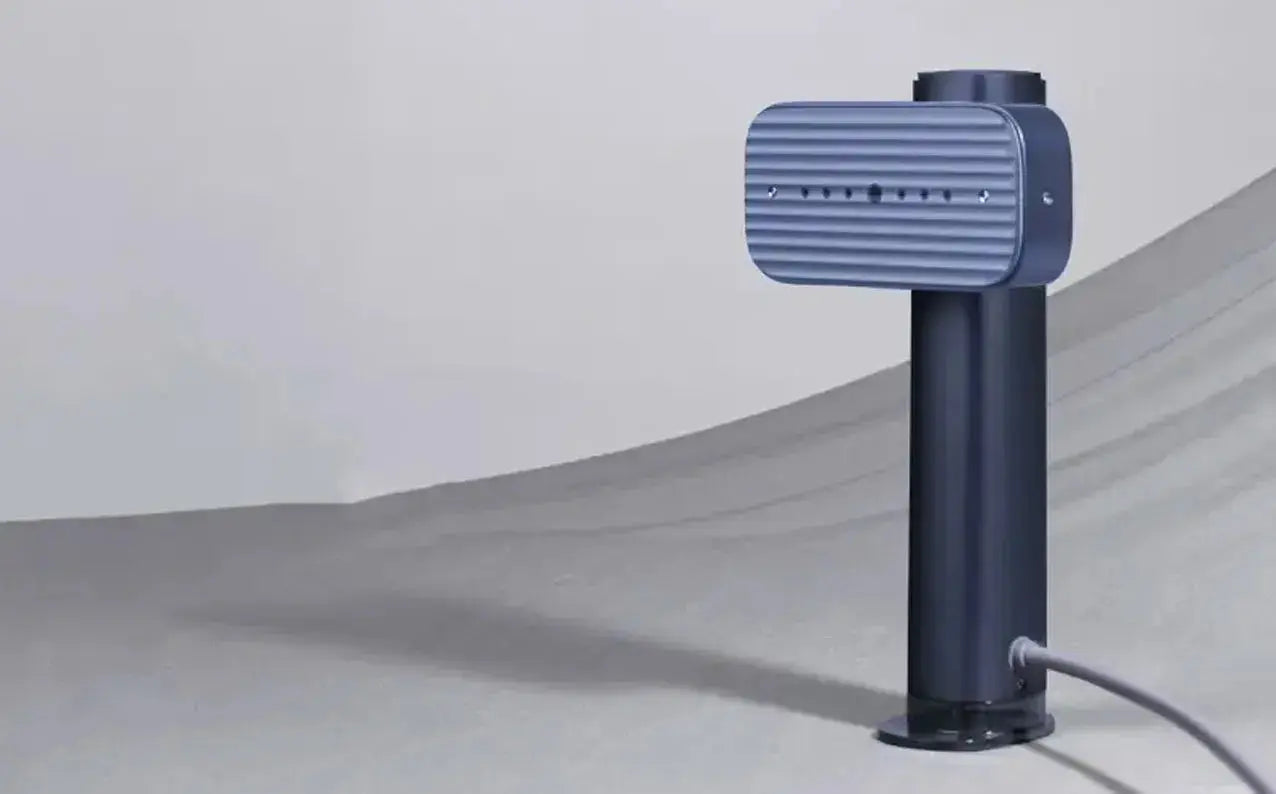

Why did I have to have a small steamer with me at the trade show?
After years on the road, I learned that 'professional' at a show often comes down to tiny things — a creased tablecloth, a sample left without hangers, or a wrinkled dress on a model.
The first time it mattered
I didn't fully appreciate a small steamer until a chaotic morning at a home-goods show in Chicago. That morning, we were rushing to set up when we opened boxes and found display fabrics creased as if they'd been in a fight. Under the harsh lights I felt a jolt — a wrinkled booth would chase away half the traffic before we even started.
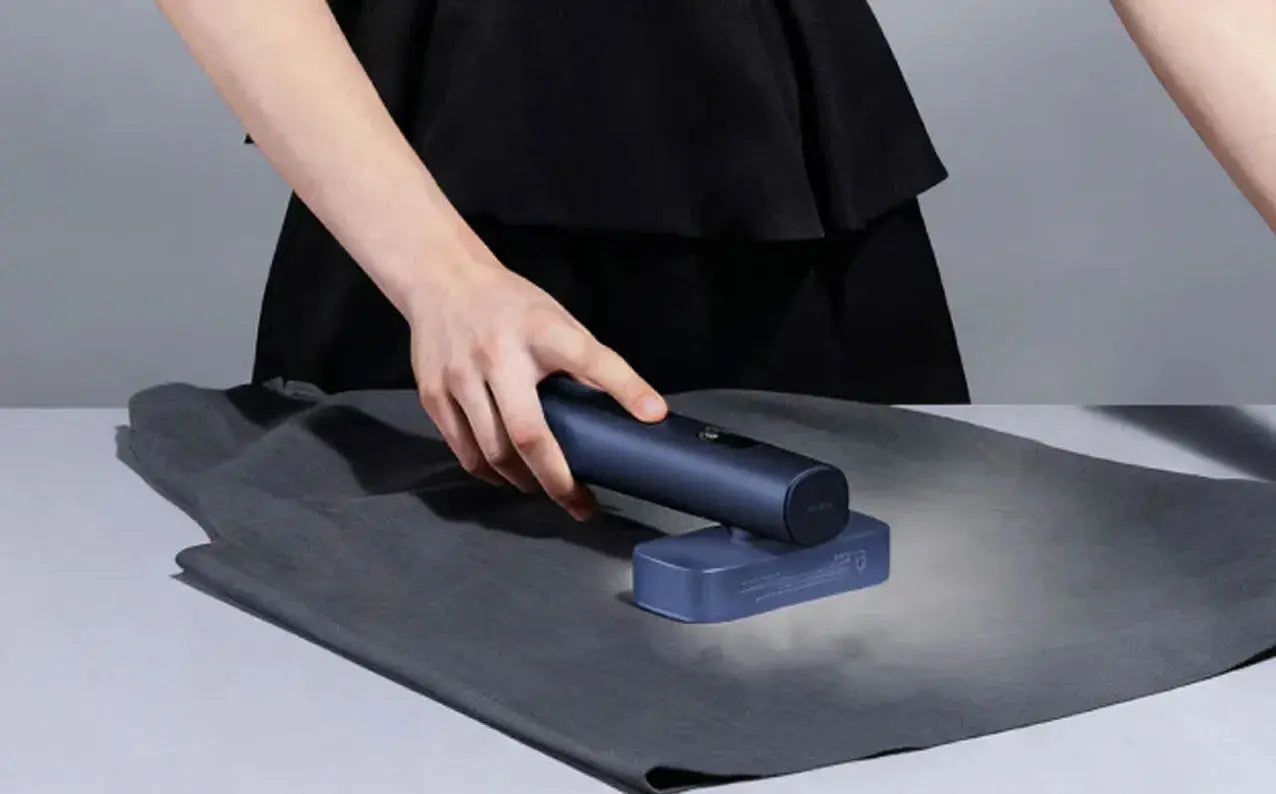
I grabbed a colleague's tiny steamer and used it properly for the first time. After 30 seconds to heat up and a few minutes of steaming, the wrinkles melted away and the fabric smoothed out like new. At that moment, I suddenly understood: Sometimes professionalism is not about telling others how well you did, but about the moments when others can't see you "put out the fire".
Since then, a portable steamer has been a permanent fixture in my toolbox.
Whether I was going to Los Angeles for a beauty trade show, to Dallas for a retail show, or even to New York for a fashion show, I always kept it in my portable trade show bag.

The real pace of trade shows: Why the small steamer is a "life-saving tool"
If you haven't worked shows, you don't realize how furious the setup pace can be.
Electricians might suddenly change the wiring, transportation companies might be late, the lighting technicians have their own schedule, and the supervisory staff from the venue will constantly patrol the site to urge you to speed up... You don't have much time to carefully deal with wrinkles and repeatedly organize the display layout.
But visitors don't cut you slack — they won't say, "Oh, it's fine, they just opened the box."
The moment the booth opens, that is the moment you are "judged".
I joke that at shows a small steamer is a dignity-saving tool.
And that's no exaggeration — I've seen the fallout when a steamer is left behind:
- A dress used for display was wrinkled as if it had just been slept in.
- The corners of the background cloth are piled with wrinkles, and when lit by the light, it looks like old junk.
- The customer touched the fabric and the first thing he said was not about the product, but rather: "Why is it so wrinkled?"
In one of the brands I was previously in charge of, a new colleague once left the steamer at the hotel. As a result, on the first morning, the three of us used a hair dryer to blow on the background cloth for a full 20 minutes, but the outcome was absolutely disastrous. Since then, she has never dared to leave it behind again.
The criteria I use for choosing a small steamer
(practical and real-world experience, not theoretical)
I haven't bought many steamer units, but each one has clearly solved my problems on-site. So when choosing them, I was very practical:
It wasn't about "just having a good appearance", nor was it about "believing the hype", what I cared about was whether it could save me once in a chaotic trade show setup.
I will focus on these elements:
Heating-up speed
What I can't stand the most is those models that require waiting for two or three minutes.
During the trade show setup, many things can happen in just one minute. You simply don't have time to wait.
It would be best if it could produce steam within 15–30 seconds. That would make me feel that it truly is a "companion".
Weight and Feel
At the trade show site, I often had to answer phone calls, reply to messages, and sort out the fabrics all at the same time.
The machine was getting heavier and heavier, and as your hands got tired, your speed would increase significantly.
In addition, some trade show halls had strong air conditioning, and I had to constantly hold the steamer to support the fabrics. I would rather make it as light as possible.
Steam Continuity and Drainage Design
I once had a bad experience: an old model would occasionally spray water droplets.
The moment when water marks appeared on the dark fabric, I really wanted to throw it in the trash.
So now, I always prioritize choosing structures with stable designs and smooth drainage.
Travel-friendly
The people who attend trade shows often fly to three different cities in a week.
I prefer the type of laptops that can easily fit into a suitcase and even into a laptop bag.
I have used some that claimed to be "travel models", but the result was that they were small in size but the wires were so thick that they were terrifying. That didn't work either.

My feelings about Nesugar
When I was organizing a jewelry trade show in Boston, a colleague from the textile booth lent me his steamer. That was the first time I saw the Nesugar model.
I don't have a particular fondness for any specific brand, but I remember it clearly:
The machine was so light that it felt as if no water was involved. And it preheated very quickly.
We were in a hurry to hang up 12 handcrafted shawls, and surprisingly, we finished all of them in just ten minutes.
Sometimes when I look for equipment in my travel luggage, I also pay attention to which models are "travel-friendly". Sometimes I come across this name.
I prefer tools that are controllable and reliable rather than those that are merely associated with a certain brand. Therefore, my evaluation of any device is solely based on the on-site experience. If a steamer can help you save time and avoid awkward situations at the trade show, then it is worth it.
Practical techniques for using the small steamer at the trade show
(The sooner you master them, the less you'll suffer from the lack of knowledge)
Over the years, I have developed a "specialized for trade show attendees" quick and effective process, and it has consistently achieved the desired result of "making attendees visible" every time.
1.Hang the fabric properly first. Do not lay it flat.
Many first-time users prefer to lay the fabric on the table. However, that is actually the most time-consuming method.
Hang it up and let the fabric hang naturally. Only then can the steam truly take effect.
2.Make sure the steam head isn’t pressed too tightly against the fabric.
Putting it too close is likely to cause water marks; putting it too far won't be effective.
Just keep it at a distance where "the steam can touch the fabric" is visible.
3.Scan the edges first, then process the main body.
This is something I've figured out based on my experience.
After the edges become smooth, the overall visual effect of the fabric will be enhanced by half immediately.
4.For the neckline, cuffs and pleated areas, use a dry cloth for assistance.
Steam combined with a dry cloth is a combination that I have repeatedly tested at the trade show site.
5.Finally, don't forget to gently press and straighten it with your hands.
Steam is the tool, and the hand is the final touch.
A few seconds of adjustment will make the display item appear more sophisticated.
6.Know the "temperament" of the fabric
The fabrics at the trade show site were of various types and qualities. I often had to handle multiple tasks simultaneously:
- Cotton and linen: The most obedient. It will be flat after just one steaming, and the result will be immediate.
- Polyester: Prone to being damaged by heat, keep a distance. Especially the shiny polyester fabric is prone to reflecting light, so I will be very careful.
- Silk: Try to avoid steaming as much as possible. When necessary, use a screen, keep a greater distance, and move faster.
- Thick fabric: Scour it several times. The steam needs time to penetrate.
As long as you master the "distance + direction + sequence", the layout of the trade show booth will generally not go wrong.
I once made a rather stupid mistake:
During three consecutive days of the trade show, I simply put the steamer in my bag after using it without pouring any water.
As a result, the machine broke down on the morning of the third day.
So now I have "three must-do items":
Drain the water immediately and let it air dry.
Even if you are very tired, you still have to do it. Scale is the number one enemy of the steamer.
Regularly use white vinegar to remove scale buildup.
It's not necessary every time, but I'll clean it once after every 2–3 trade shows.
The wires must be neatly rolled up.
It is quite common for the wires at the trade show site to be damaged. Rolling them up is done to extend their lifespan.

My compact trade-show kit
The list of small accessories that I carry with me as a trade show staff member:
At each trade show, every participant has their own "life-saving item" in their backpack.
My steamer suit usually includes:
- lightweight steamer
- Travel-sized distilled water
- Small towel (for separating)
- Mini brush (spray nozzle)
- Portable socket (of particular importance)
- Rubber bands, pins, double-sided tape (you know what they are)
Together these items weigh less than a pound and solve about 80% of display headaches.
Awkward moments (you'll recognize them)
I have encountered the following:
- The colleague next to the booth borrowed my steamer because he forgot to bring one. As a result, a queue of five people formed within just ten minutes.
- The model's clothes are wrinkled and the photographer is waiting.
- While queuing up to collect the badges, I suddenly received a message saying that the fabric had been wrinkled. So I had to go back to the booth immediately.
These small steamers of yours have all helped me turn the situation around.
I've always believed it's more than an appliance — it's the trade-show team's self-respect.
Final note
Finally, I would like to say a few words to those who are attending a trade show for the first time or are currently on a tour of the trade show venues.
You may not need the most expensive equipment, nor do you need to pursue a certain trendy product. What you really need is a tool that can help you "make the booth look trustworthy" in just five minutes on the busiest, messiest, and most stressful morning of your day.
If you are currently preparing for a business trip, setting up a trade show, or attending your first industry trade show for the first time, I would love to hear about the problems you have encountered.
What is the fabric? How are the venue lights? What is the size of the booth? Is the texture of your product soft or stiff?
You can send me the photos of the site at any time, and I will tell you how I would handle the situation - just like I have done for my colleagues at countless trade show sites in the past.
As long as your presentation is firm, clean and smooth, the audience will naturally perceive you as "professional".
And a small steamer is the most cost-effective and high-return tool for you at the trade show.