
Is a 15-Second Clothes Steamer Really Worth It? My Quick Wrinkle-Removal Guide
I used to think a few wrinkles in my clothes were no big deal.
Then one morning, I was rushing to meet a client, pulled a white dress shirt out of my suitcase, and discovered it looked like it had just survived a wrestling match.
An iron? Too much work.
An ironing board? I definitely wasn't getting that out.
The hotel iron? Honestly, I wasn't even sure I wanted to touch it.
That's when I started paying more attention to a little appliance that makes a lot more sense when you're short on time: a clothes steamer.
These days, some portable steamers heat up in as little as 15 seconds. That sounds almost too good to be true, but some really do. For example, Rowenta's Pure Pop is advertised with a roughly 15-second heat-up time, and some Tefal handheld steamers offer similar fast-heating performance.
So here's the real question:
Is a 15-second clothes steamer just a marketing gimmick, or can it actually save you a few minutes on a busy morning?
My answer: if you regularly wear shirts, dresses, suits, or travel with your clothes, it's probably worth it.

Why I Started Loving Fast Heat-Up Steamers
What really changed my mind was how quickly I could use it.
With an iron, my brain automatically goes through the whole routine:
Get the iron → find the ironing board → plug it in → wait for it to heat up → iron the clothes → put everything away.
For one wrinkled T-shirt, it starts to feel like I'm launching a small home improvement project.
A handheld steamer is much simpler.
Hang up the garment, fill the tank, turn on the steamer, wait a few seconds, and start steaming.
That's why I think a 15-second steamer makes so much sense when you're short on time.
If all I want in the morning is to make a shirt look presentable, I don't really need to iron the whole thing.
I just need to get the wrinkles out.
Sure, they're both about getting wrinkles out. But the process feels completely different.
What Does “15 Seconds” Actually Mean?
Here's the catch: 15 seconds usually refers to heat-up time—not the time it takes to steam an entire garment.
Actual steaming time depends on the fabric, how badly it's wrinkled, and how much steam the machine produces. A T-shirt might take less than a minute, while a heavily wrinkled cotton shirt or linen dress can take a minute or two.
So when I'm shopping for a steamer, I don't just look at the "15-second" claim.
I also pay attention to three things.
1. Steam Output
A steady, powerful stream of steam can make it much easier to tackle deeper wrinkles.
Some handheld steamers produce around 20–25 g of steam per minute. Higher steam output can also help with stubborn wrinkles.
2. Water Tank Capacity
One of the biggest trade-offs with a compact travel steamer is the water tank.
A smaller tank usually means a lighter, more compact machine—but it may also mean stopping to refill it.
If you're only steaming one or two garments at a time, a small tank is probably fine.
If you want to steam an entire outfit—or several outfits at once—I'd go with a larger tank.
3. Weight
Don't underestimate this one.
Hold a steamer for several minutes, and even a small difference in weight can become surprisingly noticeable.
I'd rather give up a few fancy features for a steamer that's comfortable to hold.

What Clothes Are Best for a Steamer?
In my experience, a few types of clothing really benefit from a steamer.
1. Shirts
This is probably the biggest reason I keep a steamer around.
Hang the shirt up and work your way down from the shoulders, spending a little extra time on the chest, cuffs, and hem.
If you want a sharper collar, spend a little more time on that area and make a few slower passes with the steamer.
2. Dresses
Dresses are another area where a steamer really comes in handy.
They're especially useful when you're traveling because dresses can come out of a suitcase covered in creases. In a hotel room, grabbing a portable steamer is a lot easier than trying to find an ironing board.
3. Suits and Jackets
For light wrinkles, steam can be a quick way to freshen up a suit or jacket.
But this is where I'd be more careful: always check the garment's care label and test the steamer on an inconspicuous area first.
A nice suit isn't where I'd test a new steamer for the first time.
4. Linen and Cotton
Both fabrics are notorious for picking up wrinkles.
Steam can help relax the fibers and make the garment look smoother and more polished.
That said, if you're trying to create razor-sharp trouser creases or perfectly crisp shirt cuffs, a traditional iron still has the advantage.
A Clothes Steamer Can't Completely Replace an Iron
A steamer and an iron aren't exactly the same tool.
If your goal is simply to get wrinkles out quickly, a steamer is hard to beat for convenience.
If your goal is to create sharp creases in pants, crisp cuffs, or a very polished dress-shirt finish, an iron is still the better choice.
I think of them this way:
A steamer makes your clothes look presentable.
An iron makes your clothes look like they just came back from the tailor.
For most ordinary workdays, the first one is usually good enough.

The Biggest Mistakes I Used to Make With a Clothes Steamer
First, I used to hold it too close to the fabric.
More steam isn't necessarily better just because you're closer. Follow the manufacturer's instructions and the garment's care label, since different fabrics have different levels of tolerance for heat and moisture.
I also used to leave water sitting in the tank.
These days, I try to empty any leftover water after using the steamer and let the machine dry out. Regular cleaning is also important, especially if you're using tap water frequently.
And I definitely treated the steamer like a magic wrinkle-removal machine.
If your shirt looks like a paper airplane, don't expect 15 seconds of steam to magically fix it.
What worked better for me was pretty simple:
Hang the garment up first and let gravity do some of the work. Then slowly work your way from top to bottom with the steamer.
That's usually more effective than waving it around randomly.
What Matters Most When You're Traveling?
For a travel steamer, I'd prioritize four things:
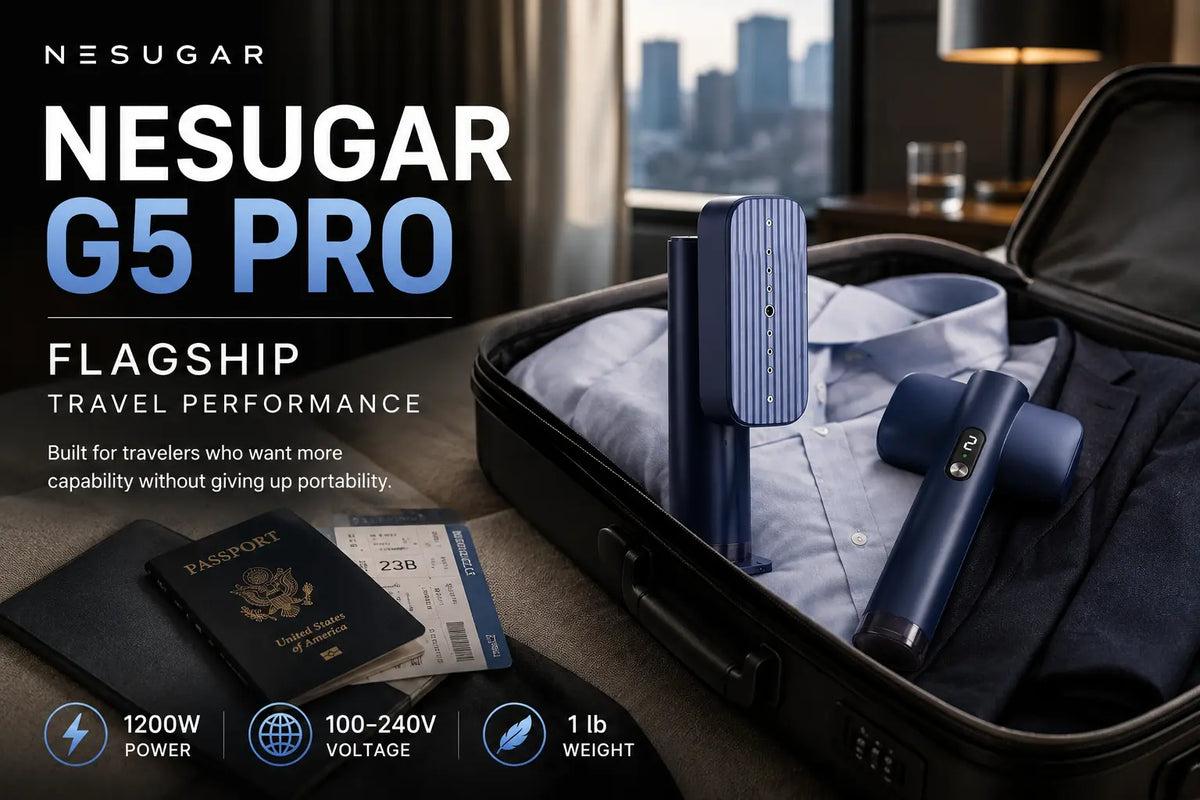
Small. Light. Fast. Easy to pack. That's especially important for business trips.
You might arrive at a hotel in the evening with an 8 a.m. meeting the next morning. In that situation, a portable steamer can come in handy.
A roughly 15-second heat-up time means you don't have to turn the machine on several minutes before you actually need it.
Some travel models also support dual voltage, such as 100–240V, which can be especially useful when you're traveling internationally.
But always check the exact voltage specifications for the model you're buying, and remember that you may still need a plug adapter depending on your destination.
So, are 15-second clothes steamers actually worth it?
My answer is pretty simple:
Fifteen seconds shouldn't be the only reason you buy one, but it is a genuinely useful feature.
What matters more is how the steamer fits into your routine:
How quickly does it heat up?
Is the steam output consistent?
Is the water tank big enough?
Is it comfortable to hold?
Is it easy to pack for travel?
Does it work well with the fabrics you actually wear?
If the answers are yes, a fast-heating steamer can easily become one of those little appliances you barely think about—but somehow end up using all the time.
After all, nobody's life is ruined by a few wrinkles.
But if you're spending ten minutes every morning fighting with wrinkled clothes, a fast, easy steamer can save you a lot of hassle.