
The moment the night shift ended, the thing I most wanted to do was not to go to sleep, but to take off the nurse's uniform that had stayed with me for twelve hours under the bright lights.
That garment, with its mixture of disinfectant smell, scent of coffee, and a hint of fatigue, always reminded me of countless quiet early mornings in the hospital.
Also, due to my profession, my perception of "cleanliness," "neatness," and "hygiene" is more acute than that of most people.
During the first few years of my career, my requirements for clothes were simply "make them clean."
It wasn't until one night shift when I had to attend an early meeting that I noticed the uniform I had just put on was all wrinkled.
At that moment, I understood that neatness is not just about outward appearance; it is a small reminder of inner stability.
I tried everything — irons, cloth steamers, air drying, quick fixes.
Each method is like a process of relearning how to take care of oneself.

So — why cloth steamer?
The hospital operates at such a fast pace that you might even forget to take a sip of water if something happens.
Therefore, my clothing changing process must be quick, reliable and clean.
An iron can make things crisp, but it's slow and can scorch fabric.
The iron can make clothes smooth and neat, but it can also easily cause the fabric to catch fire. A senior colleague once said, "An iron presses; cloth steamer heals." That stuck with me.
An elder once told me a sentence: "The iron flattens, while the cloth steamer heals." I have always kept this in mind.
A cloth steamer doesn't squash fabric — it relaxes fibers so wrinkles drop away.
A cloth steamer doesn't flatten the fabric; instead, it loosens the fibers and causes the wrinkles to naturally fall down. For everyday scrubs, cloth steaming brings back that fresh feel without the stiffness — gentler, faster, safer.
For regular work clothes, using a cloth steamer can restore the fresh feeling after washing and prevent them from becoming stiff — a simple, quick and gentle process.
How I use cloth steamers at work
"Uniform Emergency" before a night shift
Many nurses know that rush: finish a night shift, do handover, and immediately change for morning rounds.
The cloth steamer became my little savior.
I'd hang my uniform by the door, switch on the cloth steamer, and let it warm up for a minute.
While I brushed my teeth or washed my face, I'd give the uniform a few light passes — enough to smooth most wrinkles.
That little freshness helped wake me during long stretches between shifts.
That refreshing feeling often refreshed me during the long duty shifts.

Business trips, training and conferences
Sometimes I was sent for training or talks.
I always packed a small cloth steamer.
I avoided hotel irons — they often smelled of other people or had scorch marks.
I don't use the restaurant's iron very often — there's always the smell of someone else or burnt traces.
The cloth steamer's charm is its simplicity: hang the shirt, plug in for a minute, run it once — by morning it looks almost new.
That neat look gave me confidence the moment I stepped into the room.
Dressed neatly, one feels more confident when entering the room.
Disinfection & deodorizing
Household cloth steamers cannot be used as disinfectors, but hot steam can reduce odors and inhibit bacteria, and is very practical for bed sheets, curtains and work clothes. They're great for sheets, curtains and work clothes.
If I can't wash clothes right away after a night shift, I give them a quick cloth steaming and hang them to dry. The smell in the ward will then become much less intense. For nurses, it's not just hygiene — it's a little psychological relief.
Cloth steamers I've used — my experience
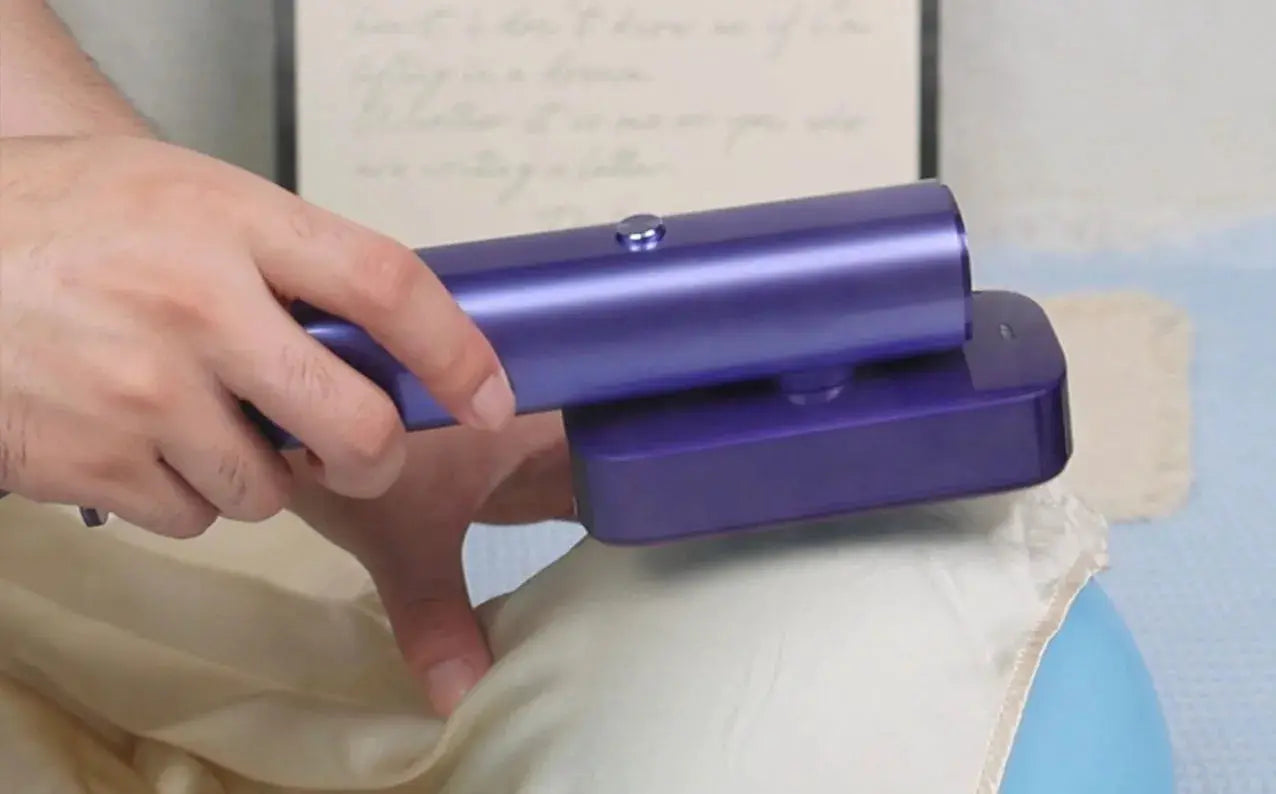
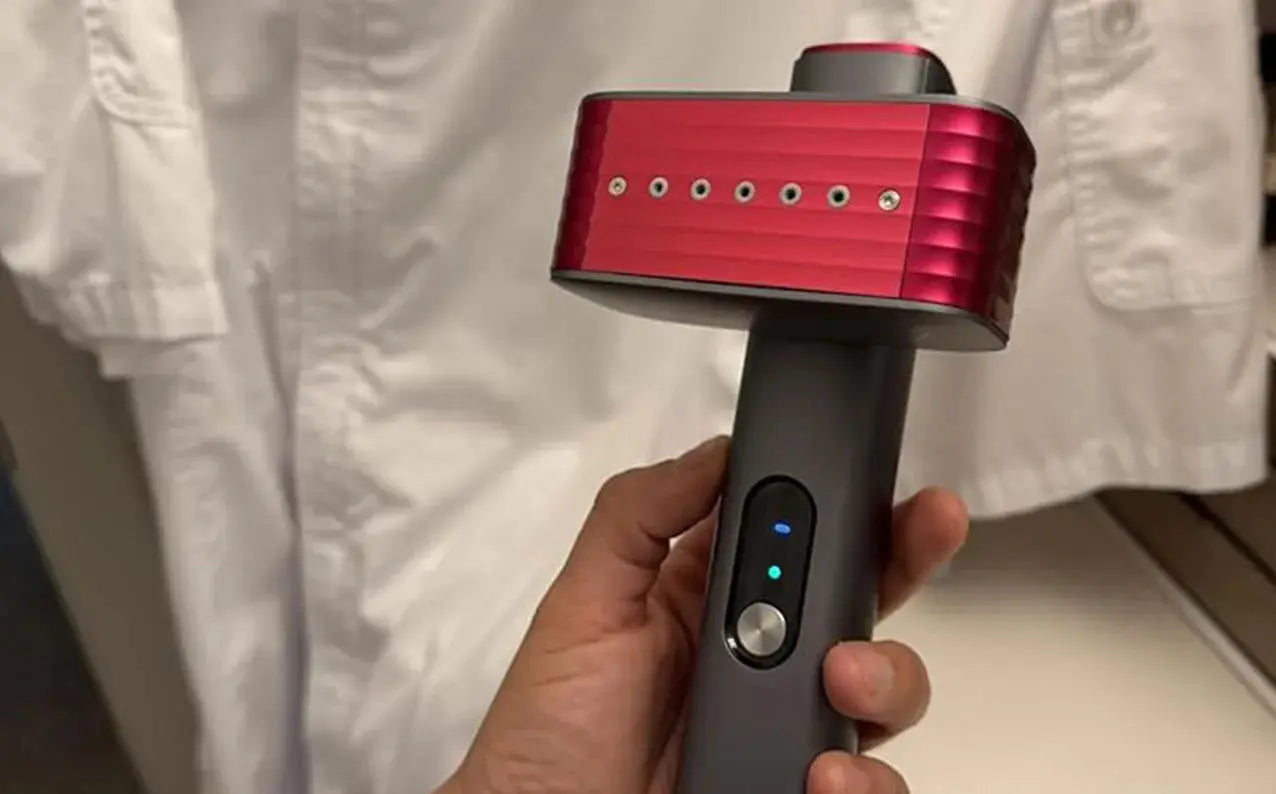
My first one was the handheld model from Nesugar. It was as light as a water bottle and very convenient to carry. Later I bought an upright cloth steamer for heavier items.
Although it takes up space, the large water tank and long battery life make it very practical. It took space, but the bigger tank and longer run-time were worth it.
I kept both: the portable in my bag, the upright at home.
Seeing them together reminds me of the ward's calm order.

Cloth steamer treatment — my routine
My training taught me to watch every detail and safety step.
- Always read fabric labels: scrubs are usually polyester blends and take some heat; silk, wool and velvet need lower temps.
- I only use distilled water to prevent scale formation — after using the equipment for a long time, I realized that mineral deposits could quietly damage the heating element. From equipment upkeep, I know mineral build-up quietly ruins heaters.
- My approach is to keep the nozzle close to the fabric and sweep it slowly across; don't rush, be gentle with the movement, and avoid spraying water droplets. Don't rush — be gentle, and avoid droplets.
- Don't collect it immediately after cloth steaming. Wait until it is completely dry before storing it.
- Maintenance: I use vinegar to rinse and clean the nozzle every week — this is a habit I developed from equipment maintenance.
Beyond clothes
A nurse's life often alternates between "busy" and "even busier."
The cloth steamer gives me a small, steady sense of control amid the chaos.
After a shift I sometimes cloth steam sheets or curtains — it freshens and smooths them.
Cushions and toys benefit too: hot steam lifts dust and smells — handy with kids or pets.
Of course, this is only extra deodorizing — not a substitute for proper cleaning or sterilization.
Each soft burst feels like a quiet moment at day's end.
The detail philosophy I learned in nursing
In the hospital, details matter.
I once saw an intern enter with a crooked collar; the patient looked uneasy.
That showed me dress affects trust, not just image.
It's the same in life: neat clothes give order — even at 2 a.m., a folded coat steadies you.
I often tell new colleagues, "Take care of yourself first, and then you can take care of others." It sounds simple, but it takes tools, habits and sometimes a cloth steamer to handle daily small troubles.
Buying tips
When I pick a cloth steamer I focus on stability, safety and easy cleaning — habits from training.
- Heating time: should start within ~15 seconds — nurses can't wait.
- Tank: at least 100 ml — about 8–10 minutes of steam.
- Dry-boil protection: pick one with automatic shut-off — crucial if you’re sleepy.
- Weight: ideally under a pound — easy to hold one-handed.
- Accessories: removable washable nozzle and a long cord — little things that matter.
Nesugar makes light handhelds with steady output; after years I choose durability over looks.
After years, I value durability over looks.
How nursing and cloth steaming connect
Sometimes the cloth steamer feels familiar — not just because it smooths fabric, but because its slow rhythm echoes nursing: steady warmth, quiet work, a little order.
Using it reminds me of early mornings — the monitor's beeps, the smell of medicine and the dark sky.
Life's wrinkles are more complex than fabric's, but we smooth them patiently, inch by inch.
Maybe that's the gentlest lesson nursing taught me: smooth things slowly, one steam at a time.
Conclusion: caring for clothes is caring for yourself
When I blow steam over my uniform and watch the mist rise, there is a quiet sense of satisfaction — not only is it clean, but it also feels like I've regained control over a part of my life.
I believe that dressing appropriately can boost one's mood, just like a patient taking a deep breath after receiving care.
Perhaps this is the gentlest lesson that nursing has taught me: To smooth things out slowly, bit by bit with a cloth steamer.