
Do You Need an Ironing Board for a Clothes Steamer? Here’s What I Learned
Whenever I pulled out wrinkled clothes, I’d usually let out a little sigh. The wrinkles themselves weren’t the problem — it was the whole process of setting up the ironing board that annoyed me. It always sat in a corner of my closet, and using it meant moving furniture around and clearing space on the floor. Then came the annoying part: finding a place to put it back without making my closet even more cramped.
Then I started using a garment steamer, and I realized something simple: most everyday wrinkles don’t actually need an ironing board.
And honestly, that was the question I had too: could a steamer really save me from dragging out the ironing board every time?
The short answer is yes. For everyday wrinkles, I actually find a steamer much easier to use than an iron.

Why Doesn’t a Garment Steamer Need an Ironing Board?
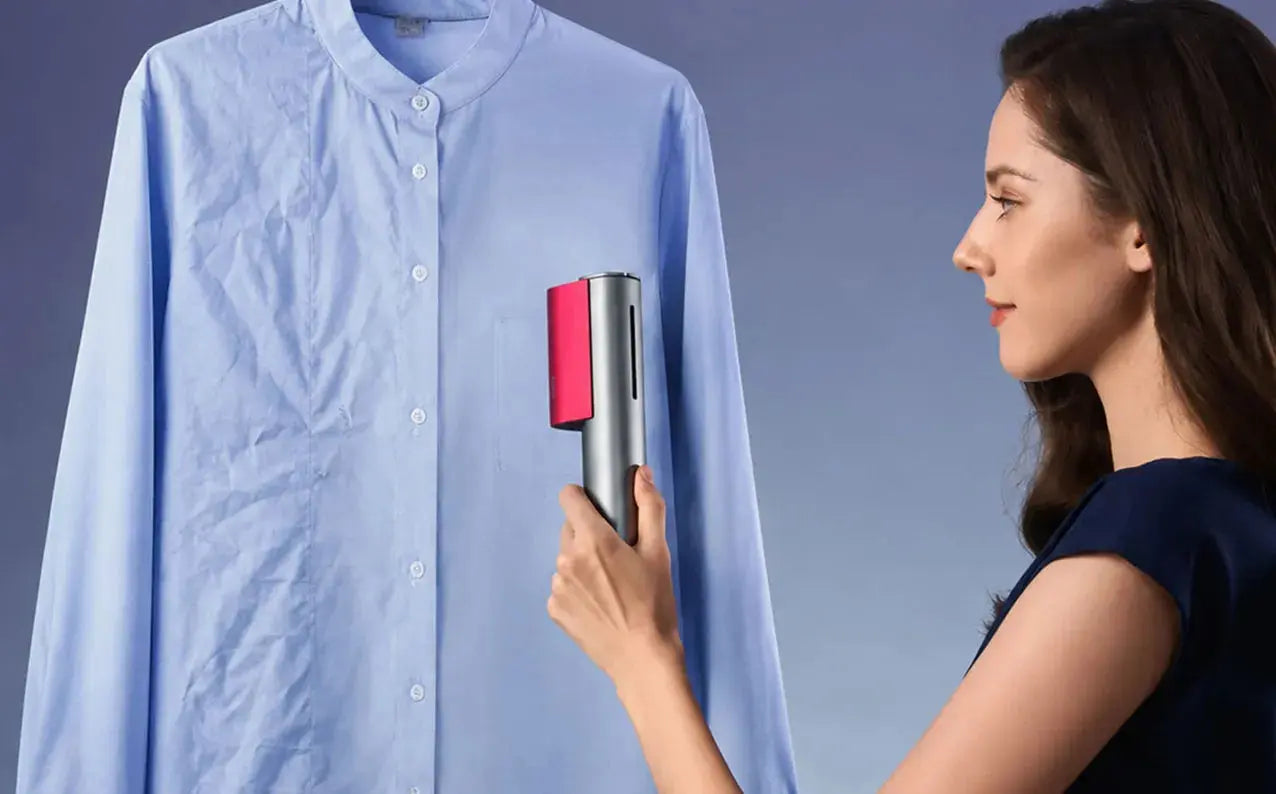
An iron presses fabric flat with high heat directly onto wrinkles. A steamer works differently. Instead of pressing clothes flat, it loosens the fabric with steam so wrinkles can gradually smooth out while the clothes are hanging.
That’s the part I like most — I don’t need to clear a table, move things around, or set up anything before I start.
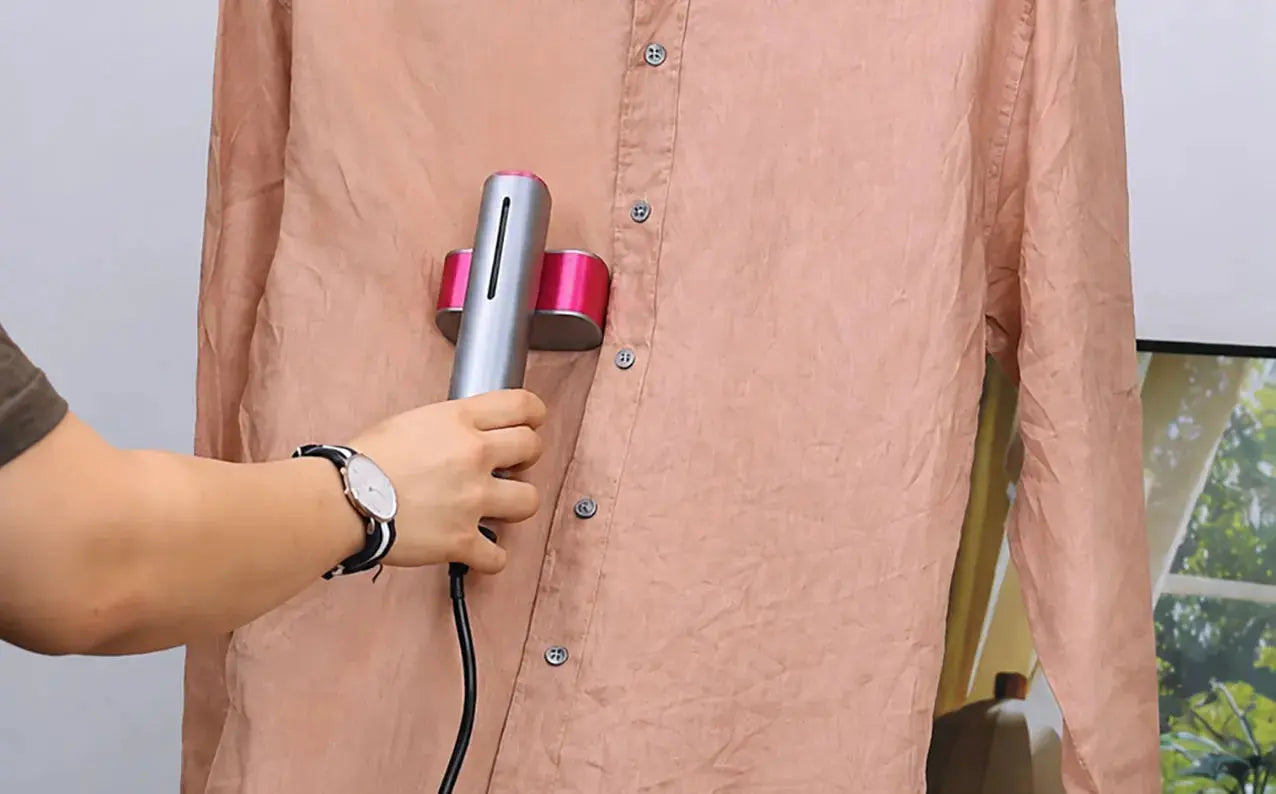
I usually hang shirts behind the door, on bathroom hooks, or in a secure spot near my closet. Once the garment hangs naturally, I hold the hem with one hand and slowly move the steam wand from top to bottom. There’s no need to lay the clothes flat, nor do I have to worry about the iron slipping off the edge of a table.
Of course, it takes a few tries to get used to it. I learned pretty quickly that rushing usually doesn’t help. If you wave it around too quickly, you’ll probably end up with clothes that are half-smoothed and half-damp.
How to use it without an ironing board?
Here’s what I usually do:
I start by hanging the garment properly and buttoning the top button so the shirt keeps its natural shape. If I notice deeper wrinkles, I’ll gently pull the fabric downward with one hand, but I try not to stretch it too much.
From there, I usually focus on the areas that make the biggest difference, like the collar, shoulders, and cuffs. After those spots look better, I move down to the front, back, and hem.
I’ve found that moving slowly works better than rushing. For thinner shirts, I keep the steamer a little farther away, while thicker fabrics usually need a closer pass. The right distance really depends on the material.
Once I’m finished, I usually leave the clothes hanging for a few minutes before wearing them or putting them away. That little bit of time helps the fabric settle and gives everything a cleaner look.

Which clothes work best with a steamer?
In my experience, steamers work best for the everyday wrinkles most people deal with:
- Shirts, T-shirts, and light tops
- Dresses and skirts
- Blazers
- Knitwear
- Scarves and some home textiles
- Clothes pulled out of suitcases
Steamers are especially convenient when traveling. Hotel rooms may not have ironing boards, but they almost always have hangers. One routine I’ve gotten into before heading out is hanging my outfit for the day and giving it a quick steam. After just a few minutes, my clothes won’t look like they’ve just survived a wrestling match straight out of the suitcase.
Knitwear also responds well to steaming. Pressing an iron directly onto knit fabrics can leave shiny marks, whereas steaming is much gentler.
Fabrics to handle with care
Steamers are convenient, but not every fabric is suitable. Always check the care label before steaming silk, velvet, leather, suede, or any fabric with special coatings. When in doubt, test the steam on a small area inside the garment or along the hem first.
Avoid prolonged contact of the steam nozzle with clothes featuring sequins, beads, heat-transfer prints, or decorative patches—high temperatures and moisture may damage adhesives or surface embellishments.
One thing I learned pretty quickly is that steaming has limits. It can freshen up clothes, but it cannot replace washing. If clothes have oil stains, sweat marks, or visible dirt, they still need proper laundering. A steamer can make clothes look and feel better between washes, but it won’t remove stains or replace a proper wash.

What do I look for when choosing a steamer?
Since I don’t use an ironing board, two things matter most to me: how easy the steamer is to carry and how comfortable it feels in my hand.
The first thing I usually check is how quickly it heats up. Most people use steamers quickly before leaving home, so no one wants to stand around waiting for water to heat up.
Next is tank capacity. A too-small tank means you’ll need to refill midway through steaming a single shirt; a too-large one makes the device heavy and uncomfortable to hold for long periods.
Stable steam output is also crucial. Intermittent steam increases treatment time and risks dampening fabrics. Pay attention too to cord length, leak-proof design, and automatic shut-off features.
When I’m choosing a steamer, I usually think about how I’ll actually use it day to day. Do you want to freshen up shirts or handle thick outerwear? Will you mainly use it at home or take it on the go? If I were traveling often, I’d care more about size and weight. For home use, I’d probably choose something with a larger tank. While attractive design is nice, comfort in hand often matters more.
My three most common mistakes
One mistake I made at the beginning was holding the steam nozzle too close. I assumed getting closer would remove wrinkles faster, but that wasn’t really the case. Most fabrics respond better when you keep the nozzle moving instead of letting it sit in one spot too long.
Another mistake was overfilling the water tank. I used to think adding a little extra water would save me from refilling, but it only made the steamer heavier and more annoying to handle. Filling it up to the marked level is usually enough.
The last thing I learned was not to ignore cleaning. Over time, mineral buildup can affect steam performance. A quick cleaning routine based on the manufacturer’s instructions is much easier than waiting until the steam becomes weaker.
After all this time, I still find myself reaching for a steamer.
Clothing steamers certainly can’t fully replace irons. For crisp creases, sharp folds, or particularly heavy cotton-linen garments, an iron remains superior.
But for everyday wear, steamers work well enough. They don’t require a dedicated ironing board or clearing out a large space. Simply hang the garment, plug in the steamer, and spend a few minutes—transforming “just-woke-up clothes” into something that says, “I’ve put effort into today.”
These days, I don’t need my clothes to look perfectly pressed. I just want them to look like I actually took a few minutes to get ready.
I’ve realized that looking put together doesn’t have to involve pulling out a giant ironing board every time. Most of the time, that’s really all it takes: a hanger, a little steam, and a few extra minutes before you walk out the door.