
Garment Steamer for Baby Clothes: The 5 Things I Care About Most When Removing Wrinkles
I used to think it was no big deal if my baby's clothes were a little wrinkled. After all, it wouldn't take long before they were redecorated with milk stains, drool, and all kinds of “mystery stains.”
But once I started washing little outfits constantly, I realized it wasn't quite that simple. Baby onesies, pajamas, and sleepers are usually made from lightweight fabrics with fine fibers, and they tend to wrinkle easily after washing. Pulling out the iron every day, setting up the ironing board, waiting for it to heat up, ironing one piece, then putting everything away… the whole process can quickly turn into an endurance sport disguised as housework.
That’s pretty much how I ended up trying a garment steamer for baby clothes.
I prefer a garment steamer not because it can make baby clothes “look brand-new,” but because it makes getting clothes ready so much easier. Especially when I discover in the morning that the little jacket my baby is supposed to wear that day is wrinkled like a road map, being able to freshen it up quickly is definitely easier than dragging out the ironing board again.

Can You Use a Garment Steamer on Baby Clothes?
Yes, but I would never equate “steam” with “disinfection.”
That's one of the easiest things to misunderstand.
A garment steamer's main job is to use steam to relax fabric fibers, help release wrinkles, and make clothing look fresher. Steam can help with wrinkles, but I wouldn’t treat a steamer as a substitute for washing or disinfecting baby clothes.
If baby clothes are going to be truly clean, the first step is still washing them properly and drying them thoroughly. For clothing that touches the baby's skin, I prefer to think of a garment steamer as the final step in clothing care—not a replacement for washing.
That’s basically how I approach anything that touches my baby’s skin: wash it properly first, then worry about the wrinkles. I don't try to make high-temperature steam solve every problem.
The 5 Things I Look for in a Steamer for Baby Clothes
1.How Easy the Steam Is to Control
Most baby outfits are nowhere near as thick as an adult suit.
Cotton onesies, muslin, bamboo-fiber blends, and lightweight pajamas need gentle, controllable steam rather than the strongest steam possible.
If a machine offers multiple steam settings, I usually start on a lower setting and adjust based on the fabric.
2.How Quickly It Heats Up
After having a baby, I've learned that “fast” really matters.
Not because I've suddenly become impatient, but because a baby has a way of reminding you—in the loudest possible voice—that they need something now. Like, right now.
That’s one reason I prefer a handheld steamer for quick touch-ups. If I only need to get a few wrinkles out of a onesie or little jacket before we leave the house, I don't want to wait around for a bulky appliance to heat up.
I’ve found that smaller handheld models make more sense for this kind of everyday job. Nesugar is one brand I’ve come across that focuses on this type of portable garment care, with handheld steamers designed around quick heating, lightweight handling, and easy storage. The lineup includes models such as the G2 Pro, G5 Pro, G9 Pro, and G10 Pro, so there are a few different options depending on how you plan to use one.
For me, the important part isn't having the most powerful steamer on the market. I just want something I can grab, heat up quickly, use on a couple of wrinkled pieces, and put away without turning the whole process into a project.
3.Water Tank Size
A tank that's too small means constantly refilling it; one that's too large can make the machine unnecessarily bulky.
If I’m only steaming a few little outfits, I’d rather have something lightweight and easy to grab.
If I'm also using it on adult shirts, dresses, or even jackets, a model with a larger capacity can be more convenient.
4.How Easy It Is to Clean
This is easy to overlook.
Leaving water and mineral buildup inside a steamer over time isn't going to make it “smarter.” I make a habit of cleaning mine regularly according to the instructions and following the manufacturer's requirements for the type of water to use.
Before buying one, I also check whether the water tank is easy to remove, whether the filling opening is convenient to use, and whether the cleaning process is straightforward.
5.Most Important of All: Safety Features
This is something I take more seriously than how much steam a machine produces.
In recent years, the U.S. Consumer Product Safety Commission has issued multiple recalls and safety warnings involving garment steamers, including risks of hot water or steam being sprayed or leaking during use and causing burns.
So if there's a baby in the house, I'm not going to fall in love with a machine just because it advertises “powerful steam.”
I'll check that the water-tank cap is secure, that the machine isn't prone to leaking, that it has overheat protection, and that the specific model hasn't appeared in official recall information.
More importantly, the baby should never be anywhere near the steamer while it's operating.
Steam is hot. Very hot. Baby's curiosity is basically undefeated.

How I Actually Use a Steamer on Baby Clothes
Once the clothes have been washed and are completely dry, I hang them up first.
Then I start with areas that tend to wrinkle easily, such as the neckline, shoulders, and sleeves, keeping the steamer at an appropriate distance and letting the steam gradually work through the fabric.
I don't hold the steam head in one spot for too long, and I don't keep steaming the same area over and over just to get the fabric “perfectly” smooth.
For stretchy fabrics, printed designs, plastic decorations, and special coatings in particular, I always check the garment's care label first.
If the label specifically says to avoid steam or high heat, I'm not using my baby's clothes as a science experiment.
There's one more little habit I think matters: after steaming, I let the clothes cool completely and dry out before putting them back in a drawer.
I don't like folding clothes while they're still noticeably damp from steaming. A closet isn't a dryer, and trapping moisture in an enclosed space can lead to odors and other clothing-care problems.
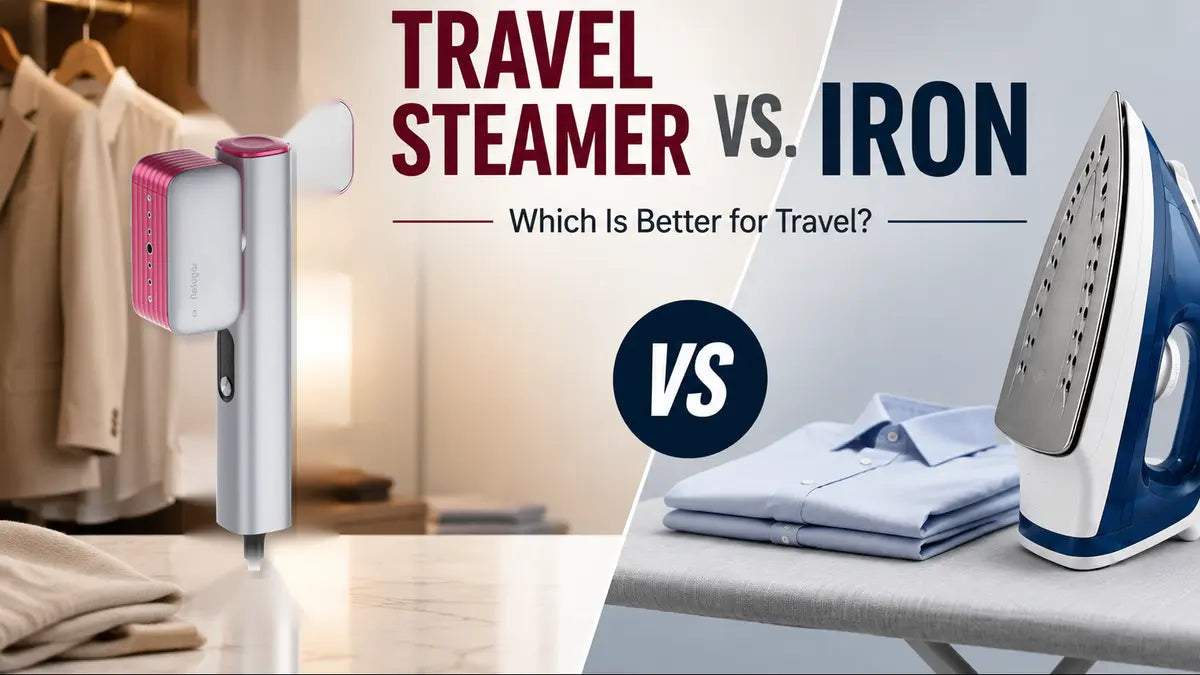
Garment Steamer vs. Iron: Which One Would I Choose?
If you simply asked me which one is better for baby clothes, I'd say this:
For everyday wrinkle removal, I prefer a steamer. If I need crisp creases and a more structured finish, that's when I reach for an iron.
An iron is better for clothes that need a very smooth finish and sharp, defined edges, such as certain formal garments.
A steamer, on the other hand, is better suited to onesies, lightweight jackets, dresses, pajamas, and those little outfits that “came out of the wash perfectly fine but somehow developed a very strong personality when it comes to wrinkles.”
Handheld steamers are also usually easier to store. For families whose baby gear has already taken over half the house, that's not a small advantage.

The One Thing I Keep in Mind
When choosing a garment steamer for baby clothes, I'm not looking for the most powerful, hottest, or fastest machine.
What I really want is something that's easy to control, easy to clean, easy to store, and built with reliable safety features.
Baby clothes themselves aren't complicated. What gets complicated is life after having a baby, when you're constantly bouncing between dozens of tiny tasks every day.
If a little steamer means I can pull out the ironing board one less time and spend a few fewer minutes getting clothes ready, then what it's really solving isn't the wrinkles.
It's just removing one small piece of chaos from everyday life.
And when there's a tiny boss in the house who comes up with a new surprise every single day, I'll gladly take a little less chaos.