
Garment Steamer for Cotton Clothes: My Lazy-Girl Method for Dealing With Wrinkles
I really love cotton clothing.
But I have to admit one thing:
Cotton can be such a pain.
Cotton T-shirts feel comfortable, cotton shirts are breathable, and cotton dresses are light and easy to wear in summer.
Then you wash them, dry them, fold them up neatly, and put them away. The next day, you pull them back out—and somehow, they're wrinkled again.
And not just a couple of little wrinkles, either. I'm talking about the kind of wrinkles that make you stand there for a second wondering how a perfectly folded shirt managed to look like that overnight.
I used to think that as long as I folded my clothes neatly after washing, everything would be fine.
But eventually I realized that clothes don't really care how neatly I fold them. Cotton clothes, especially, seem to have a mind of their own.
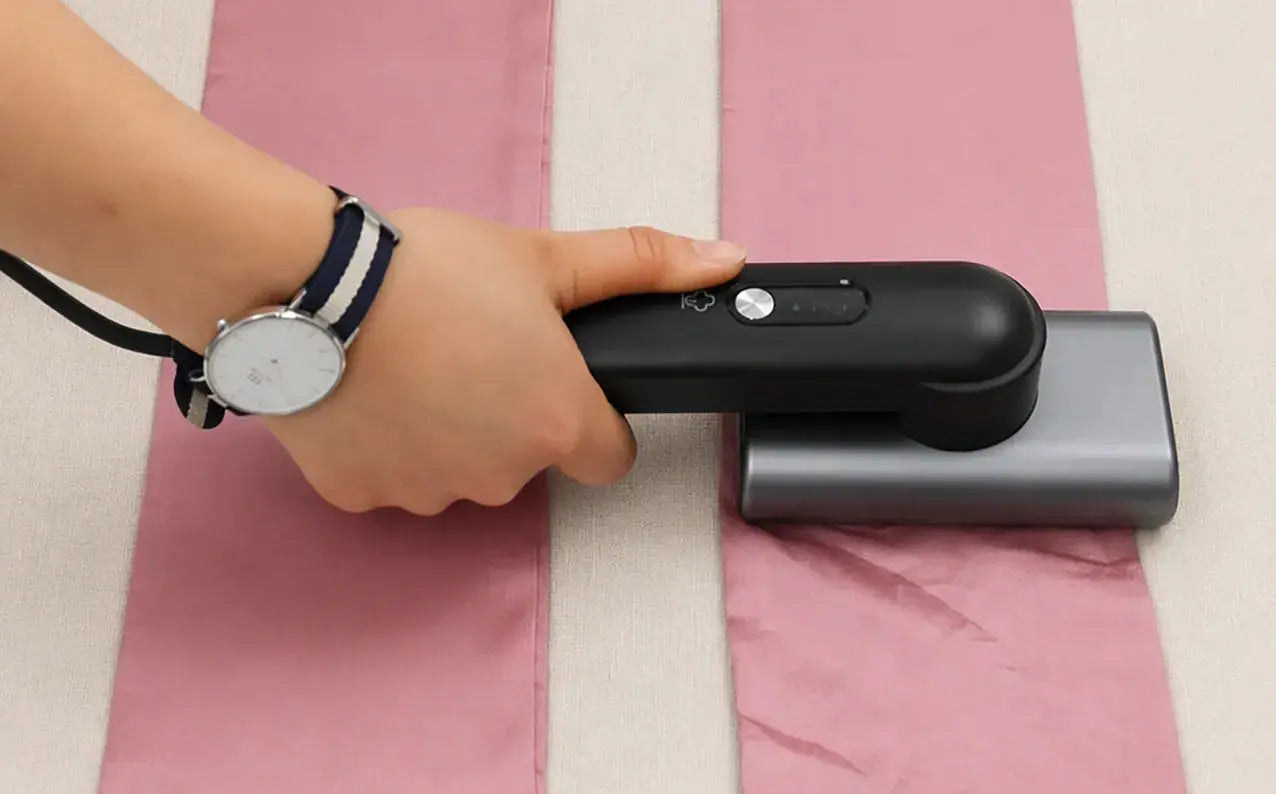
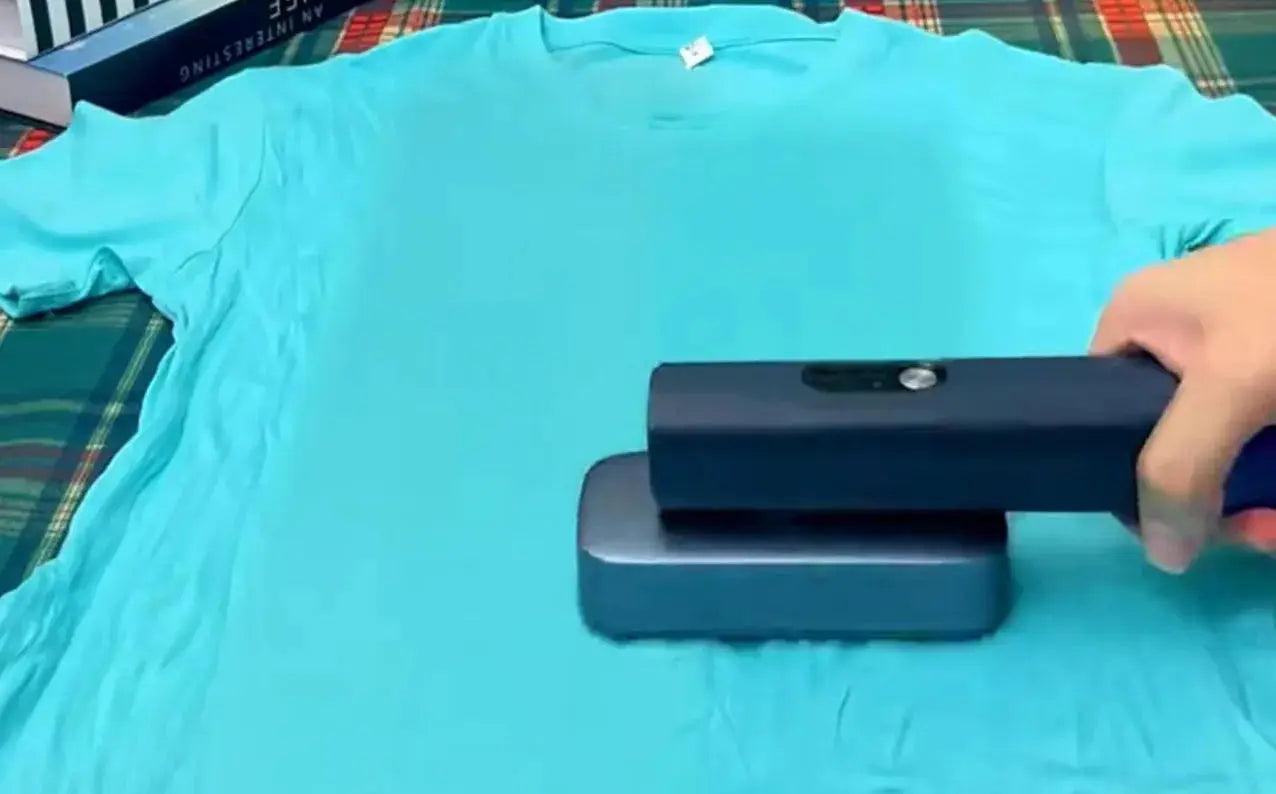
That's why I've started using a garment steamer for cotton clothes. It's become my go-to when I need to get everyday wrinkles out quickly.

Why Cotton Clothes Wrinkle So Easily
Cotton wrinkles easily.
That's just one of those things you learn to live with when you wear a lot of it.
Cotton fibers naturally crease when they get damp, warm, pressed, or folded for too long.
The washing machine tosses them around, the dryer does its thing, and then they sit in the closet with other clothes pressed against them for hours. By the time you pull them out again, those little creases have had plenty of time to settle in.
I notice it most with cotton shirts.
They look fine right after washing.
But by the time I actually want to wear one, the collar has somehow picked up a weird crease, and the sleeves look like they spent the night folding themselves.
The worst is when you pull out a shirt and there's one stupid little wrinkle sitting right across the chest.
You've already gotten dressed.
Your hair is styled.
Your shoes are on.
Then you glance down—
"Oh no."
That's when my garment steamer comes in handy.
What Steam Actually Does to Cotton
When I first used a garment steamer, I thought it was simply about "blowing hot air."
It took me a little while to realize that it's really the heat and moisture working together that help relax the fabric.
Steam helps cotton fibers soften and relax.
Once the fibers start relaxing, the fabric hangs more naturally, and a little gentle tension helps smooth out the wrinkles.
So now, when I steam cotton clothes, I don't spray one spot repeatedly.
That's unnecessary.
More steam isn't always better.
It's more like having a conversation with the garment:
"Can we please not be so wrinkled?"
And then I give it some time.
Usually, it cooperates.

How I Steam a Cotton Shirt
My routine is pretty basic.
First, put the garment on a sturdy hanger and let it hang naturally. Gravity will do some of the work for you.
I usually start at the bottom and work my way up, moving slowly rather than holding the steamer over one spot for too long.
If a particular wrinkle is noticeable, I'll slow down and go over it again.
Sometimes I gently hold the lower part of the garment with my other hand to maintain slight tension in the fabric.
The trick is not to pull too hard.
Not like tug-of-war.
You're smoothing the clothes, not testing your strength.
Sleeves are also straightforward.
Let the sleeves hang naturally, then move slowly along their length.
If there's a visible crease at the cuff, I'll spend a little extra time there.
Necklines require a bit more care.
I usually spread the collar open so the steam reaches the inside, then treat the outside.
This is far more effective than just gliding over the surface.
Don't Soak the Shirt
This was one of my earliest mistakes.
When I first started using a garment steamer, I always thought:
"This spot isn't flat yet—just a little more."
And so I kept spraying.
So I kept going back over the same spot, thinking one more pass would do the trick. Eventually, the wrinkle was mostly gone—but so was any chance of wearing the shirt right away because it was absolutely soaked.
So there I stood, staring at a shirt that was almost smoothed out, wondering another question:
When exactly can I wear it now?
Later, I learned to control the amount of steam and my movement speed.
For minor wrinkles, a quick pass is enough.
For deeper creases, take your time.
After steaming, I usually let the shirt hang for a few minutes so the fabric can cool down and any extra moisture can disappear.
Don't immediately put it back in the closet after steaming.
Otherwise, all your effort would have been in vain.
The Cotton Clothes I Steam Most Often
Most of the things I steam are pretty ordinary: cotton T-shirts, button-downs, cotton dresses, lightweight pants, and cotton blends.
They're usually the pieces I plan to wear casually, only to notice at the last minute that they're more wrinkled than I expected.
Sometimes in the morning, I have just fifteen minutes before leaving. At that point, I don't change into a different outfit. Instead, I hang the clothes up and quickly steam them. Usually, it only takes a few minutes to make them look much more presentable.
If something is seriously wrinkled, though, I don't expect steaming to perform miracles. For example, a cotton shirt that's been squished in a suitcase all night typically needs more time—and sometimes even repeated treatment.
But for everyday, minor wrinkles, steaming is truly convenient.

The Areas I Always Check
When I'm steaming a cotton shirt, there are a few spots I always check before I call it done.
I always check the neckline, cuffs, chest, and back.
Those are the spots where wrinkles tend to stand out the most, especially across the chest.
You might think it's just a slight wrinkle, but once you put the shirt on, that crease can suddenly become much more noticeable, especially under bright light.
The sleeves are the same.
In the past, I'd always focus on getting the front perfect, only to raise my arm and realize the sleeves were still wrinkled.
Now, I make sure to smooth out the sleeves as well.
Only then does the whole garment look natural.
One Thing I Learned the Hard Way
I used to make the mistake of obsessing over the worst wrinkle on the shirt. I'd keep going over the same crease for five seconds, then another five, convinced that one more pass would finally get rid of it.
Eventually, that last one would disappear.
Then I'd step back two paces and realize the whole garment was still wrinkled.
These days, I do it differently.
I start by looking over the whole shirt—the front, the back, both sleeves, and the neckline. Then I go back to the stubborn wrinkles.
This is usually faster, and in the end, the whole shirt looks much more natural.
What I Look for in a Garment Steamer
If you're buying one mainly for cotton clothes, there are a few things I'd pay attention to.
Heating speed.
I don't want to stand around waiting for it to heat up, especially first thing in the morning.
I'm not patient at that time of day.
Before I've even finished my morning coffee, I don't want to deal with anything complicated.
Steam stability.
I also want the steam to stay consistent.
Nothing is more annoying than having to stop every few seconds and wait for it to catch up.
Weight.
This is often underestimated.
A garment might only take a few minutes, but if you're handling three or four at once, a heavy machine will quickly remind your wrist:
"We're not here to work out."
Water tank capacity.
If you're only doing one or two garments per day, you don't need a large tank.
If you're steaming several outfits at once, though, a tiny tank gets annoying fast.
And one thing I care about especially:
I also want a steamer that doesn't drip.
Clothes are already wrinkled enough.
I don't need them to end up with extra little water spots after being smoothed out.
My Simple Routine
At this point, I've pretty much settled into a little routine.
I hang the garment up, turn on the steamer, and give the whole thing a quick pass first.
Then I go back over the obvious wrinkles, paying a little extra attention to the collar and cuffs.
After that, I let it hang for a few minutes before putting it on.
No complicated steps.
No need to turn this into a big household project.
That's probably why I use mine so much.
They didn't suddenly make me fall in love with organizing clothes—quite the opposite.
They simply made the task simple enough that I finally felt like doing it.
Before, when I saw wrinkled clothes, I'd think:
"Let's talk about it tomorrow."
Now, when I see wrinkled clothes, I think:
"Alright, give me two minutes."
It's a small change, but it makes getting dressed in the morning a lot easier.
My Honest Take
If you wear a lot of cotton, I don't think the best thing about a garment steamer is some fancy feature.
For me, it's simply that it makes a small, annoying chore easy enough that I don't keep putting it off.
Cotton clothes still wrinkle.
They don't suddenly become magical.
They'll wrinkle after a wash, get crushed in a suitcase, and somehow pick up new creases just from sitting in the closet too long.
That's just cotton doing its thing.
Once I accepted that, the whole thing got a lot easier.
If something is wrinkled, I just hang it up, turn on the steamer, give it a quick pass, and let it hang for a few minutes before putting it on.
I don't need to turn a normal Tuesday morning into a whole production just because one shirt is wrinkled.
Nowadays, my expectations for clothing have lowered.
I don't need them to look like they've just come off the store shelf.
I just want them to look like normal, clean clothes—clothes someone has actually worn.
Honestly, for a cotton T-shirt, that's more than good enough for me.