
How to Choose a Clothes Steamer for Overseas Travel: A Practical Guide
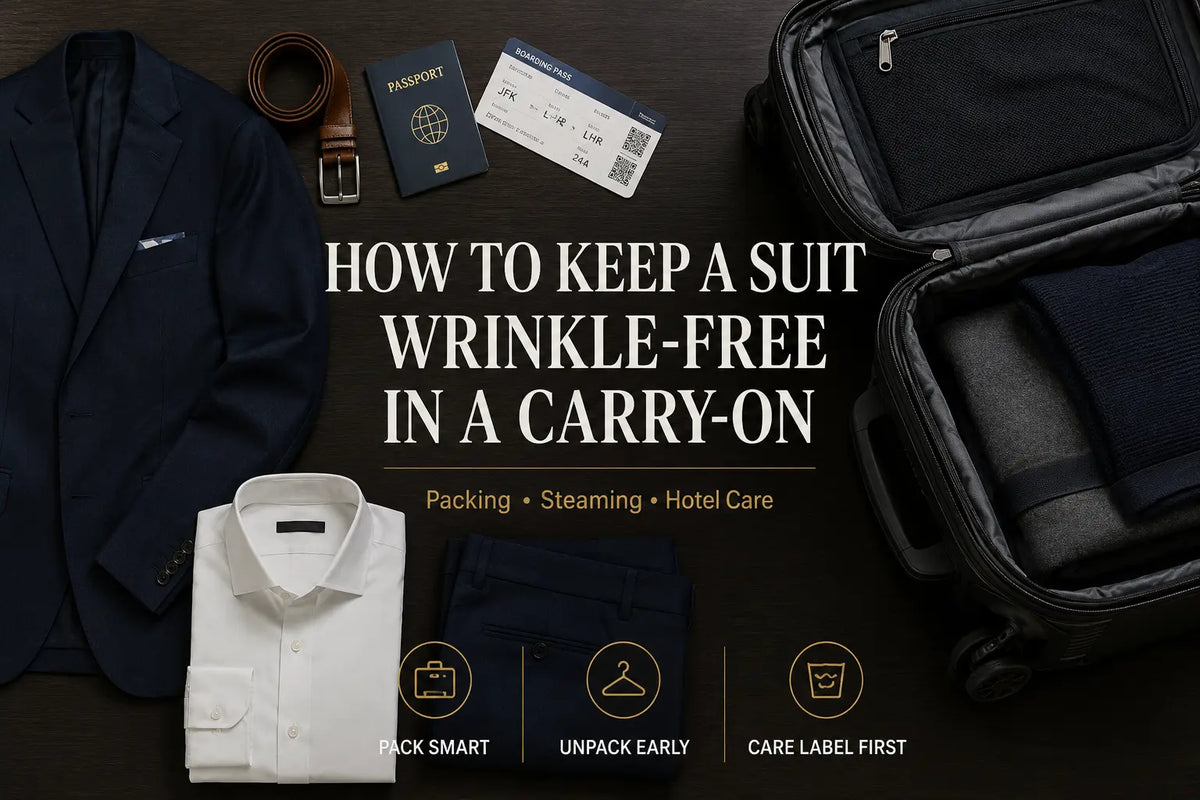
International trips always seemed to come with one small problem I could never completely avoid: wrinkles. My clothes would leave home looking fine, then spend half a day folded inside a suitcase and come out with creases I definitely didn’t put there.
Shirts, dresses, and blazers are usually the worst. Fold them into a suitcase for a few hours and the creases can be surprisingly stubborn. It’s even more annoying when I have a meeting or dinner planned for the next day.
That was when I started looking more seriously at travel steamers. I also realized pretty quickly that more steam isn’t always better.
The things I actually check are pretty simple: voltage, weight, size, heat-up time, tank capacity, and whether it’s comfortable to use.

Check the Voltage Before You Travel
This is the first thing I look at—and, in my opinion, the most important one.
Voltage standards vary from country to country. The U.S., for example, typically uses 120V, while many countries in Europe, Asia, and Australia use 220–240V.
One thing that confused me at first was the difference between a plug adapter and a voltage converter.
A plug adapter only changes the shape of the plug. It doesn’t change the voltage. So if your steamer is 120V-only, an adapter won’t make it safe to use with a 220–240V outlet.
When I’m taking a steamer to different countries, I look for a travel model that clearly supports dual voltage or 100–240V.
That’s the first thing I check before anything else.
Finding out at the hotel that your steamer won’t work with the local voltage is the kind of mistake you really don’t want to make.
Why Does Size Matter So Much for a Travel Steamer?
I’m also pretty careful about how much space a travel steamer takes up. There’s only so much room in a suitcase, especially once I add shoes, toiletries, chargers, and everything else I need for the trip.
I look for something compact enough to pack easily, but not so small that it becomes inconvenient to use.
A super-compact steamer may have a very small water tank. And if the tank is too small, you may find yourself constantly stopping to refill it. That’s usually not a big deal if you’re steaming one outfit, but it can get annoying when you need to freshen up several shirts, a dress, or a blazer.
I’d rather have a compact steamer that’s easy to pack and still comfortable to use than one that’s simply as small as possible.

Heat-Up Time Is Actually One of My Top Priorities
Heat-up time matters to me for one simple reason: I usually notice wrinkles when I’m already getting ready to leave.
I’ve had plenty of mornings where I’m almost ready to leave the hotel and then notice a few obvious wrinkles on my shirt or jacket. At that point, I want my steamer to heat up quickly—not make me stand there watching it slowly warm up.
So when I compare models, heat-up time is one of the first specifications I look at.
But the numbers don’t tell you everything.
In real-world use, I also care about whether the steam flow is consistent, whether the steamer feels comfortable in my hand, and whether it becomes tiring to hold during longer sessions.
At the end of the day, I just want it to do the job without making the process more complicated.
Water Tank Capacity Is Easy to Overlook
Travel steamers tend to have smaller tanks, which makes sense when portability is the priority. The trade-off is that you may need to refill the tank more often.
For a short trip, that doesn’t bother me much. If I’m steaming several shirts and a jacket for a business trip, though, I’d rather have enough capacity to finish without stopping halfway through.
For short trips, I care more about keeping things compact. For business travel, I’m more concerned with how long I can steam before I need to refill the tank.

A Few Tips for Using a Travel Steamer
One thing I learned pretty quickly was not to rush the steaming process.
I used to spend too much time going back over the same stubborn crease. It worked better when I slowed down and let the steam move across the fabric.
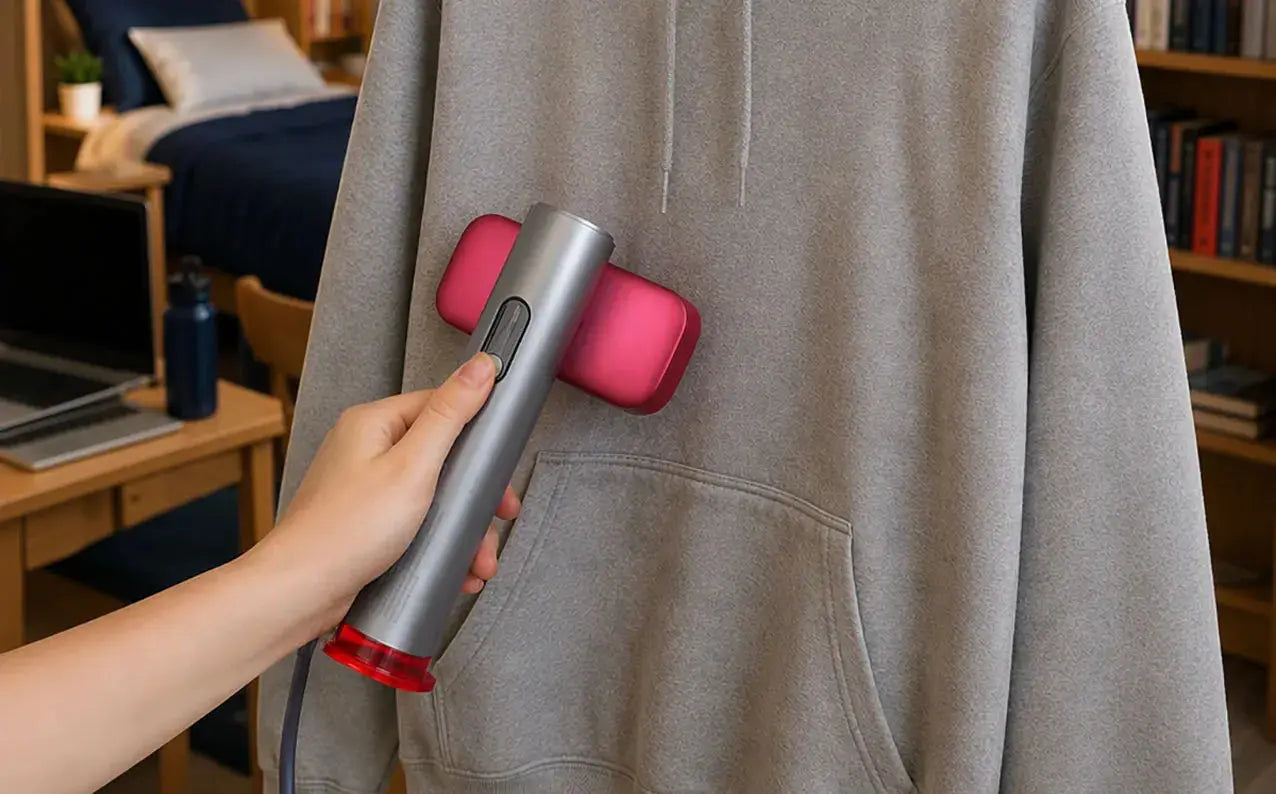
I usually hang the garment first, start around the collar and shoulders, and then slowly work my way down.
For deeper creases, I gently pull the fabric taut while slowly moving the steamer over the area.
I’m more careful with delicate fabrics, especially silk and wool.
Silk, wool, polyester, and cotton all have different heat tolerances, so I always check the garment’s care label before steaming. If I’m not sure how a fabric will react, I test it on an inside seam or another hidden area first.
And there’s one more thing worth remembering:
Don’t hold steam on the exact same spot for too long.
The whole point is to get the wrinkles out quickly and move on.
The 5 Things I Check Before Packing My Steamer
Before packing a steamer, I check five things:
1.What voltage does my destination use?
2.Is my steamer compatible with that voltage?
3.Do I need a plug adapter?
4.Will it fit easily in my suitcase?
5.Is the water tank large enough for the way I plan to use it?
If all five check out, I’m comfortable packing it for the trip.
It only takes a minute, and it’s much easier to check at home than to discover a problem after you arrive.

Which Clothes Steamer for Overseas Travel Is Right for You?
For frequent international travel, I’d start with voltage compatibility and then look at size, weight, and heat-up time. For short trips, I’d keep things simple and choose something compact. For business travel, I’d be more willing to carry a slightly larger model if it means I can steam several pieces without constantly refilling the tank.
The Nesugar Pro Series includes the G2, G3, G4, G5, G6, G9, and G10. The right one depends mainly on how often you travel, what voltage you’ll be using, and how much clothing you typically need to steam.
These days, I keep my travel gear pretty simple. I don’t need a steamer with every possible feature. I just want one that fits in my luggage, works with the local voltage, heats up quickly, and is easy to use when I’m getting ready at the hotel.
If it can do those things reliably, that’s usually enough for me.