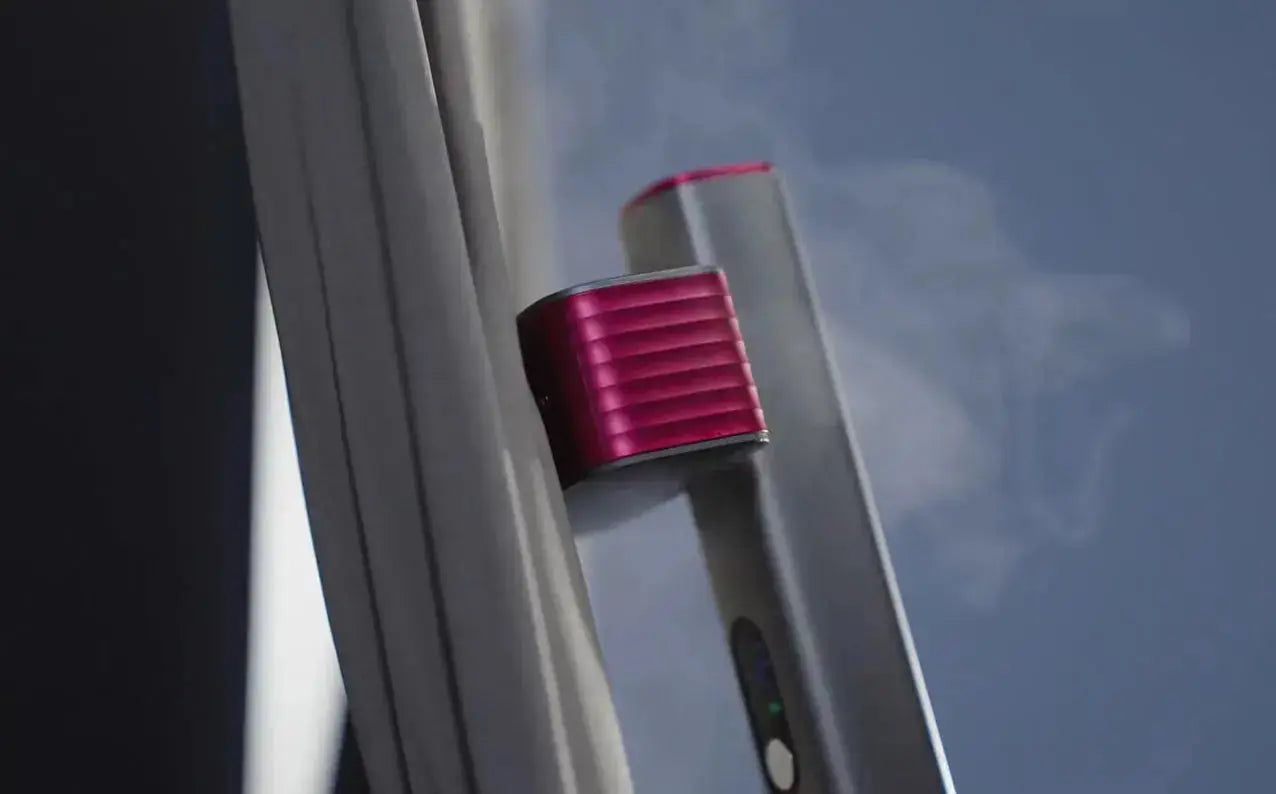

I'm in the business of providing medical consultations, and that's why I take "little things" like the clothing steamer so seriously.
If you ask me what the most important skill in my profession is, my answer has always been "judgment", rather than "professional knowledge".
I have been engaged in medical consultation for many years. My job is not just about interpreting reports or coordinating resources. Instead, I work between patients, their families, doctors and institutions, helping them make relatively more prudent choices in complex and uncertain situations.
This job has trained me in one thing:
Being highly sensitive to details and extremely tired of unnecessary waste.
This habit gradually seeped into my daily life as well.

The daily routine of a medical consultant is more "fragmented" than one might think.
Many people think that my job is regular and rational.
In fact, it is more like a state of frequent switching:
- The morning was spent on video communication across time zones.
- I might be reviewing cases and documents at noon.
- Be ready to handle any unexpected problems at any time in the afternoon.
- There may also be temporary inquiries from family members in the evening.
Under such a fast pace, I am extremely sensitive to "preparation costs".
Anything that requires additional steps, additional emotions, or additional space will be consciously excluded by me.
Including traditional irons.
I gave up the iron not because it was bad, but because it no longer suited me.
The problem with an iron is not its performance.
Rather, it requires you to set aside specific time and attention for it.
For me, the real trouble is not that the clothes have wrinkles, but rather —
To deal with the wrinkles, I have to interrupt the already very tight work schedule.
The first time I used a clothing steamer was after a series of consecutive business trips.
That morning, I only had a few minutes to get ready, and the clothing steamer was almost a "life-saving" device.
It doesn't require me to iron out the wrinkles, nor does it demand absolute precision. It merely aims to restore the clothes to a "professional, clean and trustworthy" state.
This is exactly what I expect of myself in my work.

Why does the clothing steamer fit particularly well for a career in medical consultation?
After working in this field for a long time, you may find that you are subconsciously pursuing three things:
Reduce the probability of errors
Steam treatment is more gentle and controllable than direct contact at high temperatures.
This is consistent with the logic of my advice to the client:
The preferred option is to choose the "option with a lower cost of failure".
Save cognitive resources
I have to make numerous judgments every day, and I don't want to waste my energy on "how to iron without leaving any marks".
The usage method of the clothing steamer hardly requires any thinking.
Adapt to an uncertain lifestyle rhythm
Whether it's a temporary video conference or a sudden need for a face-to-face meeting,
steam ironing is faster and more flexible.
The way I choose and evaluate the clothing steamer is very "professional".
I won't look at the promotion materials first, nor will I rush to compare the parameters.
I am more concerned about several practical issues:
- Before leaving in the morning, will it make me even more anxious?
- Is it a burden when you are on a business trip?
- Does it remain stable when used with clothes of different materials?
My attitude towards any tool is very clear:
As long as it helps me reduce distraction by just one time, it is considered qualified.

I noticed Nesugar because of its restrained way of expression.
The first time I came across Nesugar's content was while reading an article on nesugarlife.com.
What attracted me was not the product photos, but a rare tone —
One that didn't rush to make a conclusion or create anxiety.
In the medical consulting industry, we are very sensitive to this kind of "moderate commitment" expression.
Truly reliable information often doesn't require being overly explicit.
At that moment, I realized that this way of understanding life tools is actually in line with my logical thinking in making professional judgments.
The Real Presence of the clothing steamer in My Life
It doesn't "take the spotlight", but it appears at just the right moment:
- Quickly tidy up the top before the video conference
- Restoring the clothing to its original state in luggage during business trips
- Daily maintenance of long-stored clothes
- Simple tidying of the curtains and bedding at home
I never strive for "perfect ironing",
but rather aim for a certain state: it looks reliable and I myself don't feel nervous.

From my career to my life, I have always been doing the same thing.
Whether it's helping clients plan their medical journey,
or choosing a clothing steamer,
what I always focus on is:
- Is it going to be usable for a long time?
- Has the burden really been reduced?
- Does it respect the user's energy?
When a tool can naturally integrate into life rather than dominate it, then it truly has meaning.
Final Note
I won't tell anyone "You definitely need a clothing steamer".
But if your job is like mine, where you are highly sensitive to professionalism, time and stability,
you will probably come to the same conclusion.
Some changes are not aimed at improving one's life,
but merely to prevent life from draining away one's already limited judgment.
——
A medical consultant who incorporates professional habits into daily decision-making.