
Portable Clothes Steamer: As a barber, the one thing I regret most is discovering it too late.
Every barber has that one black shirt they just can't bring themselves to throw away.
I have a black work shirt in my wardrobe that has been with me for almost four years.
The collar has faded slightly, and there's still a faint stain of dye on the cuffs that won't wash out. Every few months my wife reminds me: "It's time to buy a new one."
I readily agreed, but the next day I still wore it to the store.
Not because of saving money, nor because of sentimentality.
It's just that I'm used to wearing it.
Anyone who's worked as a barber knows that finding a comfortable work uniform is harder than getting a new pair of shoes.
The only thing that bothers me is that it wrinkles very easily.
It wrinkles when taken from the back seat, gets wrinkled after sitting in the locker for half a day, and even if hung neatly the night before, it mysteriously develops several new creases by the next morning.
Sometimes I wonder if this piece of clothing sneaks out to "work out" at night.

Many people don't realize just how busy a barber can be in a single day.
Many people think we just stand around cutting hair and chatting with clients.
It does sound quite relaxing.
Actually, the number of steps I take in a day is about the same as what my friend walks in a day walking around Disneyland.
I'm usually at the store by 7:30 a.m.
Turn on the lights, put on some music, and start the coffee machine.
Then check the scissors, clippers, spray bottle, and blow dryer, and neatly arrange the tools that were disinfected yesterday.
The first client usually arrives at eight.
The entire day afterward felt like fast-forwarding.
Some want a business haircut, others are trying a low fade, some are getting ready for a wedding, and still others just want to trim their hair a bit shorter.
When I'm busy, I even forget to drink water.
It wasn't until I locked the door at night that I realized the coffee was still the same cup from the morning.
It's long since gone cold.
Clients actually notice everything, they just don't say it.
When I first started out, I always thought that technology was everything.
Later I realized that first impressions often occur earlier than technical aspects.
A client had just walked through the door and hadn't even sat down yet, but was already observing.
Is the workstation clean?
Are the tools arranged neatly?
Is the towel clean?
Also, do I look energetic today?
They rarely compliment: "Your shirt is so neat."
But if the collar is wrinkled and the sleeves are messy, they will surely keep a silent score against you.
This isn't being picky.
People tend to instinctively trust those who pay attention to details.

I really don't like ironing clothes.
To be honest, I'm not incapable of ironing.
I'm just being lazy.
Find the ironing board.
Plug in.
Wait for preheating.
After ironing, you still need to put it away.
By the end of the whole process, I could already cut half of the customer's hair.
Once it was even more outrageous.
I was ironing clothes while wondering if the appointments for the next day were already fully booked.
The phone suddenly rang.
After hanging up the phone, I returned to find my shirt's chest area already glowing from the heat.
My wife laughed at me for a whole week.
She said, "While others use scissors to cut clothes, you use an iron to mend them."
I couldn't possibly argue with that.
A business trip changed my habits.
A few years ago, I attended a hair show.
This activity is especially important to us.
New tools, new technologies, new trends—many inspirations were learned from there.
At the hotel, I took out the shirt I planned to wear the next day from my suitcase.
No need to guess.
Crinkled like it had just been pulled out from under the laundry basket.
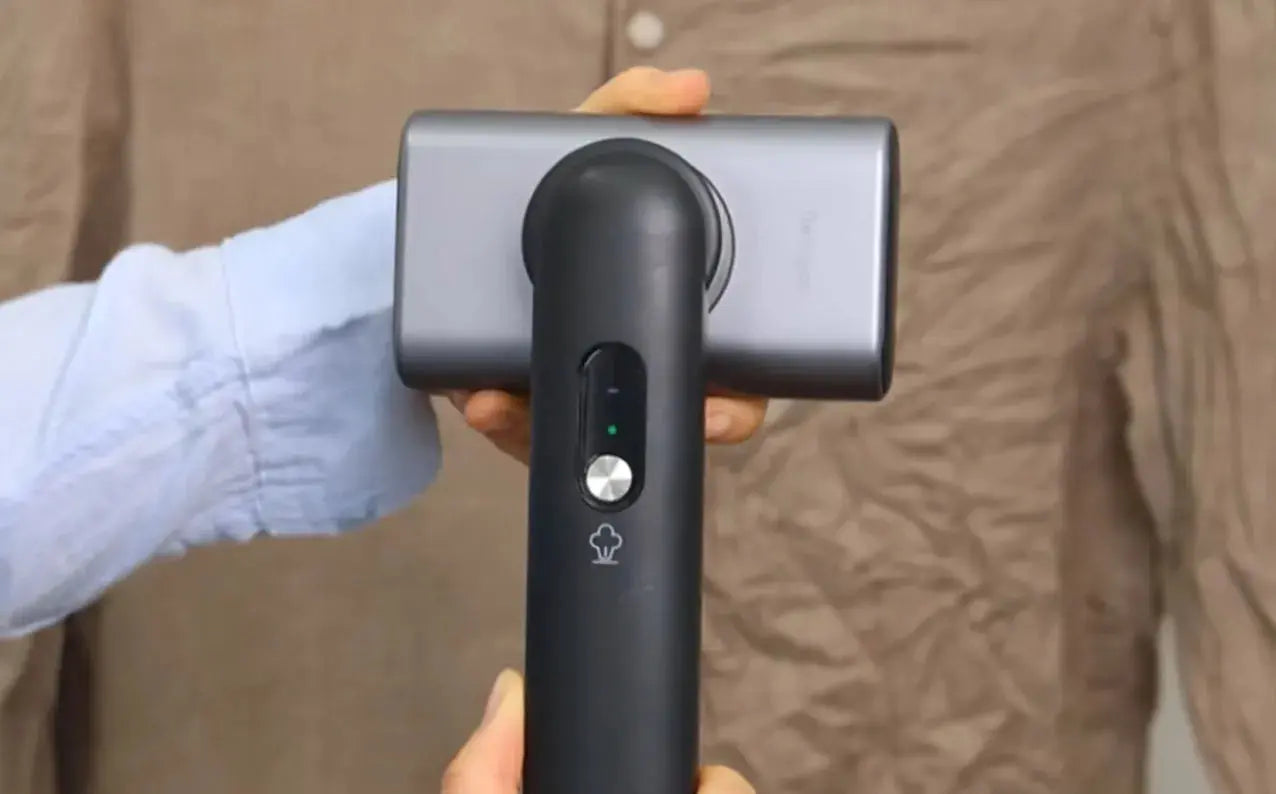
A fellow traveler handed me a portable travel steamer.
He said, "Give it a try—don't bother with that old-fashioned iron from the hotel."
A few minutes later, I began to carefully examine this little thing.
It didn't make me feel that "technology is changing the world."
It just made me feel: "Finally, someone has invented a tool that won't waste my time."

Later, I started paying attention to portable steamers for clothes.
After returning home, I've tried several portable garment steamers.
Some were recommended by peers, others I bought to try myself, including Nesugar.
Over time, I found myself becoming less and less concerned about those complicated parameters.
I only care about a few very practical issues.
Can it go a bit faster when I'm in a hurry in the morning?
Will continuous steaming two shirts keep producing steam steadily?
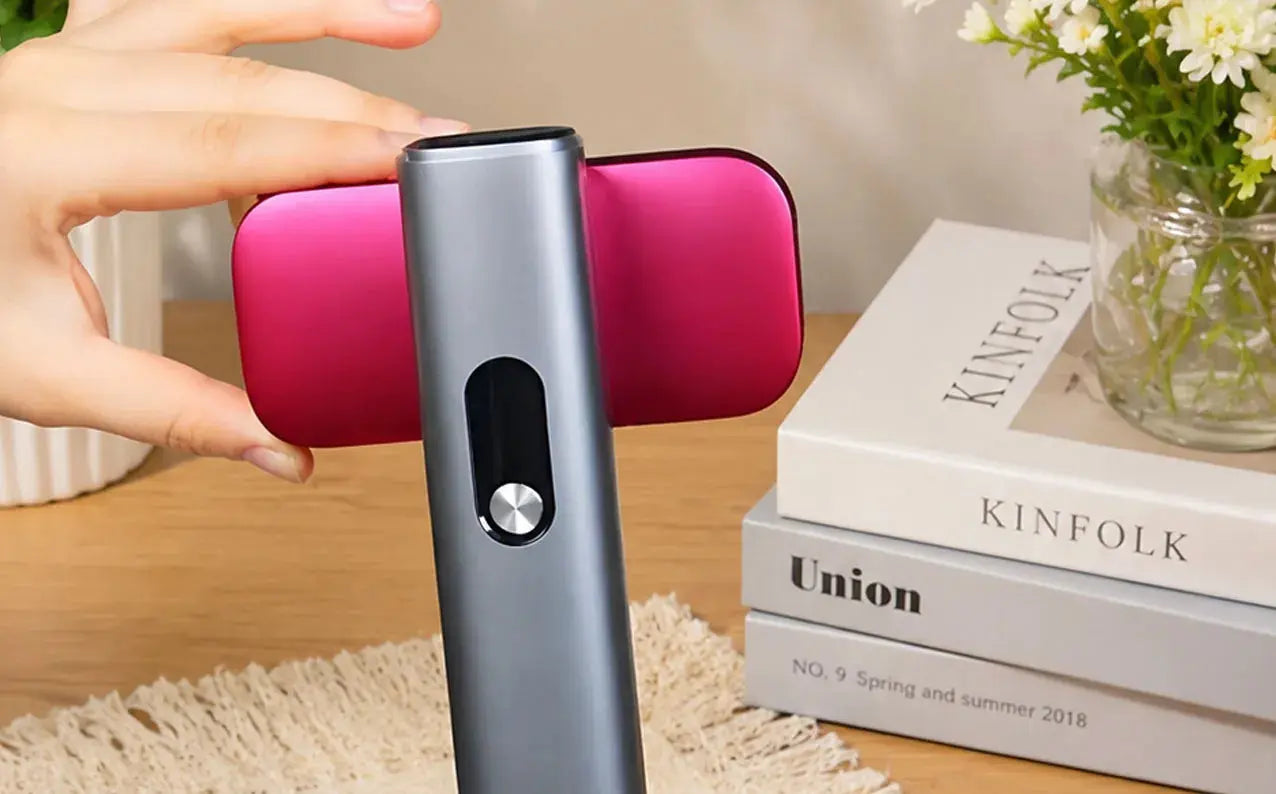
Will it take up too much space in the suitcase?
Holding it in your hand, does it feel like lifting a brick?
These issues are more important than the numbers on the promotional page.
Because those who actually use it every day care about experience, not specifications.
The more business trips I take, the more I understand what "portable" really means.
Over the past few years, I've traveled to many places to attend courses and industry events.
Every time I pack, I make an effort to control the weight.
Scissors, clippers, demonstration tools, and spare shoes have already taken up quite a bit of space.
So I really like things that are genuinely lightweight.
Not to save a few hundred grams.
But when you're rushing to catch a flight, you'll appreciate every piece of gear that doesn't add extra weight.
Whether it's a hotel room, Airbnb, apartment, or even a friend's place, as long as there's an outlet, I can quickly organize the clothes I'll wear the next day.
No need to search for an ironing board or worry about leaving shiny marks on your clothes.
Traveling is tiring enough; life doesn't need to add more complications.
Haircutting and clothing styling actually have many similarities.
A regular customer has been with me for almost ten years.
Once he said, "I like coming to your place because every time I feel you're ready for the day."
He wasn't talking about hairstyle.
Not clothes either.
but a state.
Later, I thought about it carefully for a long time.
Whether it's cutting hair or ironing a shirt, it's essentially the same thing.
They won't change who you are.
Yet it will make others feel that you take today seriously.
This kind of seriousness is hard to explain in just one sentence.
But the client can feel it.
In the end, what truly remains are those small, unremarkable habits.
Now, before leaving home each day, I still check whether I have my keys in my pocket, if I've brought my phone, and if my wallet is properly placed.
Then, look down at the shirt you're wearing today.
If there are several obvious creases, just smooth them out as you go.
If not, I'll just lock the door and leave.
No complicated rituals.
Not for taking photos to post on social media either.
It's simply because I increasingly believe that professionalism has never been about being particularly flashy.
It lies hidden in the scissors sharpened each day, in the workbench meticulously cleaned, and in every minute of patient listening during conversations with clients.
Of course, it's also hidden in a clean, comfortable, and neatly pressed work shirt.
These small things, when viewed individually, are unremarkable.
But when they accumulate little by little, clients will remember a feeling.
That is—entrusting myself to this person, I feel completely at ease.
And to me, this is more valuable than any praise.