
Why do I always bring a portable steamer for clothes when I go to work at sea now?
At five in the morning, I stand in front of the tiny mirror in the crew cabin, biting a cold bacon sandwich and staring at the white shirt that has been crushed like a "bag of chips", feeling worried.
If you haven't worked on a cruise ship, it might be hard to understand:
a wrinkled uniform can really ruin your whole day.
At sea, the air is humid, space is limited, and shifts change quickly. Clothes hardly have a chance to "recover naturally". Not to mention that we cruise ship workers often have to stuff our uniforms into suitcases, cram them into lockers, and even carry our luggage back and forth between different ports. Many times, clothes aren't worn out — they're just wrinkled from being crushed.
So over the years, I have gradually developed a habit:
no matter if I fly to the Caribbean, Alaska or the Mediterranean, I always bring a portable steamer for clothes with me.
It's not because I'm fussy.
It's because it can really save the day.

Why I Gave Up on Traditional Irons
I also tried small travel irons before.
The result was usually:
- Too heavy
- Prone to leakage
- Heats up slowly.
- The hotel sockets are incompatible.
- I accidentally ironed a shine into my shirt.
What's more troublesome is that in the crew cabins of cruise ships, there is hardly any space for you to "unfold an ironing board".
Later, when I first came into contact with a steam clothes steamer, my biggest feeling could only be summed up in one sentence:
"Finally, someone has invented something suitable for real life."
Especially now, many portable clothes steamers have achieved:
- The volume is close to that of a thermos cup.
- Quick steam within 30 seconds
- It can be ironed flat or hung for ironing.
- Not picky about voltage
- It can be put in a backpack without any problem.
For people who are on long business trips, travel frequently or live in staff dormitories, it is really much more practical than traditional irons.
Why do clothes get wrinkled so easily on a cruise ship?
Many people think only suits need ironing.
In fact, the clothes that are most likely to "break down" on a cruise ship are:
- Uniform shirt
- Polo
- Dress
- Linen pants
- costume for performance
- Evening dress
The reason is quite simple.
1.The cabin space is too small.
The wardrobes in the crew cabins are often as small as the luggage racks on planes.
You have to "force" many clothes into them.
As a result, when you take them out the next day:
They look as if they have just been wrung out of a washing machine.
2.The air at sea is very humid.
Even if clothes are dried, they tend to retain moisture.
The dampness can make fibers softer and more prone to sagging, and wrinkles will be more noticeable than in a land environment.
This is especially true for cotton and linen.
3.Frequent luggage movement
Cruise staff often change routes.
I have to do it at least ten or more times a year:
- airplane
- hotel
- Staff dormitory
- Temporary port accommodation
When clothes are compressed for a long time,
at this moment, the significance of a portable steamer for clothes is not just about "ironing".
It is more like:
"Helping you quickly regain a sense of dignity in a chaotic life."

It was the first time I realized that appearance really can affect one's working state.
Once at a formal dinner, I was late and didn't have time to iron the wrinkles out of my uniform.
As a result, throughout the entire service period, I kept tugging at my coat's hem.
That kind of discomfort can directly impact your state of mind.
Later, a senior manager told me, "Guests may not remember your name, but they will remember if you look professional."
I've held onto that sentence for a long time.
Since then, I've started to take the "condition of my clothes" seriously.
Not for vanity, but because when you dress neatly, you really do feel more energetic.
Especially in high-intensity service industries.
Nowadays, portable steamers for clothes are completely different from what they used to be.
The biggest problem with the old-fashioned steam irons was that they were large, heavy and prone to leaking.
But in the past two years, I have clearly noticed that travel steam irons have evolved very rapidly.
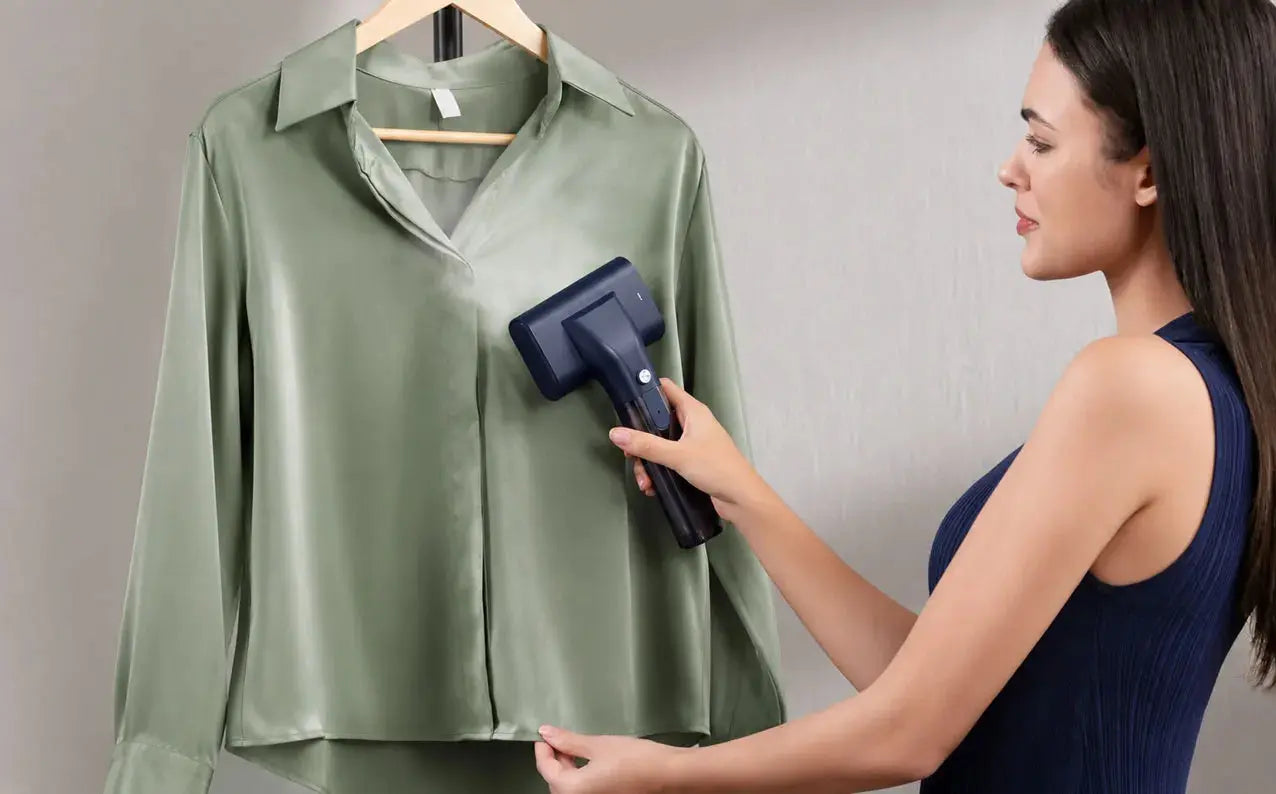
Especially those lightweight designs like Nesugar that I came across later, have truly taken "travel scenarios" into consideration.
For example:
- Can be folded
- The water tank doesn't take up much space.
- No ironing board is needed.
- It can quickly handle local wrinkles.
- More friendly to silk and knits
The most important thing is that many models no longer look like "small hot water kettles".
The previous steamers would cause wrist pain if held for a long time.
Now, some designs are so light that you can chat while ironing.
This is very important for cruise staff who stand for more than ten hours a day.
The one I use most frequently is not for ironing suits but for "emergency clothes care".
The real life situation is:
You can't possibly have time to iron your clothes carefully every day.
So the scenario where I most often use the portable steamer for clothes is actually:
"Quick fix five minutes before leaving the house"
For example:
- The collar of the shirt is rolled up.
- The crease on the hem of the skirt is too obvious.
- The crease of the trousers is crooked.
- The hem of the T-shirt is wrinkled into waves.
- The dinner dress taken out of the suitcase was all creased.
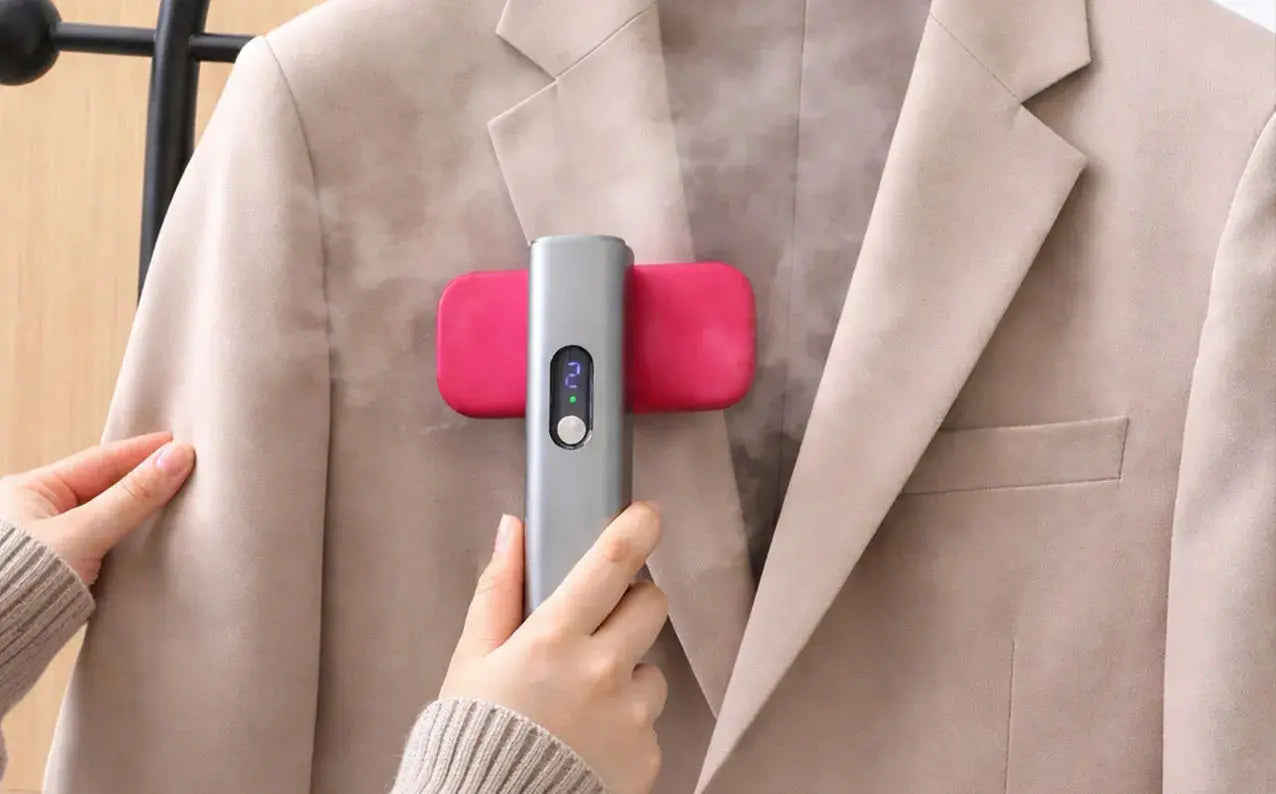
At such times, a steam clothes steamer is really much faster than an iron.
Many clothes don't even need to be taken off the hanger.
You can deal with them directly while they are hanging.
Especially on a cruise ship, efficiency is more important than formality.

Why are more and more people starting to bring steamers when they travel?
I later found out that it's not just cruise ship staff.
Nowadays, many people will bring a portable steamer for clothes when they travel.
- flight attendants
- Business travelers
- Wedding photographer
- Performance staff
- RV travel enthusiasts
- People who stay in hotels for a long time
Because everyone has found that:
The irons in hotels are really a matter of luck.
Some are simply not functional.
Some are so dirty that you dare not use them on white clothes.
Some are even not available at all.
The greatest advantage of a travel steamer is its "reliability".
You don't have to guess.
You don't have to take a chance.
When I was buying a portable steamer, these five things were the most important to me.
Over the years, I've made quite a few mistakes.
If you're also planning to purchase one, I suggest you pay close attention to the following points.
1.Weight
is really important.
Especially for frequent flyers.
If it exceeds 1 kilogram, you won't want to carry it around for long.
2.Steam Emission Speed
When you're in a rush in the morning, you don't want to wait for two minutes.
Nowadays, good portable clothes steamers can be ready to work in about 30 seconds.
The difference in efficiency is very obvious.
3.Is it prone to leakage?
This is the biggest problem with the old model.
Especially when it is placed in the trunk.
I once had an experience where:
An entire bag of clothes was ruined by the leakage from the water tank.
Since then, I have been particularly sensitive to the leak-proof design.
4.Can it handle different fabrics?
The most troublesome thing on a cruise ship is:
The uniform materials are very complex.
Some are cotton, some are polyester, and some are even stretchy blends.
A good steamer should be compatible with:
- cotton
- Flax
- silk
- wool
- Polyester fiber
Rather than just being suitable for "T-shirts".
5.Suitability for Travel Storage
This is often overlooked.
Many products may be labeled as "portable", but they actually take up a lot of space.
A truly travel-friendly design should be:
- The handle is foldable.
- The water tank has a compact structure.
- The wires are easy to store.
- Doesn't take up shoe space
Yes.
A long-term traveler even has to calculate the space for shoes.
Some clothes actually shouldn't be ironed with a traditional iron.
This is something I only found out later.
Such as:
- silk
- Chiffon
- Knitting
- Wool blend
If ironed at high temperatures, it is very easy to get damaged.
Especially in many hotels, the temperature control of the irons is not stable.
While steam treatment is much gentler.
I have a shirt for performances. Before, it was directly ironed with an iron and left shiny marks. Later, after I switched to a steamer, there have been no problems.
The impact of "looking neat" is greater than one might imagine.
After working in the cruise industry for a long time, I increasingly understand why many senior employees always keep their uniforms very tidy.
Because it's not just about appearance. It changes:
- Your mental state
- The first impression of the guests
- Confidence at Work
- Even others' judgment of your professionalism
Sometimes, what really makes a person look exhausted is not working overtime, but the crumpled clothes.
Is a portable steamer for clothes worth buying?
If you only attend one wedding a year.
It might not be necessary.
But if you:
- Travel frequently
- travel for work long-term
- Live in a small apartment
- Closet space is limited.
- I don't like ironing boards.
- Professional appearance should be maintained.
Then it will truly become a high-frequency tool.
Especially for people like us who work at sea for long periods.
It is not a small toy for "improving the quality of life".
But a practical daily item that genuinely boosts efficiency.
Nowadays, I rarely get anxious about "wrinkled clothes".
In the past, seeing a wrinkled outfit before leaving home would instantly make me agitated.
Nowadays, it's basically:
Plug it in.
Steam starts coming out.
Two minutes later, it's done.
Then I can continue to rush to the next ship boarding, the next performance, or the next shift.
Ultimately, what a portable steamer for clothes truly resolves is not just the wrinkles.
Rather, it's:
In the midst of a chaotic life, it helps you quickly restore a sense of order.
And this matter is far more important than many people imagine.