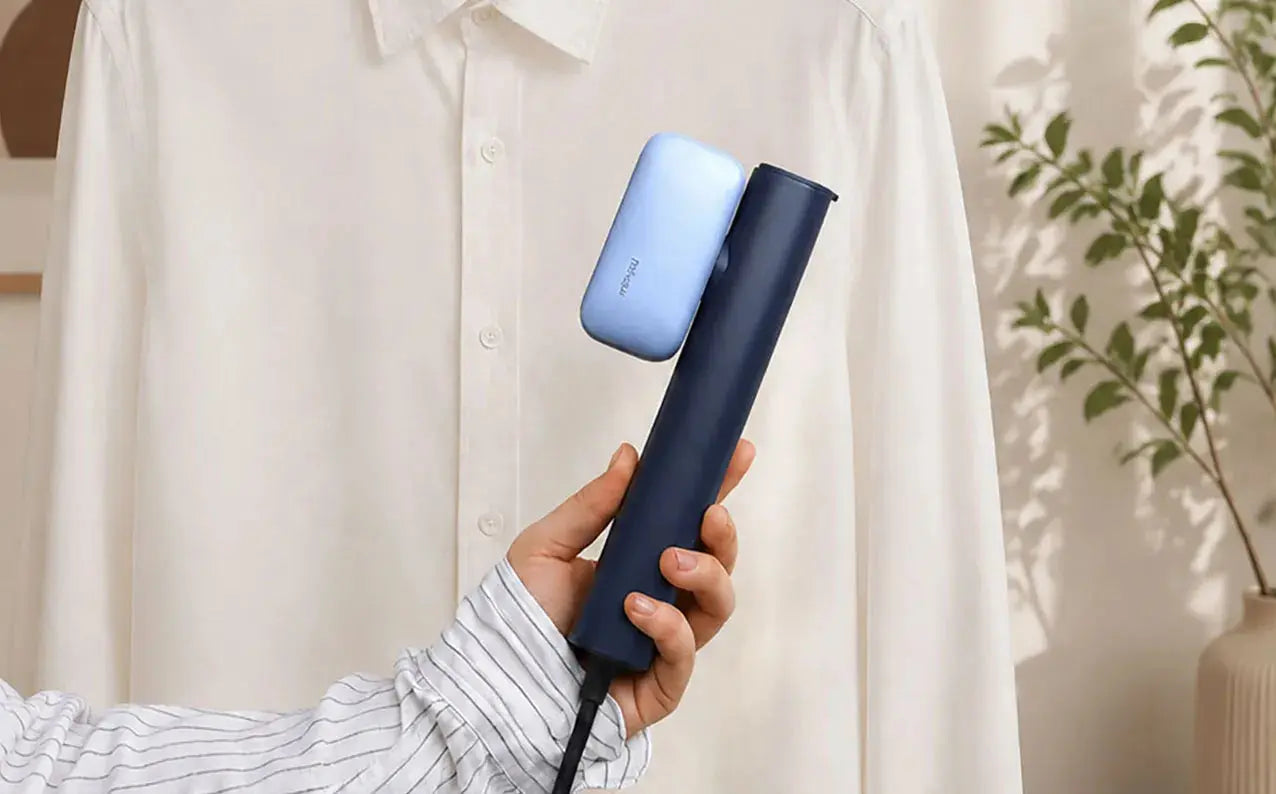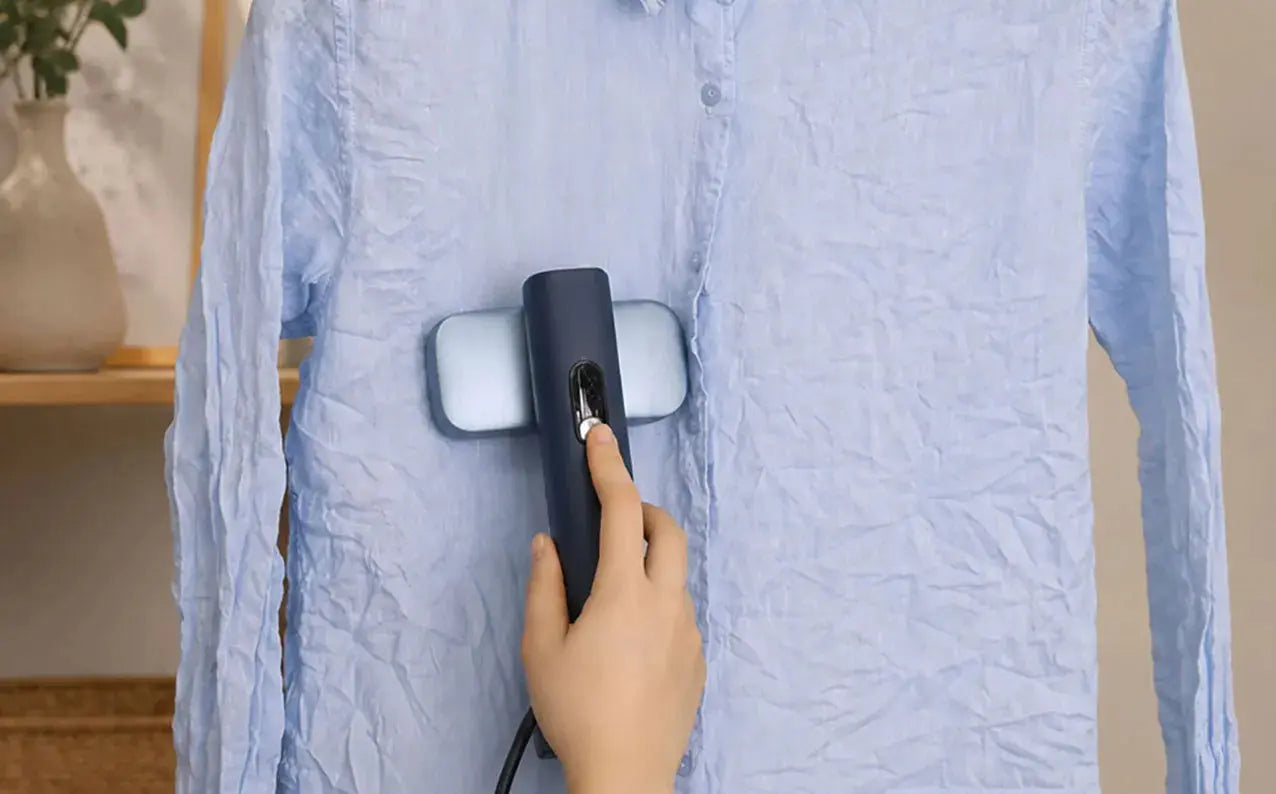

Portable Steamer for Fashion Shoots: Before every shoot, what I fear most isn't the lighting—it's the wrinkles on the clothes.
When I first worked with a photography team on a fashion shoot, I thought the most important things were the camera, lens, and lighting.
Later it turned out that what often made photographers pause and frown was merely an inconspicuous crease on the shirt.
The lens is honest.
Folds that are nearly invisible to the naked eye become strikingly obvious in high-resolution photos. Especially with materials like silk, linen, chiffon, and suits, any creases from shipping can make the entire garment look significantly cheaper.
Since then, I've always carried a portable steamer in my bag for every shoot.
Not because it can make clothes new, but because it helps the entire team save a lot of time.

Why are portable garment steamers almost indispensable on set on set on set in fashion photography?
Anyone who has actually been on a photo shoot knows that the set is never as calm and composed as imagined.
The model needs to change clothes.
The photographer is adjusting the lighting.
The makeup artist reapplies makeup.
The stylist organizes the accessories.
And staff usually have only a few minutes to get the next outfit ready.
If every outfit is ironed one by one on the ironing board, the entire shooting pace will quickly be disrupted.
This is also why an increasing number of clothing brands, e-commerce teams, and freelance photographers prefer using portable garment steamers.
Its greatest advantage is not temperature, but efficiency.
Clothes can be steamed while hanging, eliminating the need to find a table or repeatedly flatten them—many minor wrinkles can be removed in just seconds.
This is truly crucial when shooting dozens of outfits in a single day.
The biggest mistake I ever made was using the hotel's iron.
Once, while photographing a new clothing collection in another city.
The hotel room only has a traditional iron.
I thought, "It's not a big deal," but just as I ironed the second silk shirt, I left a slight shine mark.
Although the final editing can fix it, the photographer still spotted it at a glance.
After that day, I hardly relied on the hotel's ironing facilities anymore.
Not all irons are well maintained.
Some base plates may retain scale residue.
Some temperature controls are not accurate.
Some areas that haven't been cleaned for a long time are prone to stains.
In comparison, Steam is much gentler on fabric is gentler and reduces the risks associated with direct ironing.

What fashion photography truly needs is not necessarily stronger steam, but rather the right amount.
Many people, when choosing a garment steamer for the first time, focus on the amount of steam.
Later I realized that this wasn't actually the most important thing.
On set, what matters more are the following details.
1. Leak-proof
This is the point I care about most.
In a photography studio, you often see white shirts, wedding gowns, and high-end fabrics.
If the machine suddenly sprays water, everything will become troublesome.
Dry everything again.
Reset everything.
Reshoot.
A small mistake could delay the entire process.
Now I always prefer machines with leak-proof designs, so even when using them at different angles, I don't have to constantly worry about water dripping.
2. Light enough
We were constantly moving between locations.
From the studio to the fitting room.
From the backdrop to the makeup area.
Sometimes I walk tens of thousands of steps in a day.
If the steamer is too heavy, lifting it continuously for more than ten minutes will really make your wrist ache.
Keeping the weight down can make a completely different user experience.
3. Heats up quickly enough
The most commonly heard phrase on a photo shoot is:
The model is ready.
This means everyone needs to get into work mode.
If the steamer still needs to wait two or three minutes, the entire team has to stand around waiting.
Devices that can start working within seconds better match the real shooting pace.
4. Voltage-independent for added peace of mind
Nowadays, an increasing number of brands are shooting lookbooks, advertisements, or attending exhibitions overseas.
When shooting across countries, voltage varies from region to region.
If the device itself supports multiple voltages, preparation becomes much easier and eliminates the hassle of temporarily borrowing equipment.
Which clothes are best suited for use with a portable steamer?
Based on my years of experience, I usually prioritize the following fabrics.
- Silk shirt
- Linen suit
- Cotton dress
- Polyester gown
- Chiffon top
- Blazer
- Wedding dress
- Scarves, shawls, and other accessories
Especially silk and chiffon.
Often, they don't need to be completely wrinkle-free—just restoring a natural drape can greatly enhance the texture in the shot.

E-commerce photography needs it more than fashion editorials.
Many people think steam irons are only used in brand advertisements.
Actually, it's not.
I know quite a few friends who run Shopify independent stores and Etsy shops, and they almost take product photos every day.
A piece of clothing may require:
- White background photos
- Model image
- Lifestyle photos
- Detail image
- Social media content
Each time the shooting angle changes, the clothing develops a slight new crease.
If you keep pressing with the iron, it's not only inefficient but also likely to create new creases repeatedly.
Steaming is actually more suitable for this high-frequency shooting.
Later, I started paying attention to the toolkits of professional stylists.
As I took more and more photos, I noticed something interesting.
Photographers' equipment is getting more and more expensive.
The tools of a stylist are becoming increasingly simple.
Scissors.
Lint roller.
Clamp.
Sewing box.
Double-sided tape.
There is also a portable steamer.
I've also noticed many teams bring travel steamers like Nesugar—not because the brand itself has some mysterious allure, but simply because it's lightweight and takes up minimal space in a suitcase, making it convenient for those who frequently move around for shooting. True professionals rarely get caught up in specifications; what matters most to them is whether their tools are stable, reliable, and won't let them down at critical moments.
I am increasingly coming to agree with this point.

My photography habits have changed as a result.
Previously, I would organize all my clothes the day before.
Later it turned out to be meaningless.
In transit.
Try on.
When changing clothes.
The clothes will still develop wrinkles again.
Now, I'll quickly touch up the model's outfit again a couple of minutes before she steps in front of the camera.
This way, the clothes will maintain their best condition and won't develop new wrinkles from being hung for long periods.
This small habit, though seemingly insignificant, has made my post-processing much easier later on.
The last point, which many beginners tend to overlook
A great fashion photograph is more than just beautiful lighting and sophisticated composition.
Often, it's the small details—those that almost go unnoticed—that truly determine quality.
Is one leg of the pants flat?
Is there a crease on the shirt collar?
Does the cuff hang naturally?
These details may be hard for viewers to articulate, yet they silently shape their first impression of the entire photograph.
So now, whenever someone asks me what the most useful small tool to bring to a shoot is, I almost always answer:
Not a new lens, nor a more expensive camera.
but a reliable portable steamer for fashion shoots.
A smooth shoot never relies on fixing all issues in post-production, but rather on getting the details right before pressing the shutter.