As someone who has been dealing with paints and canvases all year round, I have always believed that - clothes are actually also a kind of "canvas".
The only difference is that if this canvas is wrinkled, no matter how good the color or how cool the design is, it will look as if it just "escaped" from the washing machine.
Over the years, I have attended art exhibitions, stayed in budget hotels, and even wiped the wrinkles on my shirt with my hands in the airport restroom (don't laugh, artists also need to maintain their dignity). It wasn't until later that I truly studied the "steamer for clothes" tool seriously, and only then did my quality of life officially improve.
In this article today, I have no intention of selling anything or presenting any profound theories.
I merely want to start from the real daily life of a painter and talk about:
- Why are more and more people starting to use steam ironing machines?
- What kind of steamer is truly useful?
- And the pitfalls I have encountered over the years and the experiences I have accumulated.
If you also dislike the ironing board, or if you often go on business trips, travel, or attend events, this content should be very helpful to you.

For the first time, I realized: The iron is actually quite "outdated"
It was three years ago, at a small art exhibition in Los Angeles.
I arrived one day early and opened my suitcase. To my surprise, the favorite linen shirt I had - it was wrinkled as if it had been chewed by a dog.
The hotel has ironing boards, but you know...
- Some of the base plates are dirty.
- Some of the temperature controls are not working properly.
- Some do not produce any steam at all.
I stood there, looking at that iron which "seemed to be from the 1900s", and suddenly realized something:
The traditional method of ironing clothes is actually not suitable for modern life.
Especially when you:
- Often go out
- Time is tight
- Clothing materials are diverse (silk, wool, cotton, linen)
- Don't want to move out a huge ironing board
Later, I began to try using a clothes steamer. To be honest, at first I was also skeptical.
But after using it a few times, I never looked back again.
Why are more and more people starting to use steamers for clothes?
If you take a look at the backstage of current fashion shows, the photography studios, or the scenes of fashion parades, you will notice an interesting phenomenon:
Almost nobody uses the traditional iron anymore.
The ones they used were all steam ironing machines.
The reason is actually quite simple.
Faster
Many modern handheld steam devices can be preheated in about 15 seconds, which means that by the time you are brushing your teeth in the morning, it is already ready.
While traditional irons usually require a longer time to heat up.
For someone who is often late (like me), this difference is quite significant.
Safer
I once burned three pieces of clothing with an iron:
- A woolen suit
- A silk shirt
- A black T-shirt that I like best
Later, it was discovered that the essence of the steam ironing machine is to relax the fibers through high-temperature steam, rather than directly pressing and ironing.
This means:
- Less prone to burning
- More suitable for delicate fabrics
- More suitable for beginners
No need for an ironing board
This is the aspect that I like the most.
All you need to do is:
Hang up the clothes
Turn on the steam
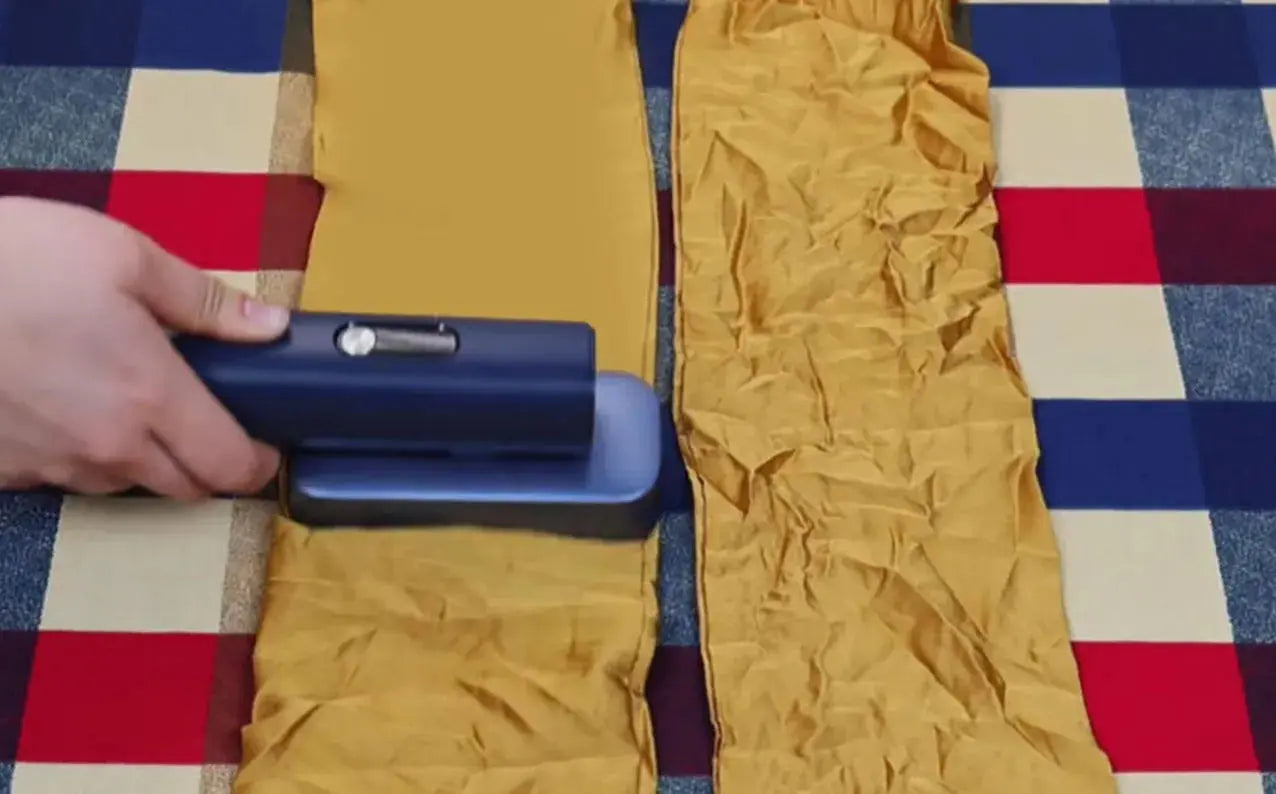
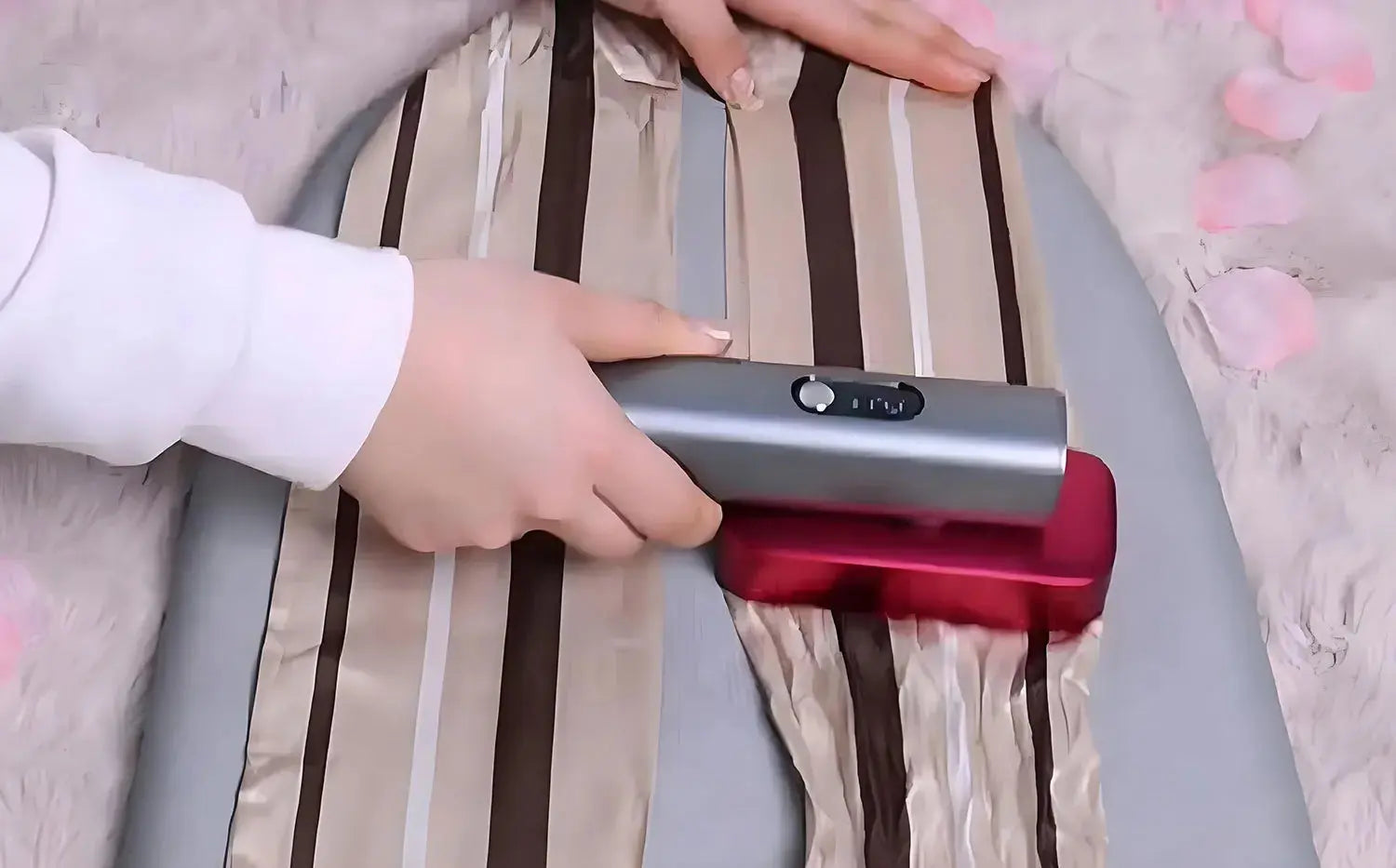
Slide down from top to bottom
It's done.
It's like giving the clothes a "steam sauna" treatment.

My requirements for the steamer are actually quite simple.
Over the years, I have used many different models.
Some were too heavy, some leaked water, and some made a sound like a tractor.
Later, I came up with a "painter's version" standard checklist:
The 5 essential core conditions that must be met
1.Quick start
2.Light weight
3.Stable steam
4.No leakage
5.Portable for travel use
It sounds simple, but in reality, there are not many devices that can achieve all these five points simultaneously.
A model that left a rather deep impression on me
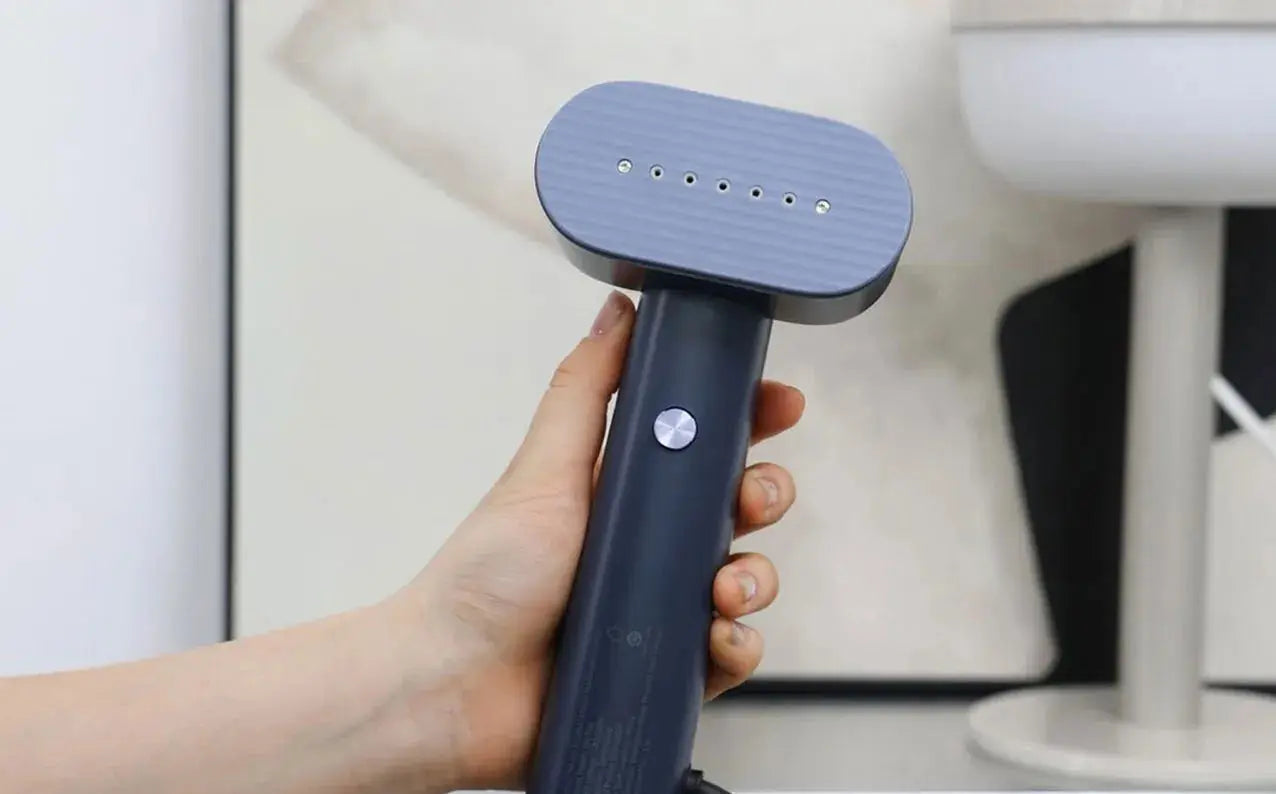
Later, a friend recommended that I give it a try. Nesugar G5 Pro Smart Handheld Steamer
My initial reaction at that moment was:
"Another gadget that looks nice but might not be practical."
As it turned out, I was wrong.
What exactly makes these modern steamers so powerful?
Not the appearance.
Not the brand.
But the design logic.
For instance, I later noticed that some of the newer handheld steamers have several key technical features:
1)Global Voltage Compatibility
If you travel frequently, this is extremely important.
Many traditional devices can only be used at a single voltage.
But now some steamers support a voltage range of 100–240V, and can basically be used in most countries.
For someone like me:
- Often fly to New York
- Occasionally visit Paris
- Occasionally attend Asian exhibitions
For those people, this really saves a lot of trouble.
2)Truly lightweight
I once bought a so-called "portable" steamer.
Result:
It looks as if it has been reformed into the shape of a dumbbell.
Later, I came to realize:
A weight of about 1 pound would be considered truly portable.
Nowadays, most designs are within this range, for example:
- About 1 pound
- Can be operated with one hand
- Can be placed in carry-on luggage
This is what we call "travel-friendly".
3)Dual Steam Modes
This point is often overlooked by many people, but it is actually very crucial.
Different fabrics require different levels of steam:
Gentle mode:
Suitable
- silk
- wool
- chiffon
Power mode:
Suitable
- cotton
- linen
- jackets
This design can protect the fibers while enhancing efficiency.

The actual application scenario of a painter
Let me give you a very specific example.
Last autumn, I attended an art exhibition in Chicago.
At 7:40 in the morning
I just finished taking a bath.
I discovered:
That shirt which was prepared to be worn at the opening ceremony -
was all wrinkled.
And the activity starts at 8:15.
If it was in the past:
I will panic.
But that day I only did three things:
1.Hang up the clothes
2.Add water
3.Turn on the steamer
Approximately two minutes later:
The clothes became very smooth and flat.
I even had time to have a cup of coffee.
At that moment, I suddenly realized:
A good tool actually helps you save emotional costs.
Many people don't know: A steamer is not just used for ironing clothes.
This is a hidden feature that I only discovered later.
It can handle these things:
Curtains
Sofa
Bedspread
Fabric background fabric
Suit
Formal dress
Even so:
The curtains in the art studio.
Because the high-temperature steam can penetrate the fibers and help restore the smoothness.

How to determine whether a steamer is reliable?
I have developed a very practical set of judgment methods.
You only need to look at 6 indicators.
1)Preheating time
Ideal range:
10 to 20 seconds
If it exceeds 1 minute:
The technology involved is quite outdated.
2)Steam Continuity
The key point is not "how strong", but:
Is it stable?
If the steam fluctuates in intensity:
The experience will be very bad.
3) Is there any leakage?
This is a common problem for many low-priced models.
Good design usually does:
Employ a multi-layer heating structure
Maintain stable steam
Reduce water droplet generation
This is also a relatively advanced design concept nowadays.
4) Weight
Suggested range:
0.8 - 1.2 pounds
Beyond this limit:
You will soon feel your hands getting numb.
5)Water tank capacity
Ideal range:
80–100 ml
This capacity is usually capable of handling:
Two to three pieces of clothing
Just right.
6)Safety Protection
Make sure to have:
Automatic power-off
Especially for you:
Easily forgetting to turn off electrical appliances
With children
Or with pets
My biggest misunderstanding about steamers
Previously, I always thought:
"This is an optional small household appliance."
But now I would rather regard it as:
Life efficiency tool.
Just like:
- Coffee machine
- Electric toothbrush
- iPad
It's not mandatory, but once you get into the habit, you won't be able to change it.
If you fall into any of these categories, I strongly recommend that you seriously consider steamer.
People who frequently travel on business.
You will save:
Time
Luggage space
Emotion
Those who don't like ironing boards
I am.
I hate:
Expand
Adjustment
Hide
The entire process.
People with a wide variety of clothing materials
For example:
Artist
Designer
Photographer
Salesperson
Host
People with a fast-paced lifestyle
If you:
Always in a hurry
In a state of chaos in the morning
The steamer will be very useful.
A little tip: How to achieve better steam effects?
This is my own summary of the experience.
Technique 1: Hang the clothes straight.
Don't put it on the bed.
Steam requires the assistance of gravity.
Technique 2: From Top to Bottom
Don't slide around carelessly.
Start from the neckline.
Technique 3: Maintain a Little Distance
Approximately; About
1–2 cm
Too close leads to water droplets
Too far results in poor effect
Technique 4: Deal with the thickest part first
For example:
Cuff
Collar
Hem
This way, the overall effect will be more uniform.
A fact that many people overlook
Keeping one's clothes tidy can actually affect many things.
For example:
Interview
Appointment
Meeting
Speech
Exhibition
Even so:
Your confidence.
I have witnessed too many talented individuals being wrongly judged as "unprofessional" simply because their clothes looked untidy.
This is very realistic.
But it can also be changed.
Finally, I would like to say something very personal.
As a painter, I have always believed:
Details determine one's temperament.
Not a brand name.
Not the price.
Not the style.
Rather than:
Is it clean?
Is it tidy?
Is it treated seriously?
A plain shirt won't make you a smarter person.
But it will make others:
I would rather listen to you talk.
And this is often the beginning of an opportunity.
If you are reading this, I hope you can take away at least three things:
The steamer for clothes is not a gimmick.
When choosing, focus on the technical details rather than the appearance.
Good tools really can change the pace of life.
Just like a handy brush.