
Travel Clothes Steamer for Vacation: Is It Worth Packing?
I used to think there was an easy fix for wrinkled clothes when traveling: fold everything neatly, pack it carefully, and hope for the best.
Turns out, suitcases have absolutely no respect for neat folding.
Linen shirts, dress pants, dresses, and other wrinkle-prone clothes can come out of your suitcase after a long flight looking like they just lost a fight with your luggage.
That’s what got me thinking about a travel clothes steamer for vacation.
A compact clothes steamer can’t make your flight arrive on time, and it certainly can’t stop your suitcase from getting tossed around. But it can solve one very specific travel problem: getting your clothes looking fresh and ready to wear again—without much hassle.
And today’s travel steamers aren’t just tiny versions of traditional irons. Many compact models weigh less than 2 pounds, and some heat up in just a few seconds.
The real question isn’t whether a travel steamer can be useful.
It’s whether it’s worth giving up precious suitcase space for one.

Why Bring a Clothes Steamer on Vacation?
It’s easy to underestimate how much wrinkled clothes can affect your trip.
Maybe you’ve booked a nice dinner, bought tickets to a show, or planned to take some vacation photos. Then you open your suitcase and discover that the only dress you brought has a few giant creases running straight across it.
Sure, you could use the hotel iron.
Personally, though, I don’t love having to track down an ironing board every time I travel. It takes up space, requires more setup, and makes me a little nervous when I’m dealing with delicate fabrics like silk or satin.
That’s where a steamer comes in.
Hot steam helps relax the fibers, while hanging the garment vertically lets gravity do some of the work. You can freshen up a shirt, dress, or jacket without turning your hotel room into an ironing station.
That’s why I think a travel steamer is especially handy for last-minute wrinkle removal.
The goal isn’t to make your clothes look perfectly pressed.
It’s simply to make them look fresh, presentable, and ready to wear.
What to Look for in a Travel Clothes Steamer
Not every compact steamer is equally convenient for travel. If you’re shopping for one, these are the features I’d pay the most attention to.
1. Weight Matters
There’s a cruel rule when it comes to travel gear: every item you pack because “I might need this” brings you one step closer to an overweight suitcase.
So I’m not automatically impressed by a bigger water tank or a higher power rating.
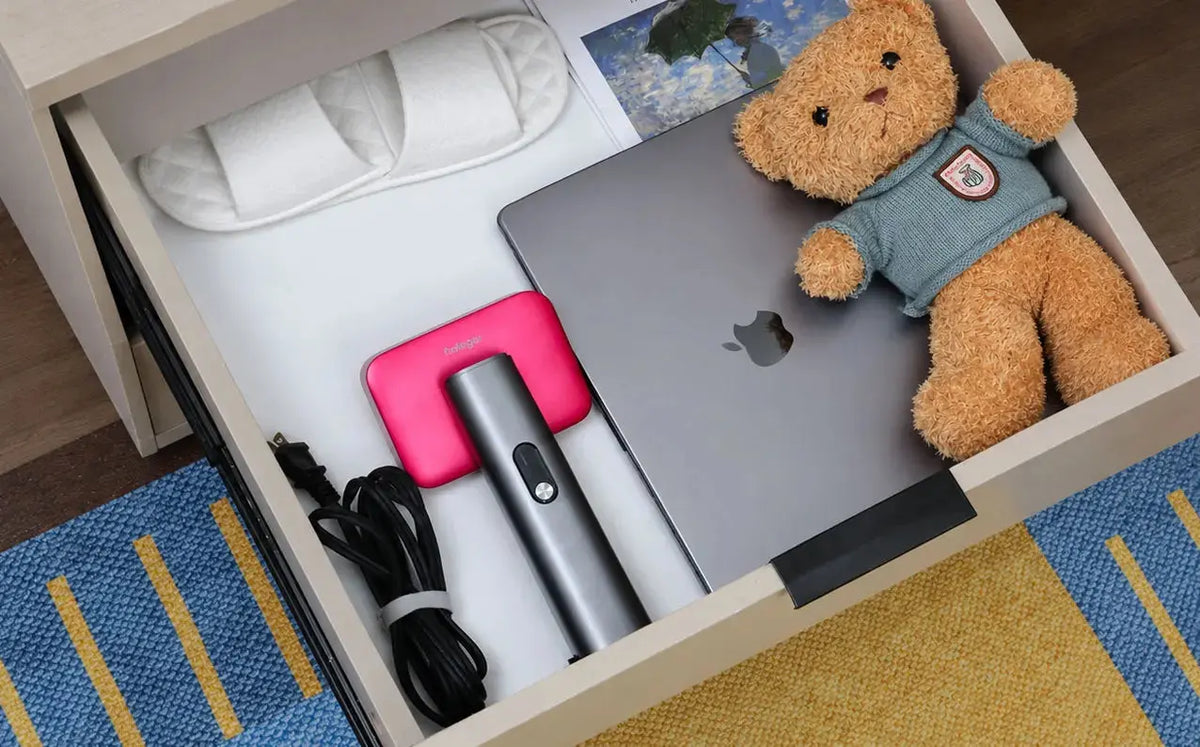
When I’m packing for a vacation, I usually go with a lightweight handheld steamer. Some travel-friendly models weigh around 0.8 pounds, which is light enough to toss into a carry-on without giving it much thought.
If I’m only going to steam a few pieces of clothing during a trip, I’d rather save a few hundred grams than carry around a bulky appliance I’ll barely use.
With travel gear, lighter usually wins—as long as the steamer still gets the job done.
2. Heat-Up Time Matters
I love travel gear that works when I need it.
If a steamer takes forever to heat up, I can already hear myself saying, “I’ll do it later.”
And then later never happens.
Some compact travel steamers can heat up in around 15 seconds, which is especially handy when you’re getting ready for dinner or trying to get out the door in the morning.
For travel, I’d rather have a steamer that heats up quickly and works consistently than one with a long list of impressive-sounding specs.
Fast and convenient beats overbuilt.
3. Check the Voltage Before International Travel
If you’re traveling internationally, this is one feature you really shouldn’t overlook.
A plug adapter only solves the problem of connecting your plug to a different outlet. It does not necessarily convert the voltage.
That matters because electrical standards vary from country to country. A steamer designed only for U.S. voltage may not be suitable for use abroad.
If you travel internationally often, I’d look for a model designed for 100–240V operation.
Still, check the manufacturer’s actual specifications before packing it. Don’t assume that a product labeled “travel” or “international” automatically supports worldwide voltage.
My rule is simple:
For domestic trips, prioritize weight and performance. For international trips, put voltage compatibility near the top of the list.
Travel Steamer vs. Hotel Iron: Which One Is Better?
This is probably the biggest question if you’re wondering whether a travel steamer is worth packing.
Most hotels have an iron and ironing board, so why bring another appliance?
For me, it comes down to convenience.
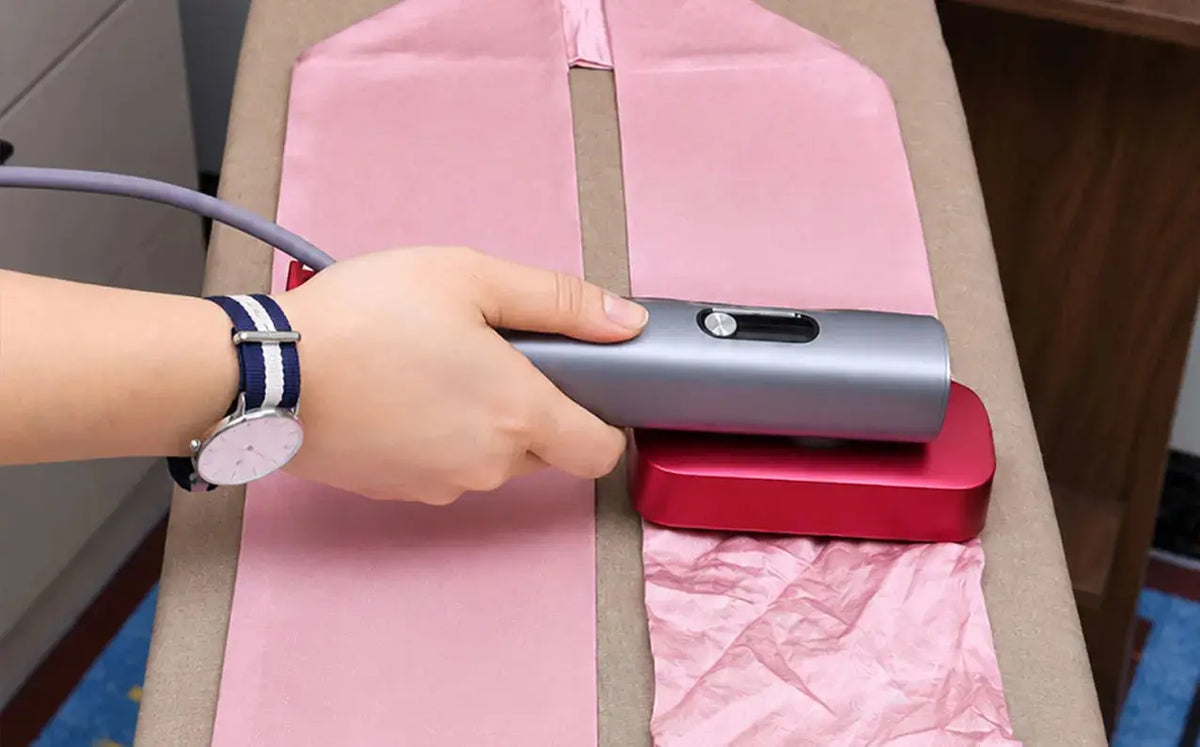
A hotel iron is better when you need crisp lines or have a really stubborn wrinkle to deal with. But a small travel steamer is easier to grab when you just want to freshen up a shirt or dress before heading out.
You don’t have to set up an ironing board.
You don’t have to press delicate fabric against a hot metal plate.
And you can usually steam a garment while it’s already hanging on a hanger.
If you’d rather spend five minutes getting ready than turn wrinkle removal into a whole project, that convenience can make a travel steamer worth packing.
4. Water Tank Capacity
A larger water tank means fewer refills.
Sounds great—until you have to carry the extra weight.
If you’re usually steaming one or two shirts or a dress each day, you probably don’t need a huge tank. A smaller reservoir keeps the steamer lighter and easier to pack.
Some compact travel models hold only a few ounces of water. Others offer around 200 mL, which can be more convenient if you’re steaming several garments at once.
There’s no single “best” tank size.
It really depends on how much clothing you expect to steam.
More capacity is useful only if you actually need it.
5. Size and Storage
Weight isn’t the only thing that matters.
A steamer can be lightweight and still be annoying to pack if it has an awkward shape or takes up too much room.
I prefer models that fit easily into a carry-on, suitcase, or packing cube without forcing me to rearrange everything else.
Think about where you’ll actually store it while traveling.
If you have to move half your suitcase around every time you want to use it, chances are you won’t use it very often.
The best travel gear is the stuff you can pack without having to rethink your entire bag.

How to Use a Travel Steamer for Better Results
Here’s a simple trick that makes a bigger difference than you might expect:
Hang the garment up and gently pull the fabric taut.
Don’t lay your clothes flat on the bed and randomly wave the steamer over them.
When the garment is hanging vertically, its own weight helps pull the fabric downward. Gently stretching the material while steaming can also help release wrinkles faster.
My usual routine is:
Hang it up → start at the top → work your way down → spend a little extra time on stubborn wrinkles → finish with the collar, sleeves, and hem.
For deep creases, don’t just hold the steamer in one spot and blast it with steam.
Instead, gently pull the fabric taut and move the steamer slowly across the wrinkle.
It usually works better—and saves you from standing there forever waiting for one stubborn crease to disappear.
One more thing: different fabrics respond differently to steam.
Linen, cotton, polyester, silk, and wool can all behave differently, so check the garment’s care label before steaming anything delicate.
Which Clothes Work Best With a Travel Steamer?
These are the pieces I’d reach for a steamer to freshen up:
- Linen shirts
- Cotton shirts
- Dresses
- Suit jackets
- Lightweight sweaters and knits
- Polyester travel clothes
For delicate fabrics such as silk, wool, or satin, always check the care label first and follow the recommended instructions.
And there’s one important limitation to remember:
A clothes steamer isn’t a magic wand.
For extremely deep creases or sharp trouser creases that have been crushed into place, a traditional iron can sometimes do a better job.
An iron gives you heat, pressure, and a flat surface, which can be exactly what you need for stubborn wrinkles.
So I don’t really think of it as steamer vs. iron.
They’re simply better at different things.
For travel, the steamer’s biggest advantage is convenience.
How Much Water Capacity Do You Actually Need?
This is one of those specifications that can sound more important than it really is.
If you’re only steaming one or two outfits, you probably don’t need a large reservoir.
For a solo traveler, a compact tank may be perfectly adequate.
For couples, families, or business travelers who need to freshen up several outfits at once, a larger tank can be more convenient.
The trade-off is simple:
More water means fewer refills, but usually more weight and bulk.
For vacation travel, I’d rather have a compact tank that’s easy to refill than carry a larger reservoir I rarely use to its full capacity.

Do You Need a Dual-Voltage Travel Steamer?
If you only travel within the U.S., probably not.
If you regularly travel to Europe, Japan, or other countries with different electrical standards, it becomes much more important.
A dual-voltage or worldwide-voltage steamer can save you from worrying about whether the appliance itself is compatible with the local power supply.
Just remember that dual voltage and a plug adapter are two different things.
You may still need a plug adapter for the outlet shape even if the steamer supports the local voltage.
Always check the exact voltage range listed by the manufacturer before using the appliance abroad.
Who Should Bring a Travel Clothes Steamer?
If any of these sound like you, I think a travel steamer is worth considering.
You take a lot of vacation photos.
Vacation photos tend to stick around for years. Unfortunately, so do the wrinkles in those photos.
You regularly wear shirts, dresses, or suits.
These pieces tend to show wrinkles much more than T-shirts, sweatshirts, or casual travel clothes.
You stay in hotels often.
You can always use the hotel iron, but having your own compact steamer means you can deal with wrinkles whenever you want without hunting down an ironing board.
You travel internationally.
In that case, voltage compatibility becomes especially important.
You care about looking put-together without overpacking.
A small steamer can be a useful middle ground between bringing a full-size iron and simply accepting whatever wrinkles your suitcase gives you.
Who Probably Doesn’t Need One?
On the other hand, you probably don’t need a travel steamer if you mostly pack:
- T-shirts
- Sweatshirts
- Hoodies
- Leggings
- Athletic clothes
- Other wrinkle-resistant basics
If you’re perfectly happy wearing clothes with a few wrinkles, save the luggage space.
There’s no reason to carry an extra appliance halfway around the world just to make a T-shirt a little less wrinkled.
That’s one of the easiest ways to keep your packing list under control.
What I’d Prioritize When Buying a Travel Steamer
I wouldn’t spend too much time trying to find the “best travel clothes steamer” in some universal sense.
The better question is:
What’s the best travel steamer for the way you actually travel?
If I were choosing one, I’d prioritize the features roughly in this order:
Weight → voltage compatibility → heat-up time → steam performance → water capacity → storage convenience.
For vacation travel, I’d much rather have a lightweight steamer that heats up quickly and works with the voltage at my destination than sacrifice valuable luggage space for a machine with an impressive spec sheet.
The perfect travel steamer doesn’t need to do everything.
It just needs to do the one thing you bought it for—and make that thing easy.
So, Is a Travel Clothes Steamer Worth It?
For me, yes—but only if it fits the way you travel.
If you wear wrinkle-prone clothes, take lots of photos, stay in hotels, or travel internationally, a compact steamer can be one of those surprisingly useful items you’re glad you packed.
If your vacation wardrobe consists mostly of T-shirts, sweatshirts, and athletic clothes, you can probably skip it.
Before buying one, focus less on flashy specs and more on the things you’ll actually notice on a trip: weight, heat-up time, voltage compatibility, water capacity, and how easy it is to pack.
A good travel steamer shouldn’t feel like another piece of luggage.
It should be the little thing you pull out for five minutes, get the wrinkles out, and put away.
Travel is supposed to feel a little easier.
We already have enough things to worry about—flights, passports, hotel reservations, chargers, and that one sock that somehow disappears every single time.
If your clothes get wrinkled, let the steamer handle it.
You just go enjoy the trip.