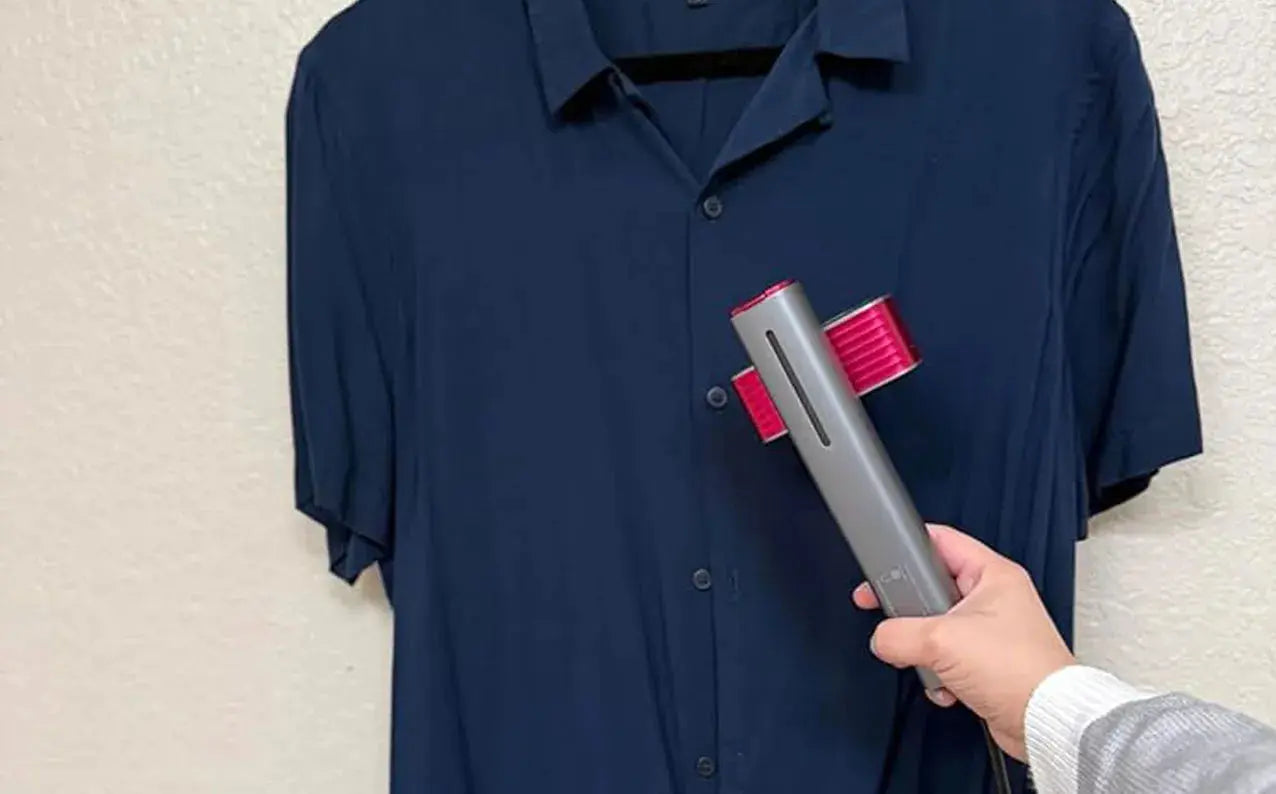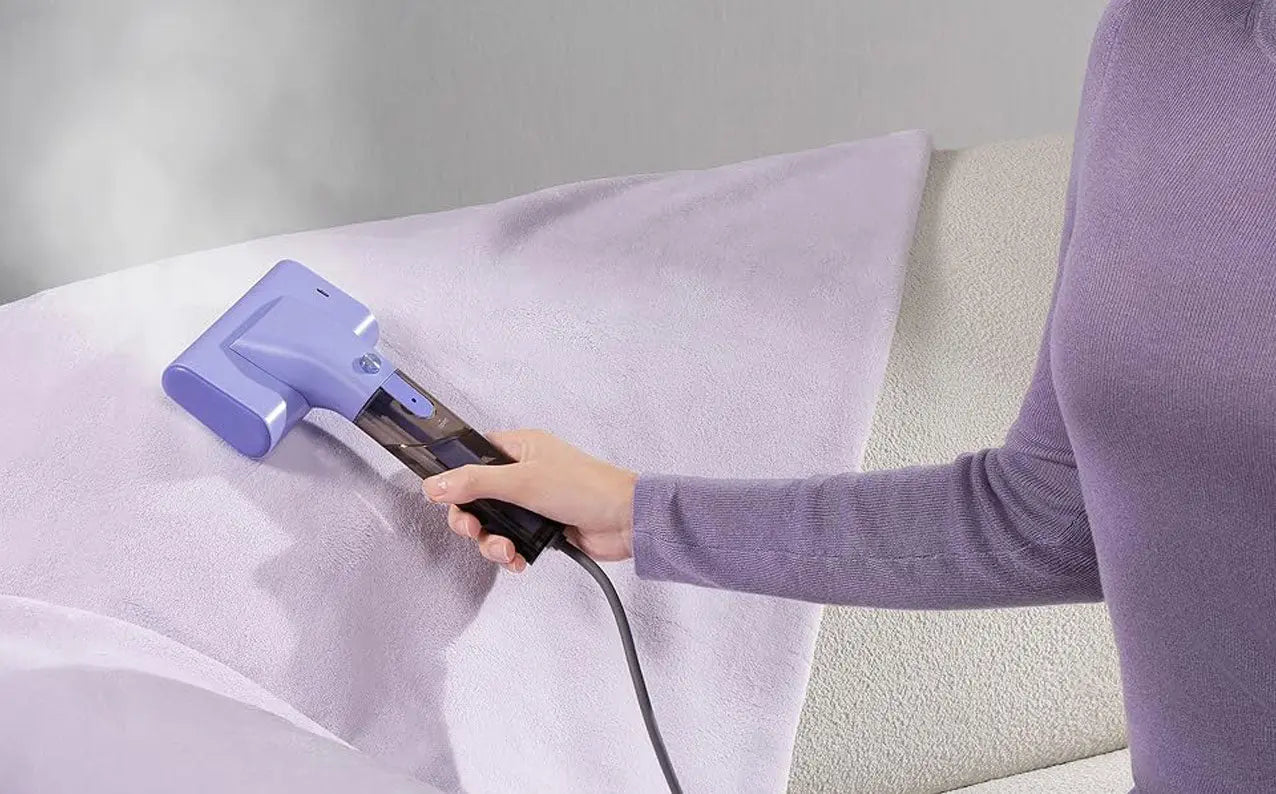

The tool that I never let go of at the wedding venue: a truly effective dress steamer.
If you ask me what the most important tool for a wedding florist is, many people would think I would say scissors, floral foam, or imported roses.
But to be honest, after visiting countless wedding venues over the years, my answer has actually changed.
There is one thing that I bring to almost every wedding - the dress steamer.
This might sound a bit "a bit much", but if you truly understand the rhythm and pressure of a wedding venue, you will realize that this is actually part of my job.

The work of a florist is never just "flowers"
Many people's understanding of wedding florists still remains at the level of "flower arrangement" and "creating a visually appealing setup".
But the truth is that we are more like the "final gatekeepers of the on-site space".
What I am responsible for is not just flowers:
- Is the overall visual appearance of the ceremony area harmonious?
- Is the desktop layout neat and orderly?
- Is there consistency among the fabric, flowers and lighting?
- Was the scene complete the moment the bride walked in?
Among these details, there is a crucial point that is often overlooked - the condition of the fabric.
You can imagine a scene:
Even the most exquisite floral arrangement design will lose its elegance if it is paired with a crumpled tablecloth. The overall quality will be instantly compromised.
This is why, later on, I began to include the dress steamer in my "standard equipment".
The first time I realized its significance was during a wedding that nearly turned into a disaster.
It was an outdoor wedding. The weather was great and the floral arrangements performed very well.
The problem occurred in the last 30 minutes after the arrangement was completed.
The bride's wedding dress was taken out of the dust bag, and it was all covered with obvious creases.
The bridesmaids' gowns were the same. Because they were packed and transported in advance, the fabric had not been fully unfolded.
There was no ironing board available on the spot, and there wasn't enough time either.
I remember that at that time, the photographer had already started to adjust the camera position, and the bride's mood seemed to be a little nervous.
Later, the makeup artist took out a small dress steamer from her bag. We all gathered around and quickly got to work on the wedding dress.
Once the steam was removed, the fabric slowly unfolded. That feeling of "reawakening vitality" still remains in my memory to this day.
From that moment on, I knew that this tool would eventually become a must-have for me.

Why, at a wedding venue, does a dress steamer seem more practical than an iron?
I haven't used an iron much, but I eventually gave up using it completely.
The reason is simple - the wedding venue is not a place where one can "take their time".
Lack of a stable operating environment
Many of the venues were set up temporarily, with no levelled floor and insufficient space to unfold the fabrics.
Time is compressed.
The sequence of events on the wedding day is like a chain reaction. Any delay in one part will affect all the subsequent arrangements.
The fabric is becoming increasingly fine.
Wedding dresses, silk, and organza - these materials are at high risk when using traditional irons.
And the advantage of the dress steamer lies here:
- Can be steamed directly
- No additional space required
- More gentle on the fabric
- Processing speed is faster.
In my work routine, it is more like an "instant repair tool".
The several types of problems that I most frequently deal with at the scene
These are almost always encountered in every wedding:
Wedding dress creases
Especially in the trailing part, if there are any scratches, they will be very obvious in the image.
Creases in the center of the tablecloth
The creasing caused by the transportation of the folding items will destroy the overall sense of sophistication of the tabletop.
The background cloth for the ceremony is not flat.
No matter how beautiful the setting is, as long as there are horizontal wrinkles, it will look cheap.
Details of suits and formal dresses
The areas of the groom's shoulders and cuffs are easily magnified in the close-up shots.
The common point of these issues is that -
They are not "major problems", but they can ruin the overall effect.
And the dress steamer is precisely the most effective tool for solving these "minor problems".

How do I choose a suitable dress steamer for my work?
Over the years, I have tried many devices and gradually developed my own criteria for judgment.
The steam needs to be stable, rather than simply "strong".
Many machines claim to have high power, but the steam supply is intermittent, which makes it more likely to leave water marks.
The preheating must be quick.
At the wedding venue, waiting is the cost.
I usually expect to be able to start using it within one minute after plugging it in.
The volume should not be too large.
I need to move around in different areas. Heavy equipment will only slow down the pace.
The feel should be smooth.
This point is often overlooked by many people, but it is extremely important when actually using it.
A handy device will make the entire operation more natural.
Why did I later become more accustomed to using Nesugar, which has a more lightweight design?
The first time I came across Nesugar was through a recommendation from a colleague.
What attracted me at that time was not the brand itself, but its design logic - it was more about "real-world usage" rather than a domestic setting.
After using it, several feelings became quite obvious:
- Smaller in size, it won't take up space when placed in the workbox.
- Easy to use, no need for complex adjustments
- Easy to move and suitable for multi-point operations
- The appearance is clean and will not damage the visual impression of the scene.
Especially in the current trend of more and more outdoor weddings and small-scale weddings, this lightweight equipment is actually more practical.

My actual work process (real habits)
For every wedding, I basically follow this sequence of steps:
First, deal with the wedding dress.
Starting from the hem, from bottom to top, pull and steam as you go.
Re-steaming bridesmaid dresses
Give priority to the front areas because they are where the most photos will be taken.
Then come the tablecloth and the backdrop.
Let the fabric hang naturally, and then use steam to adjust it.
Final check of details
Including suits, belts, ceremony table, etc.
This process has become an integral part of my work, just as natural as arranging flowers.
Some of my own summarized tips and tricks
All of these were gradually accumulated on the spot:
- Don't leave the steam head in one position for too long.
- Pull the fabric gently with your hands for a better result.
- Try to make full use of the natural weight of the fabric as it hangs down.
- Test the different fabrics first before proceeding with the formal processing.
These details will have a direct impact on the final outcome.
Why do I increasingly value these "invisible tasks"?
When I first started out in this field, I paid more attention to the design itself.
Later, it was gradually discovered that what truly determines the quality of a wedding is not "how complex the design is", but rather -
Have you ensured that every detail is done properly?
A flat piece of fabric can make floral arrangements look more three-dimensional;
A crisp dress can make the entire person look more stylish;
A clean background can make photos more appealing.
And the dress steamer is the tool that "saves the day" at the last moment.
Final Note
After doing wedding-related work for a long time, you will gradually come to understand one thing:
True professionalism lies in maintaining the standard even when no one is paying attention.
I won't deliberately emphasize which tools I used, but I know that behind every successful on-site operation, there are these "quiet but crucial" elements.
If you are also in this industry, or frequently need to handle clothing, decoration, and on-site details -
A suitable dress steamer might be more important than you think.
It won't be the center of attention, but it will make all the attention appear more perfect.