
As the founder of a startup company, I probably have a sharper understanding than most of what “details” really mean.
If you asked me what the most important lesson I’ve learned throughout my journey as an entrepreneur is, I wouldn’t talk about financing, growth, or strategy.
Instead, I would say this:
No one gives you a second chance at a first impression.
I’ve been building and running my company for a long time now. From the very early days, when I was sitting alone in front of my computer putting together the first pitch deck, to later leading a team, meeting investors, visiting clients, and constantly traveling between cities. My schedule is always packed, with almost no buffer time between meetings.
At this kind of pace, you quickly become very pragmatic about many things.
One of them is this: you simply don’t have the luxury of “preparing slowly.”

The way I work directly shapes what I expect from my tools.
As a founder, my working environment changes all the time:
- In the morning, I might be on a cross-time-zone video call in a hotel room.
- At noon, I’m meeting potential partners in a shared office space.
- In the evening, I show up at an informal industry event.
None of these settings has a strict dress code, but every single one of them is watching you.
I don’t need to look overly formal, but I do need to look clean, reliable, and well put together.
This isn’t vanity. It’s a professional habit.
And because of that habit, I’ve become extremely selective about everything I carry when I travel.
That experience that completely changed my perspective
A few years ago, I was still relying on hotel irons.
Until one time, in New York, when I had to meet a very important client. It was informal, but absolutely critical.
I went back to my room about 15 minutes early, just to quickly straighten my shirt.
The iron malfunctioned and started leaking water, leaving visible water stains on the fabric.
I still got through the meeting that day, but I was painfully aware of one thing:
While I was talking, part of my attention was stuck on my clothes.
From that moment on, I completely lost patience with the idea of leaving uncontrollable variables to the environment.
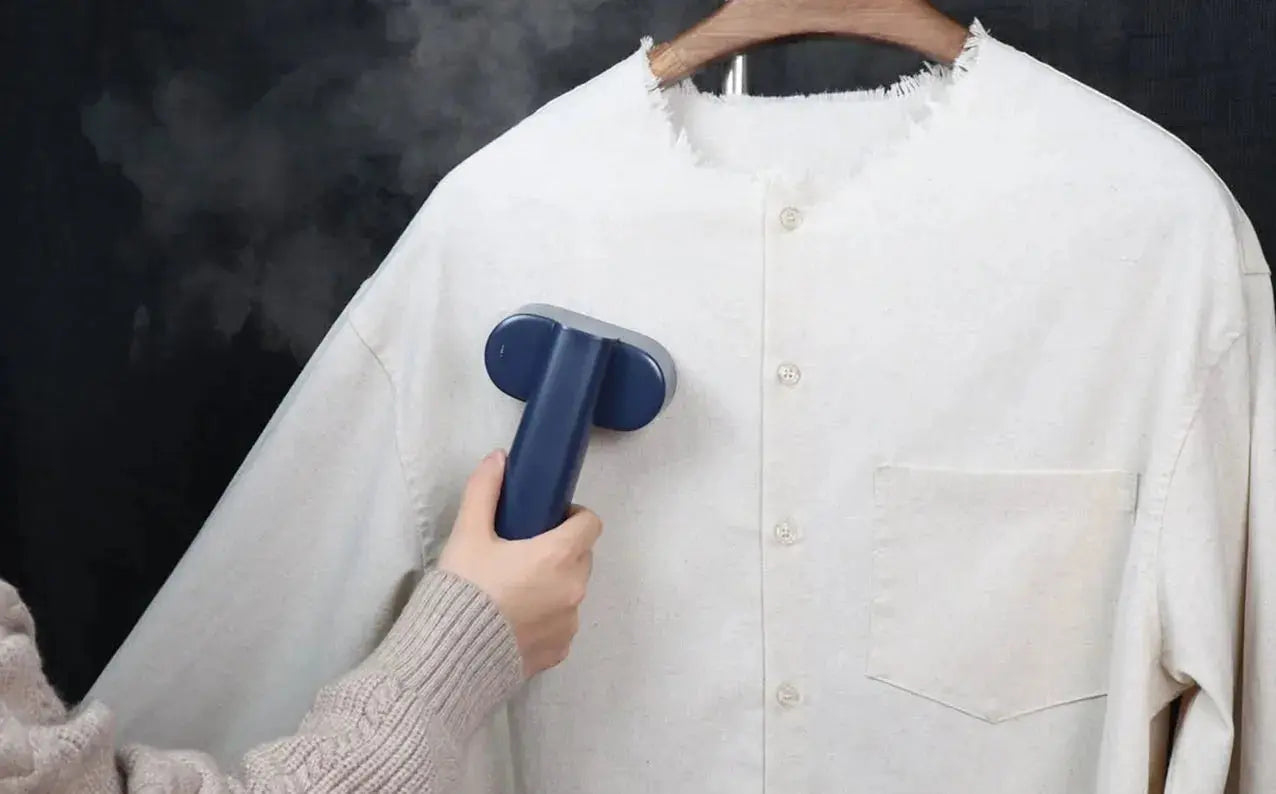
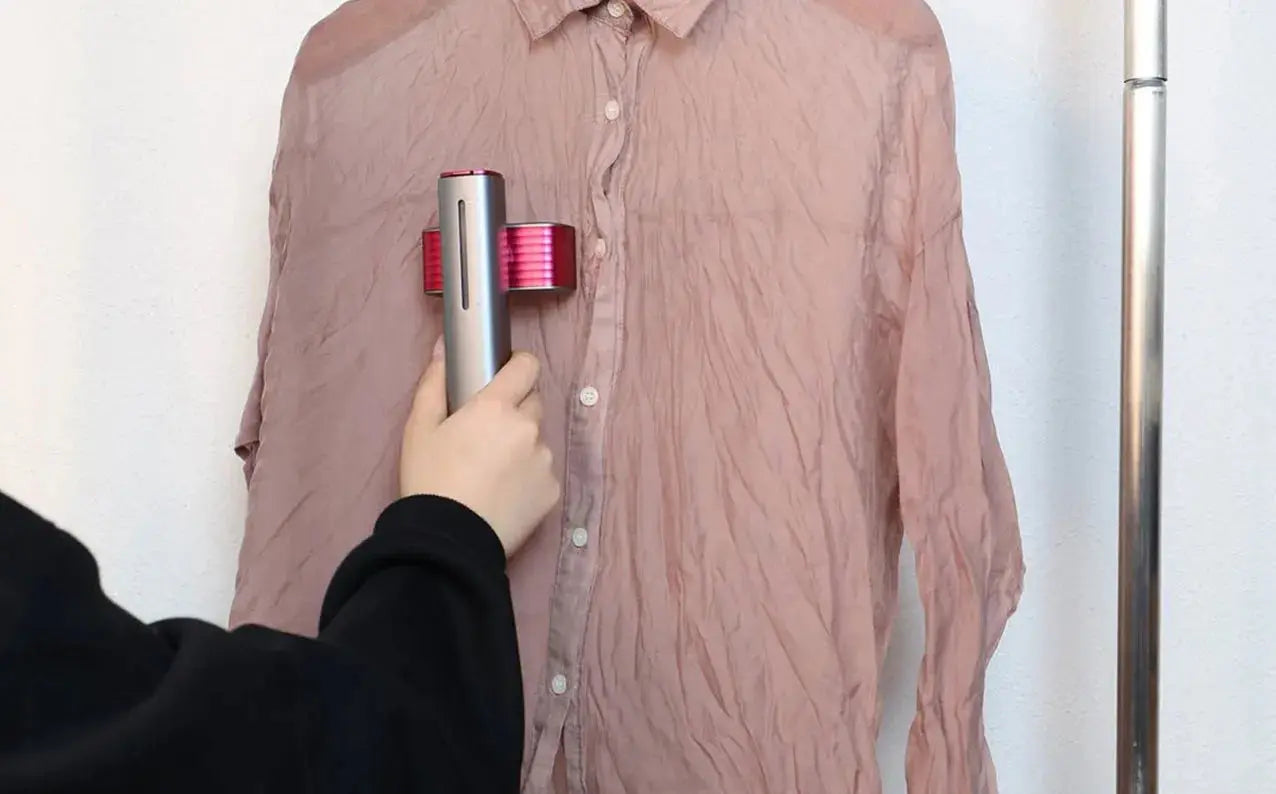
For me, a travel steamer is not a household item. It’s a work tool.
A lot of people think of a travel steamer as a “small home appliance.”
But to me, it’s much closer to things like:
- A laptop charger
- A power bank
- Noise-canceling headphones
In other words—
Without it, my efficiency noticeably drops.
I don’t need perfect, showroom-level ironing.
I only need three things:
- Fast
- Stable
- No surprises
Those three requirements are exactly the same standards I use to evaluate any tool I work with.

As an entrepreneur, how do I evaluate a travel steamer?
I don’t start with specs, and I don’t care much about “selling points.”
I ask myself a few very simple questions.
Will this make me hesitate for even one extra minute before heading out?
If the answer is yes, then it fails.
Can it still be reliable when I’m mentally exhausted?
On business trips, tools are usually used late at night, when jet lag hasn’t settled and your brain is already tired.
Will it add psychological friction?
For example, worrying about leaks, worrying about heat, worrying about how to pack it.
A truly good travel tool should almost disappear from your awareness.
Why did I notice Nesugar?
The first time I really noticed Nesugar was at an industry conference.
I was backstage with another founder, waiting to go on stage. He casually took a small steamer out of his bag and spent a few minutes smoothing out his jacket.
There was no explanation. No showing off.
My first reaction was simply:
“This looks incredibly practical.”
Later on, as I encountered it again in different travel scenarios, I realized it perfectly matched my personal standard for a good tool:
- Not flashy
- Not complicated
- Not distracting
It doesn’t make you think, “This is a brand.”
It feels more like a tool that has quietly proven itself over time.

Why entrepreneurs should care about these “invisible details”
Starting a business is full of uncertainty by nature.
What I can do is control as many variables as possible.
Whether your clothes are wrinkled or not might seem trivial, but it affects things like:
- Whether the other person feels comfortable trusting you
- Whether you yourself feel relaxed
- Whether the conversation flows smoothly
I don’t believe appearance determines everything.
But I know very well that appearance influences the starting point of many things.
A travel steamer is not for everyone.
I’ve never believed that everyone needs tools like this.
If you only travel a few times a year, or if you have very low standards for how you present yourself, then you probably don’t need one.
But if you’re like me—
Frequently moving between cities
Needing to switch into “professional mode” at any moment
Unwilling to waste mental energy on trivial issues
Then you’ll probably understand why I always leave space for it in my luggage.
Final note
As a startup founder, I’ve become increasingly convinced of one thing:
A truly mature tool isn’t one that makes you feel “taken care of.”
It’s one that makes you forget it exists.
For me, the travel steamer is exactly that kind of presence.
It doesn’t solve big problems.
But it ensures that at critical moments, I’m never held back by small details.
On the entrepreneurial journey, that alone is already a very real and valuable form of support.