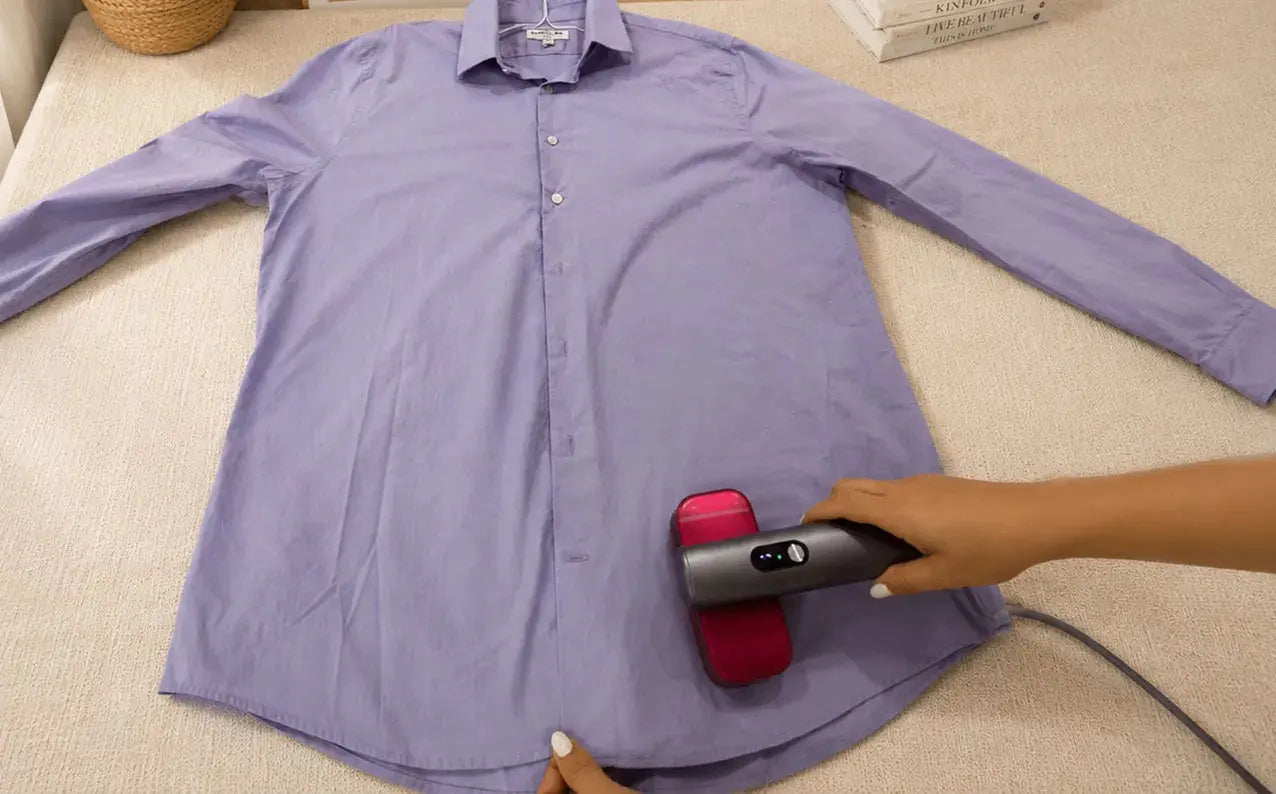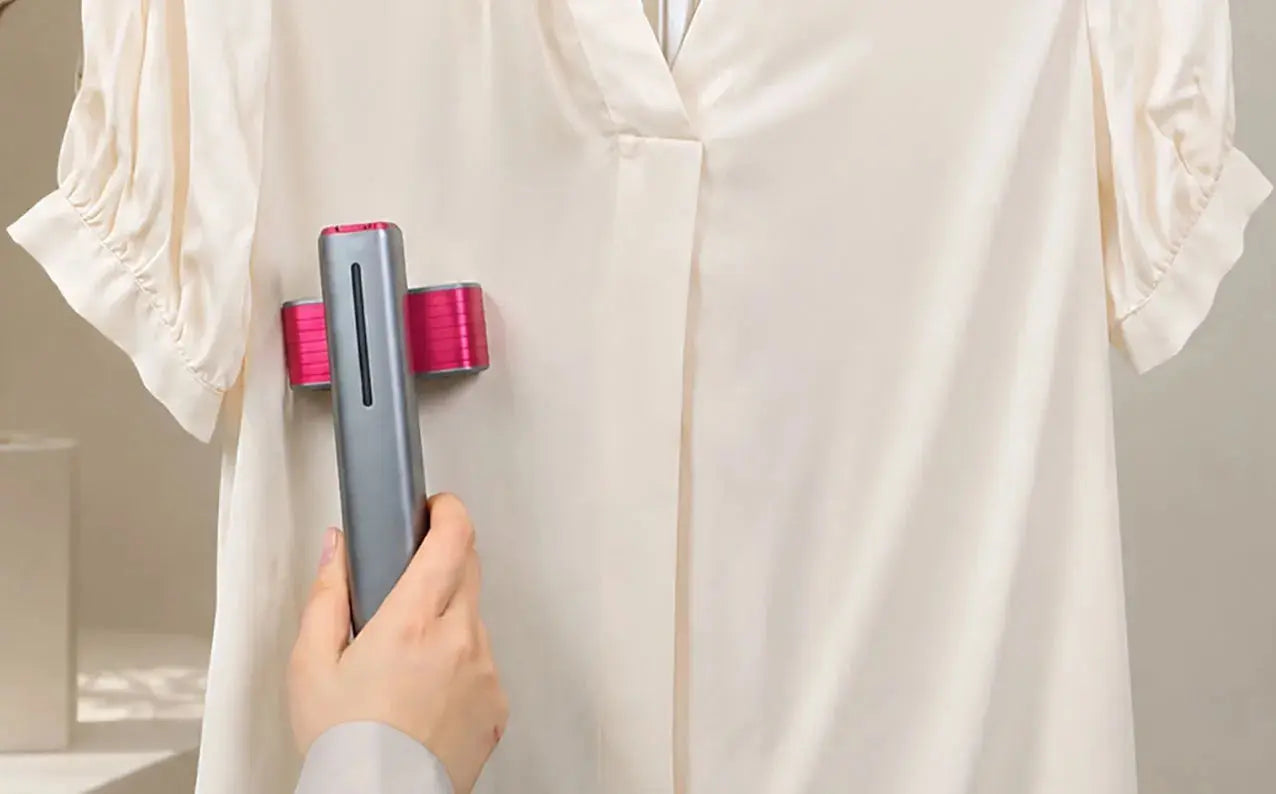

Why do I always place a garment steamer next to a performer's suitcase?
If you ask a celebrity stylist what they fear most.
Many people might assume the answer is damaged clothing, wrong shoe sizes, or delayed jewelry delivery.
Actually, none of them are.
What I fear most is this: the clothes arrive, the person arrives, the photographer is ready, but all the garments are wrinkled.
Sounds a bit exaggerated.
But anyone who has done large-scale filming knows that a crumpled shirt will be infinitely magnified under high-definition lenses.
Audiences might not be able to pinpoint exactly what's wrong, but they always feel something is missing in terms of sophistication.
Over the years, from red carpet backdrops to brand commercial shoots, from hotel suites to airport lounges, I've become increasingly reliant on one tool: a garment steamer.
It isn't as dazzling as jewelry, nor as eye-catching as haute couture.
Yet often, it is the true unsung hero behind the scenes.

The beauty industry has a secret: sophistication often comes from the details.
When I first started out, I was especially obsessed with expensive clothes.
I always felt that as long as the budget was high enough, the results would naturally be good.
Later I realized it was completely not the case.
I've seen dresses worth tens of thousands of dollars that, due to creases from shipping, looked as if they'd just been pulled out of a cardboard box.
I've also seen basic suits priced at a few hundred dollars that, with their clean and sharp lines, appear more refined on screen than many luxury brands.
Clothes are like people.
State determines everything.
And wrinkles are precisely what can most easily ruin your condition.
Especially now, celebrities' schedules are becoming increasingly hectic.
I shot an ad in New York yesterday.
Filming a show in Los Angeles today.
Flying to Miami tomorrow for an event.
Can clothes remain wrinkle-free after being stored in a box for over ten hours?
Unrealistic.
So before every trip, the first thing I check isn't my dress, but whether I've packed the steam ironing equipment.
I first truly believed in the garment steamer during a magazine cover shoot.
That was a shoot many years ago.
The brand shipped over ten sample garments from Europe by air.
Everyone is excited.
When the clothing box was opened, the entire room fell silent.
Each piece of clothing seems to have just undergone a long journey.
Especially a light-colored silk dress.
The creases are as numerous as map lines.
The studio was located quite far away, and we couldn't find a dry cleaner at all that day.
The only usable item on site was a small steam iron that the assistant had pulled out from the car.
To be honest, I didn't have high hopes at that time.
The result came in less than twenty minutes.
The dress actually regained its original drape.
Later, the photographer specifically asked me if I had changed into a new one.
From that day on, I completely changed my opinion about the garment steamer.

Why are more and more stylists starting to abandon traditional ironing irons?
Of course, I have an iron at home too.
And not just one.
But when working, I use the steam iron far more often.
The reason is particularly simple.
Time.
No one in the real back office would leisurely set up an ironing board.
No one will start preparing half an hour in advance.
The reality is usually like this:
The artist still has fifteen minutes to get downstairs.
The photography team is in place.
The PR team is pushing for progress.
The makeup artist had just finished the final touch-up.
At this moment, you notice a deep crease pressed into the back of your suit.
What should I do?
You simply can't spread out the ironing board and take it slow.
A garment steamer typically reaches operating temperature within seconds.
Hang it up.
Steam.
Flatten.
Done.
Proceed to the next task.
This is the true pace of the industry.
Silk and wool are my favorite fabrics to steam care.
If you have a silk shirt in your wardrobe.
You should be able to understand my pain.
This fabric is especially beautiful.
Also particularly delicate.
High-temperature ironing can easily leave shiny marks if not done carefully.
Some expensive fabrics can even directly damage the fiber structure.
Steam is much gentler.
It's more like helping the fabric relax.
Rather than forcing it flat.
The same principle applies to wool suits.
Many men always think the stiffer the suit, the more sophisticated it is.
Actually, it's quite the opposite.
A truly good suit should retain a natural, three-dimensional shape.
Steaming restores fabrics to their original condition without making them stiff and board-like.

The biggest change in my business trips over the years has been that my luggage is getting lighter and lighter.
When I previously worked on overseas projects, I brought a lot of things.
Spare shoes.
Backup accessories.
Backup tools.
Later, it turned out that only a few things were truly important.
One of them is the portable garment steamer.
Many designs today are already very lightweight.
One practical reason why travel steamers like Nesugar have attracted attention from many stylists and business professionals is their lightweight design.
You won't feel like you're carrying an extra household appliance.
It's more like a daily carry tool.
For people who travel frequently, this difference in experience is particularly noticeable.
Because every bit of weight reduced helps reduce strain on your shoulders.
Many people don't know how to use it, so they find it difficult to use.
Over the years, I've helped many friends with their clothes.
Then I noticed an interesting phenomenon.
The equipment is fine.
The method is flawed.
The most common scene is:
Playing with the phone.
Quickly swipe past with the steam head in hand.
Five seconds to go.
Then complain about the poor results.
It's like turning on a hair dryer for one second and then wondering why your hair isn't dry.
Steam needs a little time to penetrate the fibers.
Especially cotton shirts and linen.
Gently pull the hem of the clothing.
Let the fabric unfold naturally.
Move slowly.
The results are usually much better.
This is a little trick I've been using in the background for over ten years.
Simple.
But very effective.
I'm even using it to handle furniture now.
A friend was particularly surprised when he first came to my place.
Because he saw me doing steam treatment on the curtains.
In fact,
This is quite common in the industry.
When shooting a model home.
Curtains, cushions, and bedding will all be treated with steam.
The reason is simple.
The lens dislikes wrinkles.
And steam happens to be the fastest solution.
Sometimes I even feel that the frequency of using the garment steamer at home is almost higher than the number of clothes we actually own.
When it comes to fashion, the one thing I agree with most is
A photographer friend once said something.
I still remember it to this day.
He said:
Audiences may not be able to tell what brand you're wearing, but they can definitely tell whether you've paid attention to the details.
This statement is especially true.
We always talk about fashion trends.
Discussing colors.
Discuss the pattern.
Discussing luxury brands.
Yet often, what makes a person appear neat, professional, and put-together is simply a crisp shirt, a wrinkle-free suit, or a well-kept dress.
And these things don't require complex techniques.
Sometimes, a reliable garment steamer is all you need.
As someone who deals with cameras, lighting, performers, and all kinds of unexpected situations every day, I'm increasingly convinced of one thing:
What truly elevates the quality of one's wardrobe has never been the price tag.
but rather the details that others cannot see, yet can feel.