
During these years as an immigration consultant in the United States, why have I become increasingly dependent on a garment steamer?
Many people's understanding of immigration consultants is still limited to "helping fill out forms and submit materials". But if you work in this field for a long time, you will realize that this profession is more like a long-term companionship process - you need to understand the policies as well as the people.
Over the years when I have been providing immigration consultation services in the United States, I have come into contact with clients from all kinds of backgrounds: students who have just graduated and are preparing to work in the US, technical talents who are planning for the future with their families, and business owners who need to make quick decisions at critical junctures. Behind each case lies a life choice with high levels of uncertainty.
In such a working environment, "professional competence" is merely the foundation. What's more crucial is the overall impression you leave on others - whether you are reliable, meticulous, and trustworthy.
What surprised me a little was that tools like the garment steamer - which seemed quite mundane - gradually became an integral part of my way of maintaining this "sense of stability".

This industry is more dependent on the "first impression" than you might think.
Many of the crucial points in immigration consultation actually occur during communication.
For example, during the first meeting.
Clients usually come to you with a lot of anxiety. They may have already researched a great deal of information, or they may have been rejected by other institutions recently. In such cases, they will sensitively pick up on every detail you give.
Whether your expression is clear and your logic is rigorous are of course important. But there are also some more intuitive aspects - such as your demeanor, your pace, and your overall presentation.
To put it more directly:
If a consultant even appears disheveled and hurried in their own attire, it's very difficult for the client to completely trust you with their application.
I'm not particularly particular about my clothing style, but I've long realized that at the very least, one should aim for "clean, neat, and without any unnecessary distractions". And wrinkles on clothes are precisely one of the details that are most easily overlooked but have the greatest impact on the overall appearance.
Why did I give up using an iron and start using a garment steamer instead?
At the very beginning, I also insisted on using the traditional iron.
However, the reality was that this method was difficult to sustain in the long run.
My daily work routine is roughly like this:
- In the morning, handle emails and policy updates.
- During the noon to afternoon, arrange client consultations (sometimes several in a row).
- In the evening, follow up on materials or communicate across time zones.
Under this kind of pace, it's very difficult to set aside specific time to "carefully iron a piece of clothing".
The emergence of the garment steamer has precisely solved this problem.
The biggest change is not "better results", but "greater ease of persistence".
I use it almost every day now, and the whole process takes no more than three minutes:
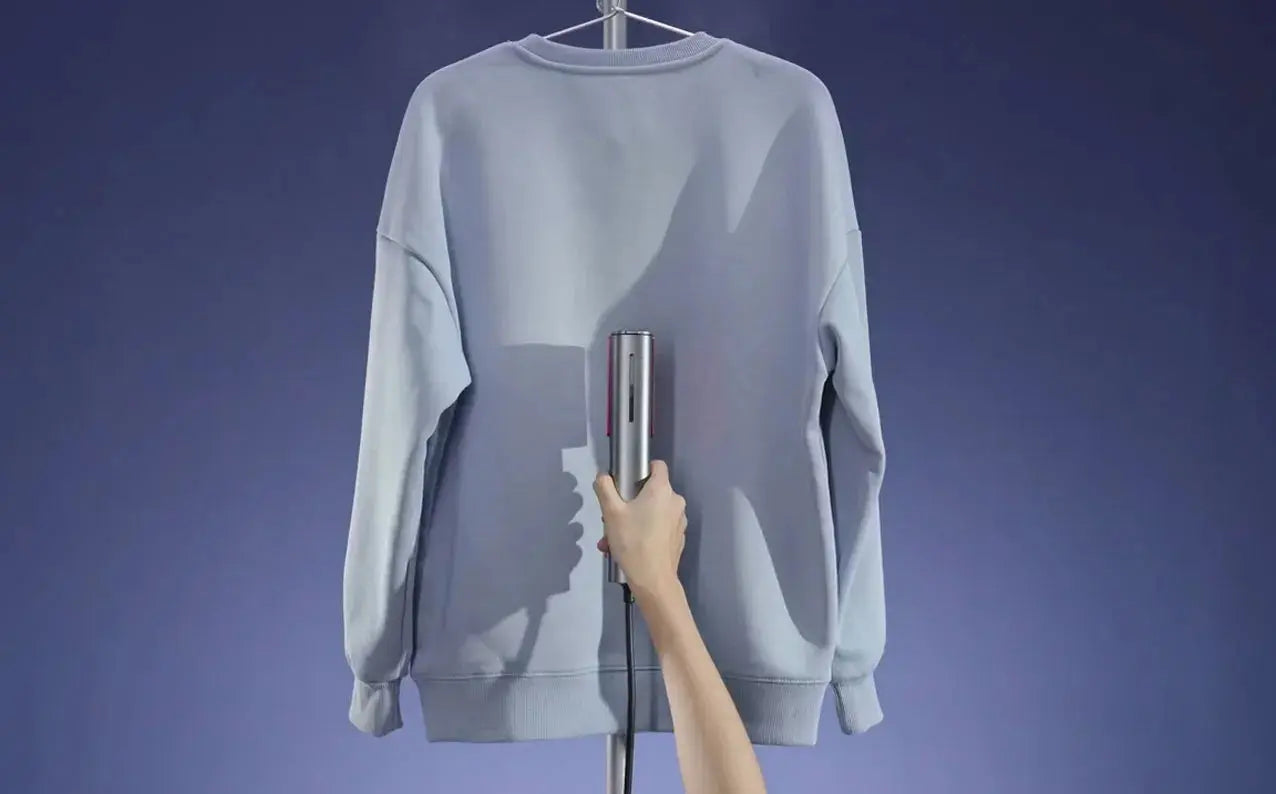
Just hang the clothes up, turn on the machine, walk along the fabric gently, and that's it.
There are no complicated steps and no additional space required.
This low-cost approach has made "keeping one's clothes clean and tidy" a task that can be consistently carried out over a long period of time, rather than something done only occasionally.

After becoming an immigration consultant, my understanding of "details" has changed.
When I first started in this field, I would focus almost all my attention on the professional aspects: policy provisions, application strategies, and risk control.
These are of course very important, but as I gained more experience, I gradually discovered:
Ultimately, clients trust you not because of how "much you know", but because of whether you are "stable".
This sense of stability actually stems from many details:
- Do you always respond on time?
- Are your suggestions consistent throughout?
- Do you maintain the same level of performance in different situations?
Clothing is only one part of it, but it is very obvious.
And what the garment steamer has helped me achieve is:
No matter how busy I am on any given day, I can always present myself in a relatively "organized" state.
This is actually helpful for building long-term trust.
Some real experiences of using the garment steamer
All of these were gradually discovered by me during my daily work. They are not complicated, but very practical.
1. Not aiming for "perfect smoothness", but for "natural cleanliness"
The effect of steam is more like "relaxing fibers" rather than creating sharp lines. Therefore, I won't demand a stiffening effect like that of an iron.
For routine consultations, this natural state is actually more comfortable.
2. Shirts are the items with the highest usage frequency.
I wear a shirt almost every day, especially when having face-to-face consultations or participating in video conferences.
The greatest advantage of using a garment steamer to handle shirts is that:
The details such as the collar and shoulders can be quickly arranged without having to repeatedly adjust the angle.
3. During business trips, I could more clearly perceive its value.
The irons in many hotels are actually not very reliable. Some have unstable temperature control, and some are even not very clean.
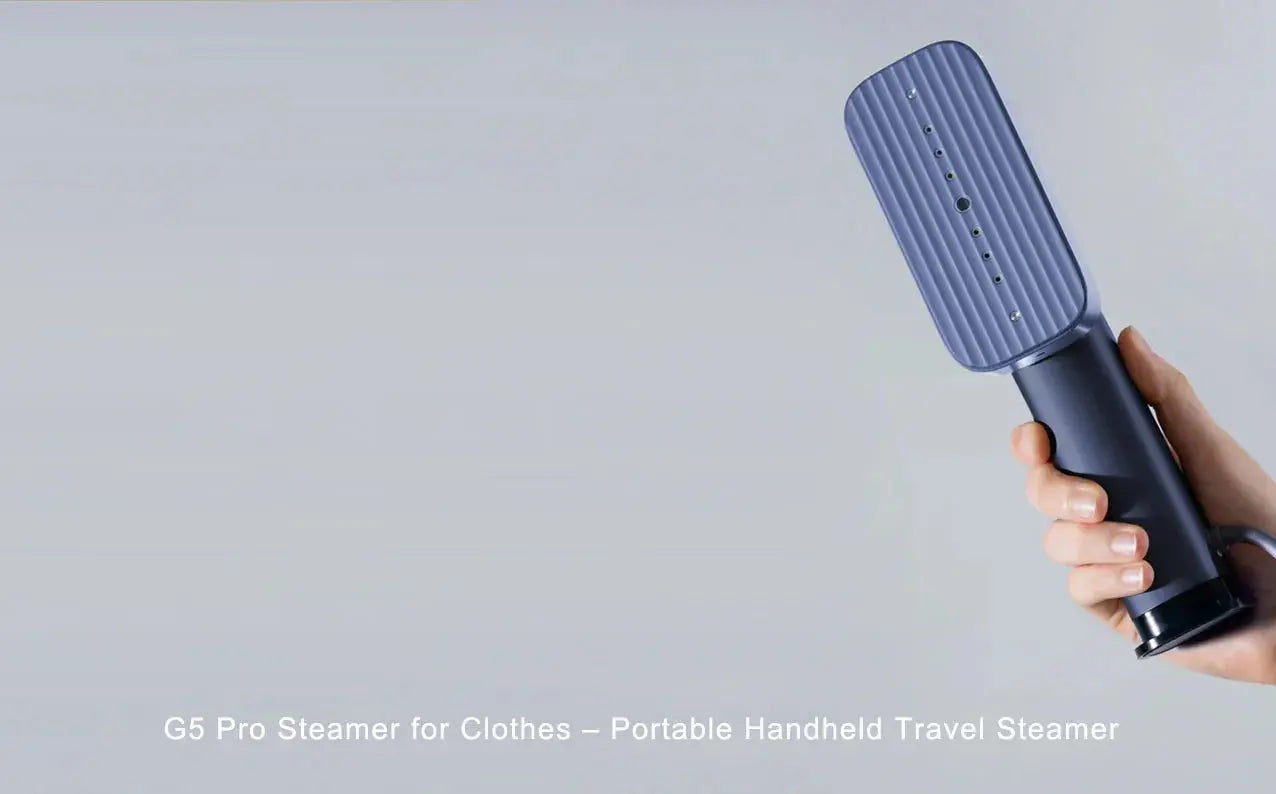
Later on, I will always carry a portable version with me. Even if it's just for a quick touch-up, it can significantly improve the overall condition.
Regarding the choice, here is my personal opinion.
I don't really like the "parameter comparison" approach, but there are a few points that are definitely worth noting:
- Is the steam stable (more important than instantaneous strength)?
- Is it easy to operate (without complex procedures)?
- Is it suitable for your usage scenario (for home use or business trips)?
Later, when I came into contact with various products, I also noticed that some brands (such as Nesugar) place greater emphasis on the balance between continuous output and portability. This design approach is actually more user-friendly for daily use.
But in the end, the tool is just a tool. The key lies in whether you actually know how to use it and whether you will continue to use it in the long run.

What the garment steamer brings about is actually a kind of "controllable sense"
Over the years of providing immigration consultation, my biggest realization is that -
This industry has too many uncontrollable factors.
Policy changes, review cycles, and individual case differences - none of these can be fully controlled by individuals.
But precisely because of this, I will pay more attention to those "small matters that can be controlled".
For example:
- Can I start each consultation on time?
- Can I explain complex issues clearly?
- Can I maintain consistency in my external behavior?
A garment steamer is just such a "little gadget" for me.
It won't affect your professional skills, but it will make you more at ease with many details.
Finally
If you ask me whether it's worth using or not, I probably won't give you an absolute answer.
But what I can say is --
When your job requires you to frequently build trust with others, when your time is fragmented into tiny pieces, and when you wish to maintain a stable state in various situations,
Tools like the garment steamer, which are simple yet frequently used, are often more valuable than one might think.
It doesn't solve the problem of "whether the clothes are wrinkled or not", but rather helps you avoid one more thing that requires your attention.
And in a profession that is already complex, this point is actually already quite important.