
After organizing hundreds of wardrobes, I realized that what truly causes clothes to go unused has never been a lack of space.
When I first started doing home organizing, I thought all closet issues were related to space.
Too many clothes.
The cabinet is too small.
Poor storage planning.
Later, as more and more families came into my life, I gradually realized that things weren't actually like that.
Some clients have dedicated walk-in closets, spacious enough to envy, yet still stand in front of their wardrobes each morning feeling anxious.
Some families have only a double-door wardrobe in their regular bedroom, yet manage to make excellent use of every piece of clothing.
Over time, I began to notice a detail.
Many clothes that are never worn for long periods aren't because they're outdated or disliked, but because of wrinkles.
Sounds a bit funny.
But that's just how reality is.
If a shirt is visibly wrinkled, people will instinctively hang it back up.
If a dress comes out of the storage box completely wrinkled, most people would tell themselves to wear it another day.
So it was changed to next week.
Next week becomes next month.
The last piece of clothing completely vanished into everyday life.

Many people focus on the wrong things when organizing their closets.
The phrase I've heard most often in recent years is:
Should I buy more storage boxes?
Usually my answer is:
Don't rush yet.
Because the problems of most families don't lie in storage tools at all.
I've seen quite a few wardrobes.
All hangers should be of the same color.
The zoning plan is clear.
Even the labels are neatly and precisely attached.
But when the cabinet door was opened, the clothes inside were crumpled into a mess.
This situation isn't uncommon.
A tidy wardrobe doesn't mean the clothes are ready to wear.
From a practical standpoint, the latter is clearly more important.
After all, the purpose of organizing our closet isn't to take photos.
but to make getting dressed every day simpler.
When did I start relying on the garment steamer?
To be honest, I was also a traditional iron user at first.
I always feel that the iron is more professional.
Until one time, when I helped a client with seasonal organizing.
That day required handling a large number of coats, shirts, and dresses.
Using traditional irons exclusively would result in an enormous workload.
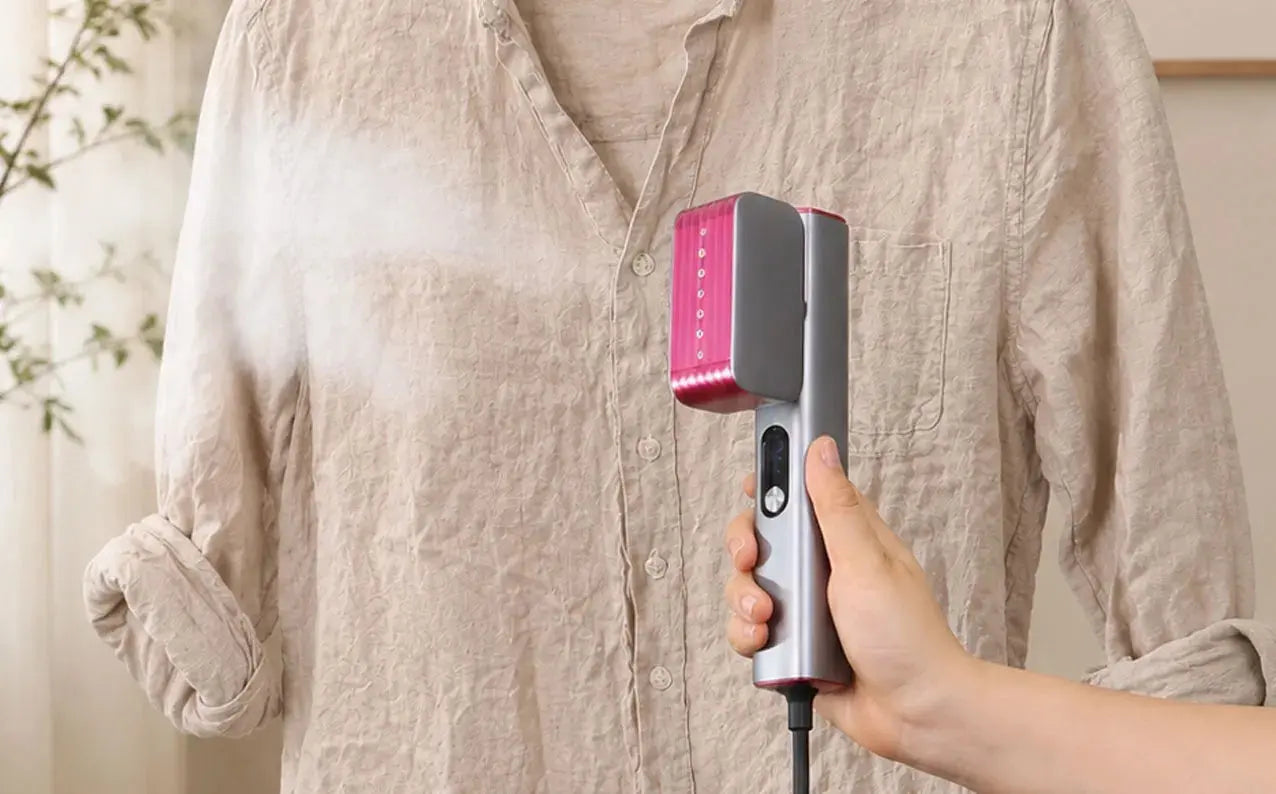
The customer casually pulled out a garment steamer.
I didn't have high expectations at the time.
After a few hours, I completely changed my opinion of it.
Many minor wrinkles don't require the heavy-duty approach of an iron.
As steam passes through the fabric, the fibers naturally relax and smooth out.
It's much faster than expected.
More importantly, there's no need to look for an ironing board.
This is especially important for the family environment.
In real life, people often avoid ironing clothes not because they don't know how, but simply because they're too lazy.
It's simply too much trouble.

True wardrobe management is really about reducing resistance.
After doing organizing for a long time, I've come to believe in one principle more and more.
Whether a family can maintain cleanliness over the long term depends on one thing:
How much cost is required to complete an action.
The higher the cost.
The easier it is to give up.
For example.
If every time you iron clothes you need:
Find the ironing board.
Plug in.
Preheat.
Adjust the temperature.
Organize the wires.
Put things back in their proper place.
So many people naturally choose not to iron.
But if it only takes a few dozen seconds to finish the clothes.
Things are completely different.
So in my view, the greatest value of a garment steamer has never been about how strong its wrinkle-removing ability is.
Rather, it lowers the psychological barrier people have when caring for their clothes.
The most overlooked items are actually the clothes hanging on the hangers.
Many people think only clothes stored by folding will get wrinkled.
In fact, that is not the case.
I often find this when organizing my closet.
Some clothes remain hanging, even though they've been there for a long time.
However, due to the closet being too full and clothes being constantly compressed, noticeable wrinkles will also appear over time.
Especially blazers, chiffon shirts, and linen fabrics.
This situation is most noticeable during seasonal changes.
Some clothes have been hanging for a full six months.
The actual condition when wearing it wasn't good.
Steam care is perfectly suited for this situation.
No complicated preparation needed.
With a simple treatment, much of it can be restored.

Why I'm increasingly valuing lightweight design
I used to think tool performance was the most important thing.
Later it turned out not to be.
Frequency of use is more important.
No matter how powerful a tool is, if it's buried in the back of a cabinet gathering dust, it offers no help to life.
Over the years, I've come across many different types of garment steamers.
I've found that the products customers stick with long-term are often not those with the most impressive specifications, but the ones that are the most convenient.
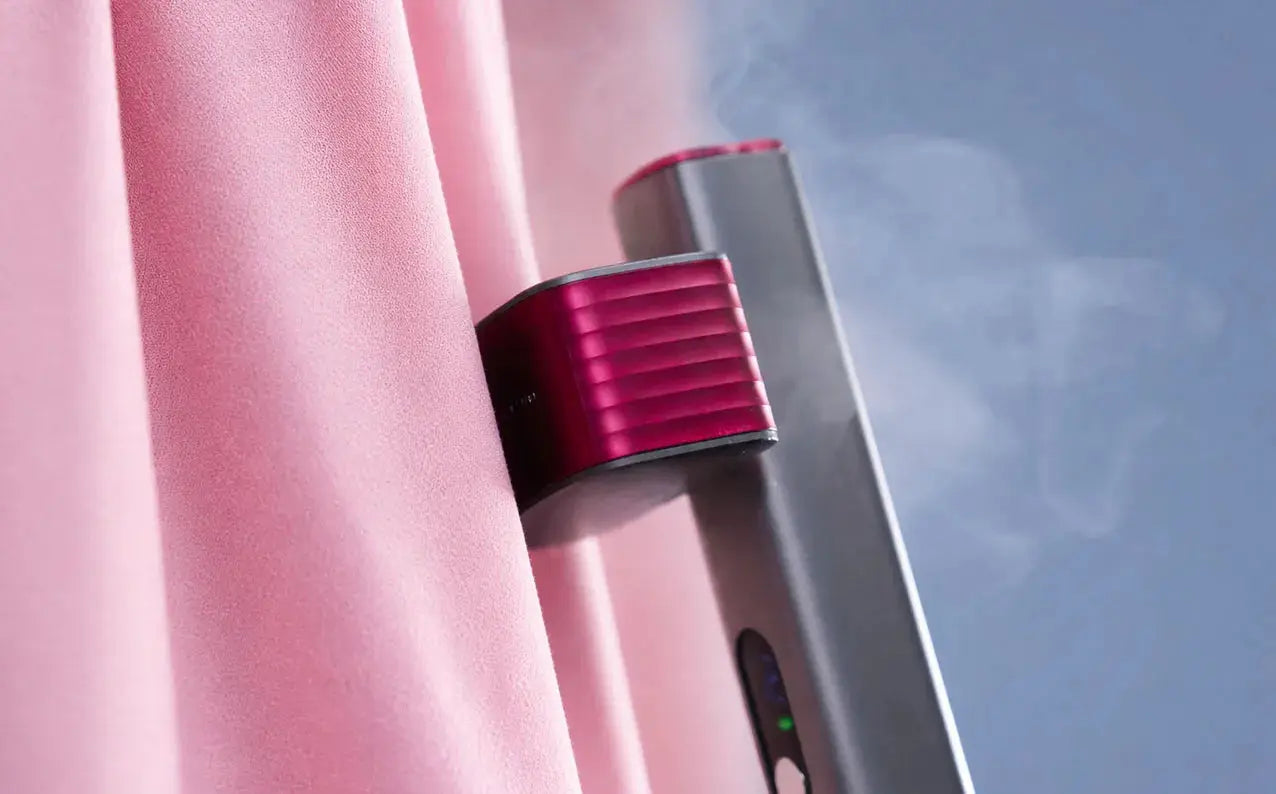
Lightweight and comfortable to hold.
Easy to store.
No need to set aside a special corner for storage.
This is also why products like Nesugar, which emphasize lightweight and portable design, have been gaining increasing attention in recent years.
Because what modern families truly need is often not complex functionality.
But simple.
Simple enough to use every day.
A piece of clothing only realizes its value when it is worn frequently.
This is one of the deepest feelings I've experienced in my work.
Many people spend money on buying clothes.
What truly deserves our attention is how to keep these clothes in use over time.
I've seen expensive coats hanging in the corner for years.
I've also seen ordinary white shirts that, despite being worn by their owners for many years, still remained in good condition.
The difference lies not in price.
And in maintaining habits.
When a piece of clothing is easy to care for, easy to access, and easy to wear, it naturally becomes a go-to item in your wardrobe.
On the other hand, even the most expensive clothes may gradually be forgotten.
Final genuine impression
If someone had told me ten years ago that one day I would seriously study garment care tools, I probably wouldn't have believed it.
After all, in the eyes of most people, organizers should focus on closets and storage.
But over the years, I've come to realize that organizing is never just about space.
It ultimately serves life.
Whether a wardrobe is useful doesn't depend on how many compartments it has.
It depends on whether you can easily find an outfit you want to wear, can wear, and can put on right away when you open the closet door in the morning.
And often, what decides this matter is nothing more than a bit of steam.