
The One Travel Essential I Never Expected to Care About: A Hand Steamer
If someone had told me a decade ago that one day I would seriously write an article about a steam iron, I would have probably thought they were crazy.
Back then, I had just entered the legal profession, and my daily thoughts revolved around cases, clients, transaction structures, and deadlines. Clothes were certainly important, but how important exactly? My understanding was pretty basic—just buy a better suit and hand it over to the dry cleaner.
Later, work became increasingly busy.
Business trips are becoming more and more frequent.
I just realized that reality is nothing like that.
I once flew to seven cities in the same month. The most extreme trip involved meeting a client in New York on Monday, attending a meeting in a London conference room on Wednesday, and then returning to Chicago on Friday for a board meeting.
People who travel frequently all have one common enemy.
Not time difference.
Not the airport.
but the suitcase.
To be precise, it's the wrinkles in the suitcase.

A good suit can't withstand ten hours of flight.
There's an interesting phenomenon in the legal profession.
Newcomers often pay special attention to which brand they wear.
People with over ten years of experience tend to care more about the condition of their clothes.
Because experience will tell you one thing:
Customers rarely notice where your suit comes from.
But they will definitely notice whether your collar is wrinkled.
Sounds a bit harsh.
That's just how the business world works.
Especially in large mergers and acquisitions, financing negotiations, or cross-border transactions, everyone is watching the details.
Did you arrive early?
How is the document preparation coming along?
Is the speech well-organized?
Even whether your shirt is neatly pressed.
Sometimes this judgment is even made subconsciously.
Before you even start introducing yourself, the other person has already formed some impression.
The hotel iron once let me down.
I still remember a client meeting from several years ago.
Flight delayed.
It was nearly midnight when we landed.
I have a client meeting at 8 a.m. tomorrow morning.
When I opened the suitcase, my blue shirt, which I had planned to wear the next day, was already completely wrinkled.
So I started searching the hotel room.
Find the iron.
Find the ironing board.
Read the manual.
Finally, it took nearly half an hour to sort it out.
The temperature setting was wrong, leaving a noticeable crease directly at the cuff.
The meeting went smoothly that day.
But I spent the whole day thinking about that indentation.
Since then, I began looking for solutions better suited to business travel.
It was during that period that I first encountered the hand steamer.

Its greatest advantage is not speed.
Most product descriptions emphasize the speed of steam production.
Of course, it's important.
But the real reason I stayed was actually something else.
Convenient.
After years of business trips, I've grown increasingly tired of complicated procedures.
I don't want to look for an ironing board.
Don't want to study the temperature settings.
Even less concerned about whether the expensive fabric might get damaged by heat.
The logic behind steam care is much simpler.
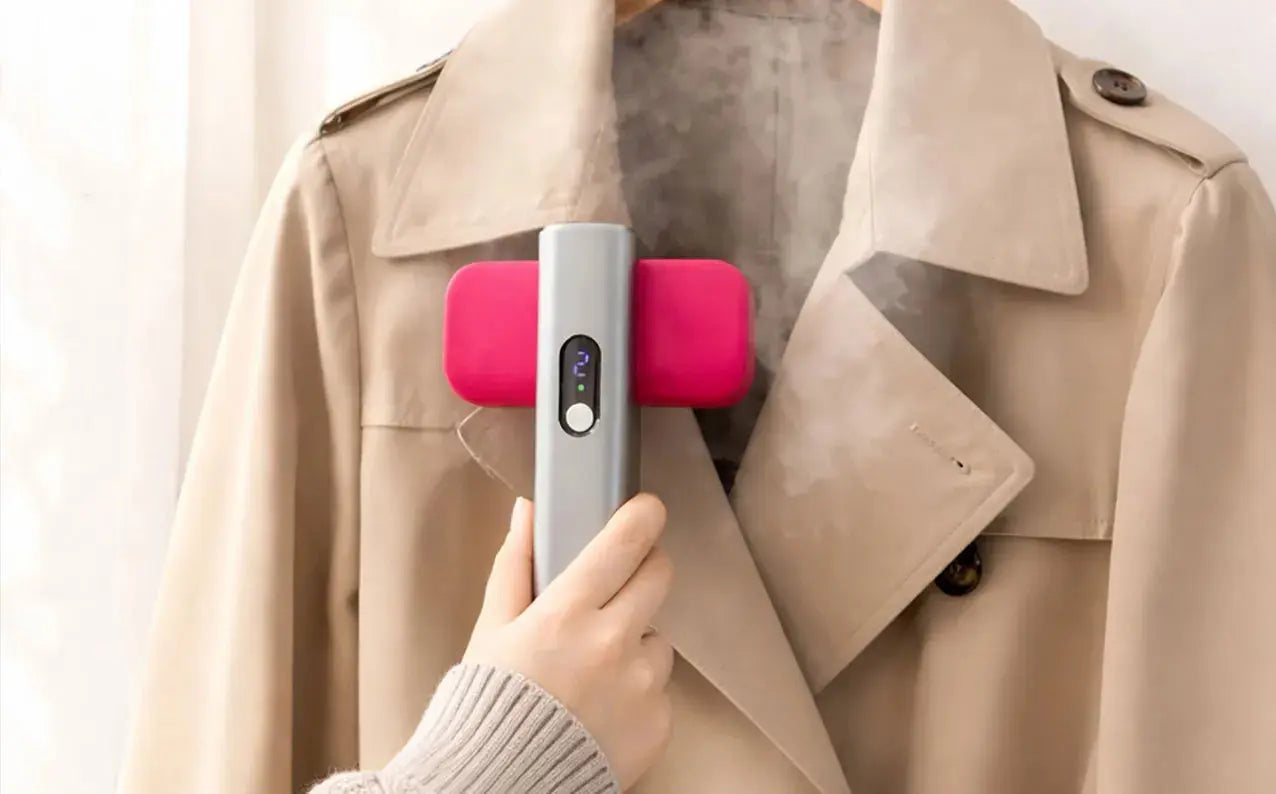
Hang the clothes up.
Add water.
Turn on the device.
Gently move from top to bottom.
The matter is basically over.
For people who are often in a hurry, this experience is highly appealing.
My closet has quite a few fabrics that aren't suitable for traditional ironing.
Although the legal profession isn't as fashion-conscious as the fashion industry, those who deal with clients regularly tend to have a few well-chosen outfits in their wardrobe.
My work uniform is almost entirely dominated by the following types of fabrics:
Wool.
Linen.
Silk blend.
Cashmere.
These fabrics share a common characteristic.
They don't like direct exposure to high temperatures.
Especially wool suits.
If not handled properly, bright areas can easily appear.
Steaming is considerably gentler.
It doesn't force the fibers flat, but instead helps the fabric return to its original state.
This is especially popular among those who regularly wear high-quality formal attire.

Why are more and more business professionals starting to carry travel steamers?
Over the past few years, I've frequently heard fellow professionals discuss travel gear at airport lounges, bar association events, and industry conferences.
Interestingly, the most discussed topic is no longer luggage brands.
but rather various small tools that enhance business trip efficiency.
Travel steamer is one of them.
The reason is actually quite practical.
Today's business travel is completely different from what it was ten years ago.
Many people used to check their luggage.
Now more people tend to carry only a carry-on bag.
Previously, meeting schedules were relatively flexible.
Now it's common to go straight from landing to the meeting room.
In such a situation, tools that can quickly organize clothes naturally become more valuable.
I later realized that the Hand Steamer is actually more than just a travel item.
After the pandemic, I've been working from home more often.
It was then that I realized the applications of steamers were far more diverse than I had imagined.
Newly purchased curtains.
A suit hanging in the closet for a long time.
Shirt prepared for the event.
Even certain bedding items that are prone to creasing.
In many cases, it is more convenient than a traditional iron.
This is also why many brands have started expanding their product positioning from simple clothes steamers to everyday home care tools.
I’ve noticed brands like Nesugar gaining traction recently—their focus on simplicity is exactly what busy professionals are looking for.
What users truly need is not complex features.
but a tool capable of quickly solving practical problems.

After so many years of business travel, my requirements for equipment have actually become simpler.
In my youth, I enjoyed studying parameters.
What is the power rating?
What is the temperature setting?
How many functions.
Now it's completely different.
If a product makes me think too long, I usually don't buy it.
For a hand steamer, I only look at three things.
Is it light enough?
Is it fast enough?
Is it reliable enough?
Because real-world usage always happens during the busiest times.
No one will study the product manual before the meeting starts.
No one wants to spend half an hour ironing a shirt in their hotel room.
The ability to complete tasks quickly is valuable in itself.
Interestingly, the most important work of my career has almost all been related to complex problems.
Cross-border transactions.
Regulatory risk.
Commercial dispute.
Each requires extensive analysis and judgment.
Yet many problems in life have surprisingly simple answers.
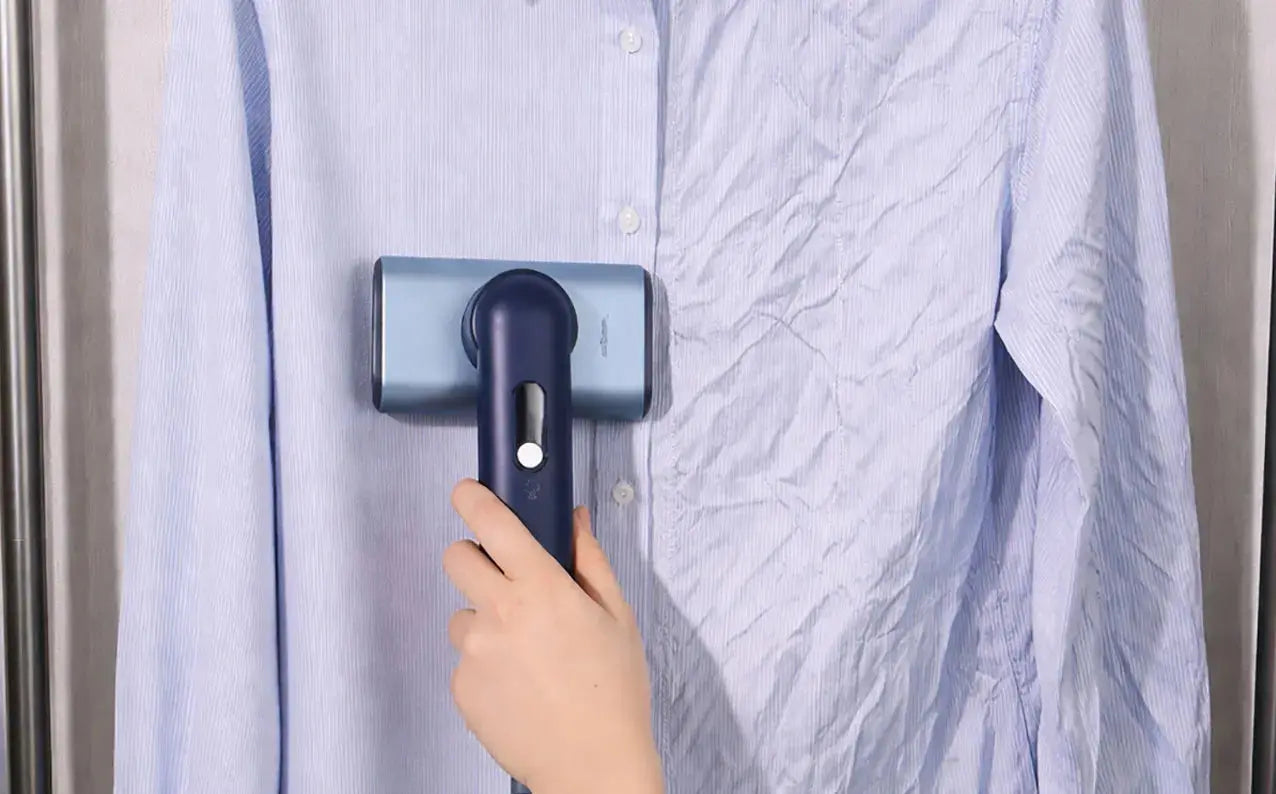
For example, how to restore a wrinkled shirt to its original condition.
Sometimes, a little steam is enough.