
Best Handheld Steamer for Business Travel: Keep Your Work Clothes Looking Sharp
You unpack your suitcase before tomorrow's meeting and find that your dress shirt is badly wrinkled. The jacket you packed for your presentation isn't looking much better, and you don't have much time to get everything ready.
A handheld garment steamer can help you deal with those wrinkles without taking over your hotel room. It's a practical option for freshening up work clothes when you're away from home, especially if you travel frequently and want to keep your luggage light.
If you're looking for a hand steamer for business travel, focus on six things: weight, heat-up time, steam performance, voltage compatibility, water tank capacity, and safe storage. The best choice depends on how much clothing you bring, how often you travel, and how quickly you need to get ready.

Why Bring a Garment Steamer on a Business Trip?
Business trips can leave you with little time to deal with wrinkled clothes. You might arrive at your hotel late at night, head straight from the airport to a client meeting, or have an early presentation the next morning. The last thing you need is to spend your limited free time trying to make your clothes look presentable.
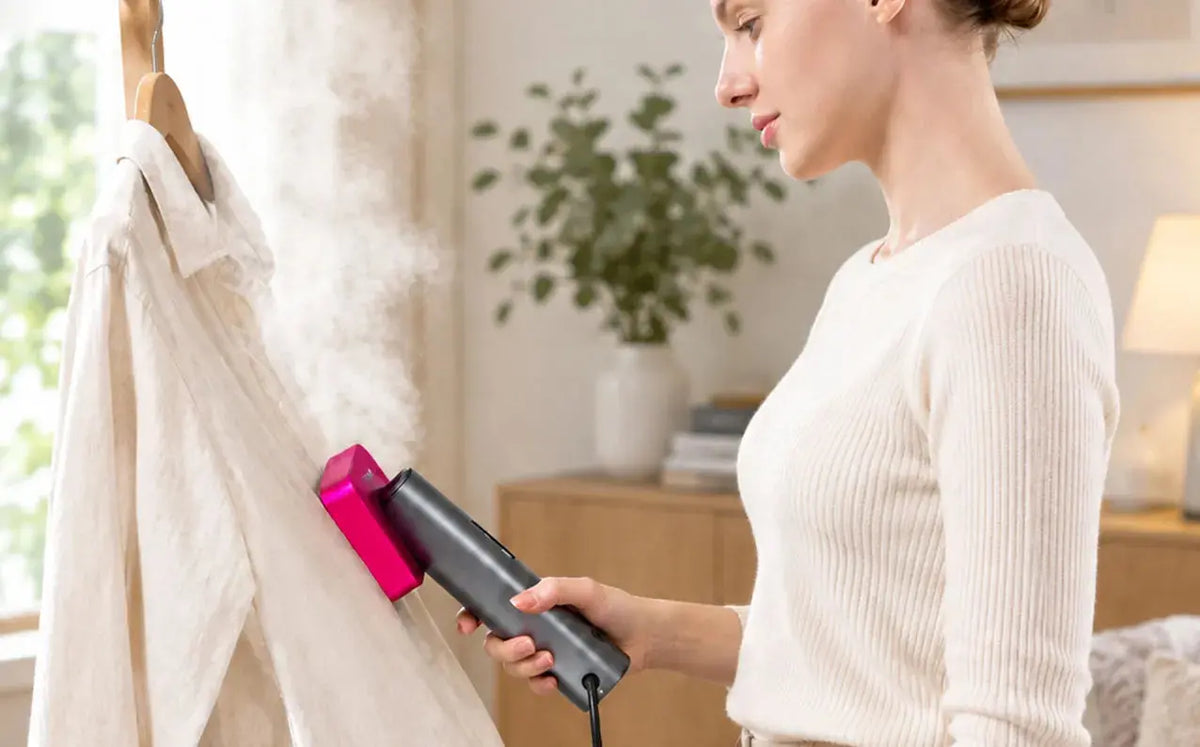
A handheld garment steamer uses steam to help relax fabric fibers and reduce everyday wrinkles. Most models are designed to work with clothes hanging vertically, so you can freshen up a shirt or dress without setting up an ironing board.
A travel steamer can be useful for:
- Dress shirts: Smooth out wrinkles caused by folding and packing.
- Business-casual clothing: Freshen up dresses, lightweight pants, and shirts before a meeting.
- Last-minute touch-ups: Tackle visible creases before a presentation, conference, or business dinner.
- Frequent work trips: Keep a compact clothing-care tool in your luggage instead of relying entirely on hotel amenities.
A steamer won't remove every crease from every fabric. Results depend on the material, the garment's construction, and the device itself. For everyday wrinkles from traveling, though, it can make getting ready in a hotel room much easier.
How to Choose a Hand Steamer for Business Travel
1. Weight and Size: Make Sure It Fits Your Luggage
When you're packing a laptop, chargers, documents, toiletries, and business clothes, suitcase space fills up quickly. A bulky appliance can be more trouble than it's worth.
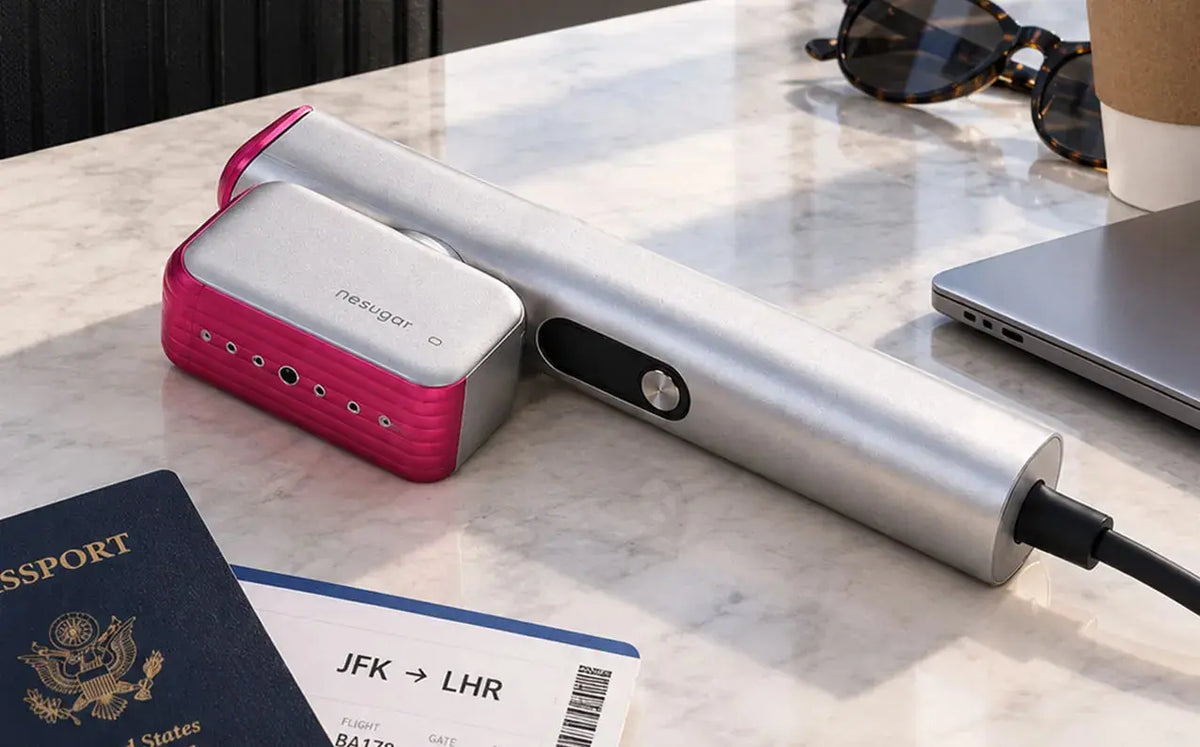
Look for a compact handheld model that's easy to pack and comfortable to hold. If you usually travel with a carry-on, check the product's actual dimensions as well as its weight. Photos can make a device look smaller than it really is.
The NESUGAR G2 Pro is listed at approximately 0.8 pounds. That lightweight design may appeal to travelers who want to keep their bags manageable.
Before choosing a model, think about where you'll store it. A steamer that fits neatly into a suitcase compartment is easier to pack than one with a bulky handle or accessories that need separate storage.
2. Heat-Up Time: Get Ready Faster
If you have a meeting in 30 minutes, you probably don't want to spend the first 10 minutes waiting for your steamer to heat up.
A shorter heat-up time is useful when you're getting ready in a hurry. Some portable steamers advertise heat-up times of around 15 seconds, but actual performance varies by model. Check the manufacturer's specifications before relying on a particular figure.
Your routine matters, too. If you usually prepare your clothes the night before, heat-up time may be less important than weight or tank capacity. If you tend to deal with wrinkles just before leaving the hotel, a fast-heating model could be worth prioritizing.
3. Steam Performance: Look Beyond the Wattage
A high wattage rating doesn't automatically mean a steamer will remove wrinkles more effectively. Steam output, fabric type, and the way you use the device all affect the results.
If you only need to freshen up one dress shirt, a compact model may be enough. If you regularly travel with several outfits, compare the stated steam output and water tank capacity to see whether the device suits your needs.
The NESUGAR G5 Pro is listed with 1,500 watts of power and a 200 mL water tank. Those numbers are a useful starting point, but they don't tell you how well the steamer will handle your clothes.
For better results, hang the garment properly, follow the recommended steaming distance, and keep the device moving over the fabric. Always check the garment's care label before applying steam.
4. Voltage Compatibility: Check Before Traveling Overseas
If you travel internationally for work, check your steamer's voltage rating before packing it. Electrical systems vary between countries, and a device designed for one voltage may not be suitable for another.
A model rated for 100–240V can generally accommodate a broad range of international power supplies, provided the manufacturer confirms that rating for the specific device.
You may still need a plug adapter because outlet shapes differ between countries. A plug adapter changes the shape of the plug; it doesn't convert voltage.
Before leaving home:
- Check the voltage rating on the device or in its official manual.
- Confirm that the rating covers the voltage at your destination.
- Bring the appropriate plug adapter if necessary.
- Follow the manufacturer's instructions for safe operation.
Don't assume a steamer is dual-voltage simply because you can use it with a plug adapter.
5. Water Tank Capacity: How Many Clothes Will You Steam?
A small water tank helps keep a travel steamer compact, but it may need refilling if you're steaming several garments. A larger tank can reduce interruptions, although it may add weight and bulk.
If you usually touch up one shirt before a meeting, a smaller tank may be sufficient. If you regularly prepare several shirts, pants, or dresses, a larger capacity may be more convenient.
Tank size alone doesn't determine how long a steamer will run. Water consumption depends on the device's steam output and how you use it.
Compare tank capacity with the steamer's weight and dimensions. A larger tank isn't necessarily better if it makes the device too bulky for your luggage.
6. Safety and Storage: Know How to Pack It
A travel steamer should be easy to put away after use, especially when you're checking out of a hotel and heading to the airport.
Before buying, check the manufacturer's instructions for filling the tank, operating the device, and allowing it to cool. Find out whether the tank should be emptied after each use.
After steaming, switch off and unplug the device. Empty the tank if the instructions recommend doing so, then let the unit cool completely before packing it. Never put a hot steamer straight into your suitcase.
Store the device securely to protect it from damage during transit. A compact design helps, but safe handling and storage are just as important.

How to Steam Business Clothes in a Hotel Room
You don't need a complicated routine to get your clothes ready for a meeting. A few simple steps can help you deal with the most noticeable wrinkles before the morning rush.
Step 1: Hang up your outfit as soon as you unpack.
Take your shirt, pants, or jacket out of the suitcase and hang them on suitable hangers. Giving clothes time to hang may help some packing wrinkles relax before you start steaming.
Step 2: Check the care label.
Make sure the garment can be steamed. Some delicate fabrics and specially constructed garments require extra care, and certain items shouldn't be steamed at all.
Step 3: Fill and prepare the steamer.
Use the type and amount of water recommended by the manufacturer. Secure the tank properly and let the device heat up according to its instructions.
Step 4: Focus on the most visible wrinkles.
For a dress shirt, start with the front, then move to the placket and sleeves. Keep the steamer moving and follow the recommended distance between the device and the fabric.
Step 5: Let the garment dry.
Steamed clothes may retain moisture. Hang them somewhere with good airflow and allow them to dry completely before wearing them or packing them away.
If you have an early meeting, steaming your outfit the night before gives you more time to get ready in the morning.
How to Steam Different Business Clothing Fabrics
Different fabrics respond differently to heat and moisture. Always follow the garment's care label and the steamer manufacturer's instructions.
Cotton Dress Shirts
Cotton shirts often develop visible wrinkles after being folded in a suitcase. If the care label permits steaming, hang the shirt and work across the body, sleeves, and back.
Pay attention to the front of the shirt and the placket, since these areas are especially noticeable during a meeting. Move the steamer steadily rather than concentrating steam in one spot for too long.
Polyester and Blended Fabrics
Polyester and blended fabrics are common in business shirts, travel pants, and some suits. Their heat tolerance varies, so don't assume every garment can be treated the same way.
Check the care label and follow the recommended settings. If steaming is allowed but you're unsure how the material will respond, test a discreet area first.
Avoid lingering over one spot, and let the garment dry before wearing it.
Linen Clothing
Linen naturally wrinkles, even when you handle it carefully. The goal is to soften the most noticeable creases, not necessarily to make the fabric look perfectly smooth.
Hang the shirt and concentrate on the front, placket, and sleeves. A steamer can help reduce pronounced wrinkles while allowing linen to retain some of its natural texture.
For a business-casual setting, that relaxed finish may be perfectly appropriate.
Suits and Delicate Fabrics
Wool suits, silk garments, and other delicate items need extra care.
Start with the care label. If the garment's instructions don't permit steaming, don't risk it. When steaming is allowed, follow the recommended technique and test an inconspicuous area first.
Be particularly careful around structured jacket shoulders and lapels. Heat and moisture can affect the shape or finish of some garments, so avoid directing steam at these areas unless the garment's instructions allow it.
For expensive suits or garments with special care requirements, professional cleaning may be the safer option.

Can You Bring a Travel Steamer in Your Carry-On?
Before packing a garment steamer for a flight, check your airline's current baggage rules and the security requirements for your route. Requirements can vary depending on the airline, airport, and device.
Before putting the steamer in your luggage, switch it off, unplug it, empty the water tank if appropriate, and let it cool completely. Pack it securely to protect it from damage during transit.
If your device has a rechargeable battery or other accessories, check whether those items have separate restrictions.
Even if your steamer is compact, check your airline's rules before packing it.
Frequently Asked Questions
What Wattage Is Best for a Business Travel Steamer?
There isn't one wattage that's ideal for every traveler. If you mainly need to freshen up a shirt, prioritize portability and ease of use. If you regularly steam several garments, compare wattage with the stated steam output and tank capacity.
How Quickly Should a Travel Steamer Heat Up?
A fast heat-up time is useful when you're getting ready shortly before a meeting. Some models advertise heat-up times of around 15 seconds, but actual performance varies. Check the manufacturer's specifications for the model you're considering.
Do I Need a Dual-Voltage Steamer for International Travel?
If you frequently visit countries with different electrical standards, a model rated for 100–240V can be convenient. Verify the exact voltage rating and check whether you need a plug adapter for your destination.
Can I Steam Every Type of Business Clothing?
No. Some delicate fabrics, coated materials, and structured garments need special care. Follow the garment's care label and the steamer manufacturer's instructions. If you're unsure whether an item can be steamed safely, don't experiment on an expensive piece of clothing.
What Water Tank Capacity Do I Need?
It depends on how many garments you plan to steam in one session. A smaller tank may be enough for a quick shirt touch-up, while a larger tank may be more convenient if you're preparing several outfits. Consider capacity alongside the steamer's weight and dimensions.
Final Thoughts
The best hand steamer for business travel is one that fits the way you actually travel.
If you pack light and usually need to touch up one shirt, prioritize weight, size, and quick setup. If you prepare several outfits at once, pay closer attention to tank capacity and steam performance. For international trips, check voltage compatibility before buying.
The NESUGAR G2 Pro, G5 Pro, and G9 Pro have different specifications and design features. Compare each model's official details with your travel needs before choosing one.
Unpack your work clothes when you arrive, steam any noticeable wrinkles the night before, and let everything dry overnight. You'll have one less thing to deal with before your morning meeting.