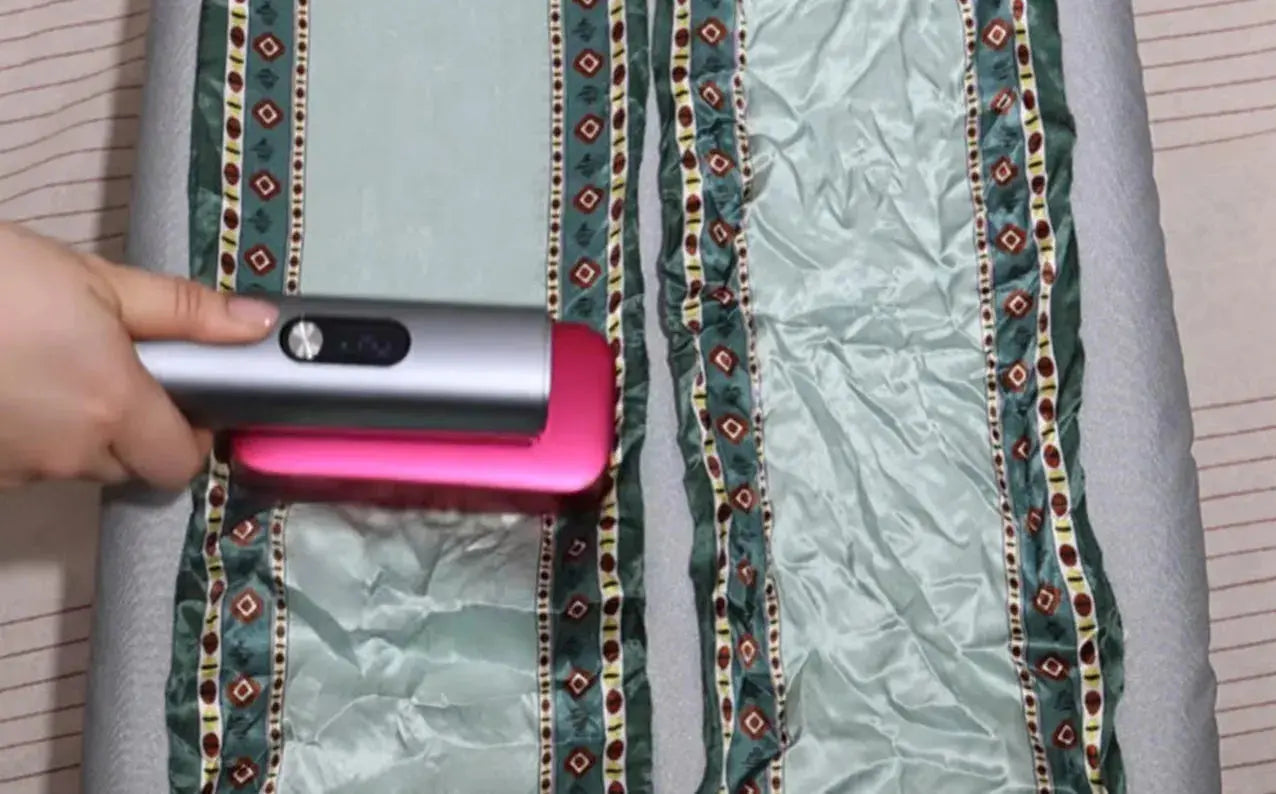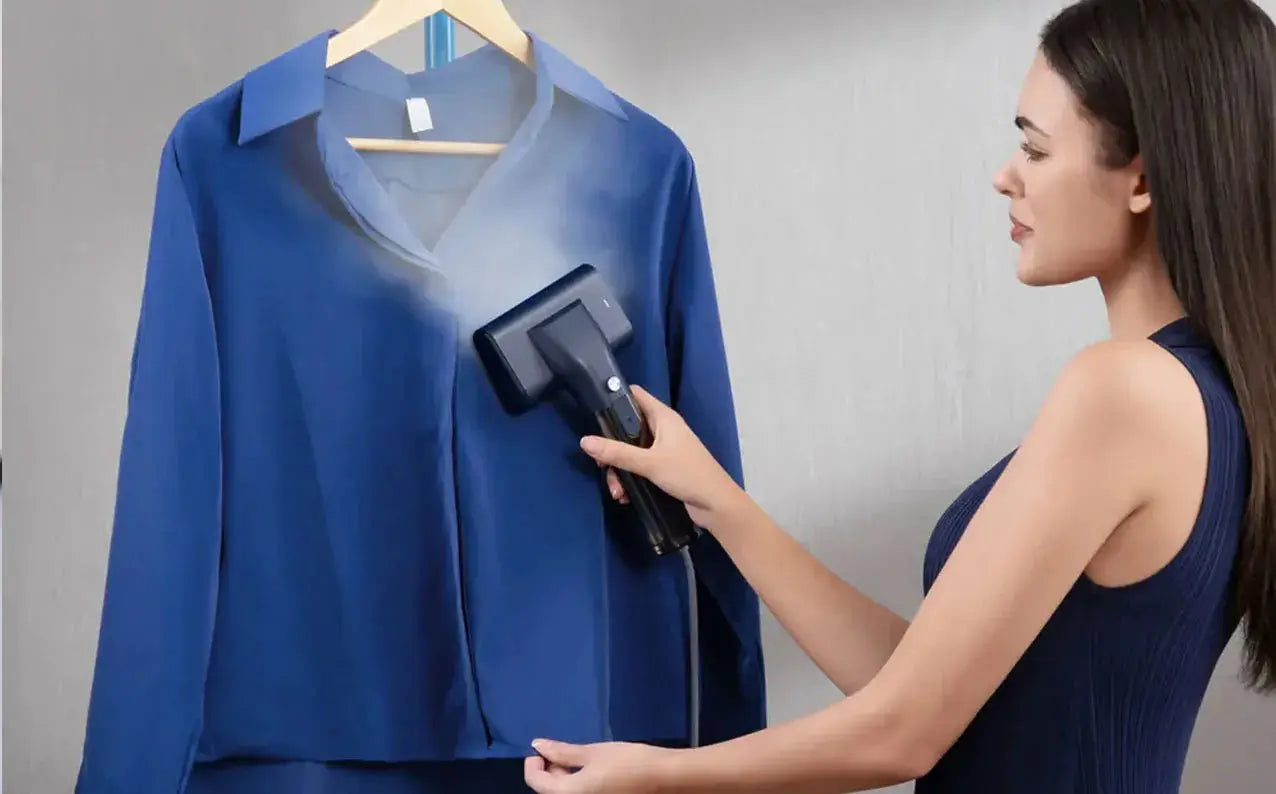

In my job, the wrinkles on clothes are never something to be taken lightly.
I work in a job that has extremely high requirements for "presentation".
Whether it's brand exhibitions, content shooting, offline events, or face-to-face communication with suppliers, creative teams, and clients, I have to switch roles in different situations almost every day.
Many people believe that what really matters is creativity, plans or communication skills.
But in my professional experience, there is one fact that has proven itself over and over again — when a person shows up, the state of his clothes will complete the first round of communication before he even opens his mouth.
It is precisely because of this that I am far more sensitive to the issue of clothing organization than ordinary people.

Why is my job inseparable from a clothes steamer handheld?
Early in my career, I, like most people, relied on traditional irons.
Until my work routine changed —
- I was changing cities frequently within a week.
- There is almost no buffer time between shooting, meetings and events.
- Sometimes it is necessary to quickly sort out the clothes in the backroom, at the hotel, or in a temporary studio.
The problems with traditional irons started to become impossible to ignore:
They were heavy, unstable, highly dependent on the environment, and any single mistake during use could irreparably damage a piece of clothing.
The first time that truly changed my habits was during a content shooting session.
The model had already put on her makeup, the lighting was set up, but the shirt on the hanger had obvious creases due to the transportation process.
There was no ironing board on set, and time was running out — only ten minutes remained.
That was the first time I saw a clothes steamer handheld being used as a "professional tool" rather than a household appliance.
In professional settings, what is the value of a clothes steamer handheld?
Since then, I have been using clothes steamer handheld in my work for a long time, and gradually developed a very clear set of judgment criteria.
1.It is not for "perfect smoothing", but for "controlled presentation".
In clothing shows, shoots or business settings, what we aim for is not the museum-quality straight lines, but:
- The fabric has a natural draping effect.
- The surface is clean and there are no obvious scratches.
- The wearer will not generate any new dead folds during movement.
The advantage of steam lies in that it "relaxes" the fibers through moist heat, rather than forcibly pressing them.
This is particularly important for wool-silk blends, silk fabrics, and knitted materials.
2.Extremely low intrusion into the work process
I often need to use it in the following scenarios:
- The backstage during the break in the shooting.
- Temporary arrangement of the clothes to be worn the next day in the hotel room.
- The dressing room before the event starts.
- Storage space for exhibitions or pop-up events.
The greatest advantage of a clothes steamer handheld is that:
It requires almost no "space" to be "occupied" by it.
Hang it up, power it on, and release the steam — the fewer the actions, the lower the error rate.
3.Also very user-friendly for non-professional operators
In many projects, I am not the only one who sorts out the clothes.
The assistants, models and partners all use the same equipment.
One of the practical advantages of a clothes steamer handheld is that:
It doesn't require "teaching".
There is almost no learning cost and very few irreversible damages occur.

When I choose a clothes steamer handheld, what I really focus on is not the parameters.
After doing this job for a long time, I have become quite immune to "attractive parameters".
Here are the judgment rules that I have formed after long-term use:
Is the steam continuous and predictable?
Unstable steam will directly affect the fabric condition.
The safe distance between the nozzle and the fabric.
A good design allows you to use it closely without worrying about water stains or burns.
Is the weight distribution reasonable?
When used continuously for more than 5 minutes, the wrist feedback is very obvious.
Does the structure withstand frequent movement?
It is often placed in boxes or backpacks, and durability is far more important than appearance.
I came across the name Nesugar during a discussion about the structural design of steam equipment.
At that time, we weren't talking about the brand; instead, we were discussing the differences in the impact of various steam paths on the fabric — this kind of "engineering-oriented" discussion itself can well illustrate for whom the clothes steamer handheld is designed.
Carrying a clothes steamer handheld has become part of my working routine.
Now, it has become a regular part of my work checklist, just like a portable hard drive or a spare shirt.
It doesn't steal the spotlight and isn't given special emphasis.
But if it is absent, the entire process will become disrupted.
Many of my colleagues have also told me similar feelings:
The tools that are used most frequently are often not the most expensive ones, but the ones that don't disturb you the most.

To you who also attach great importance to "presentation":
If your job involves any of the following:
- Content creation.
- Business travel.
- Fashion, display, and brand-related industries.
- Or any situation where one needs to frequently interact with people.
Then you must understand what I'm saying.
Whether the clothes are neatly dressed is never just an issue of appearance.
It relates to professionalism, credibility, and also to whether you can focus on the truly important matters during crucial moments.
I wrote these not to recommend any particular product,
but to share a logic for choosing tools that has been repeatedly verified in real-world work.
As for whether a clothes steamer handheld suits you —
You only need to experience it once during a really stressful working day, and you'll have the answer.