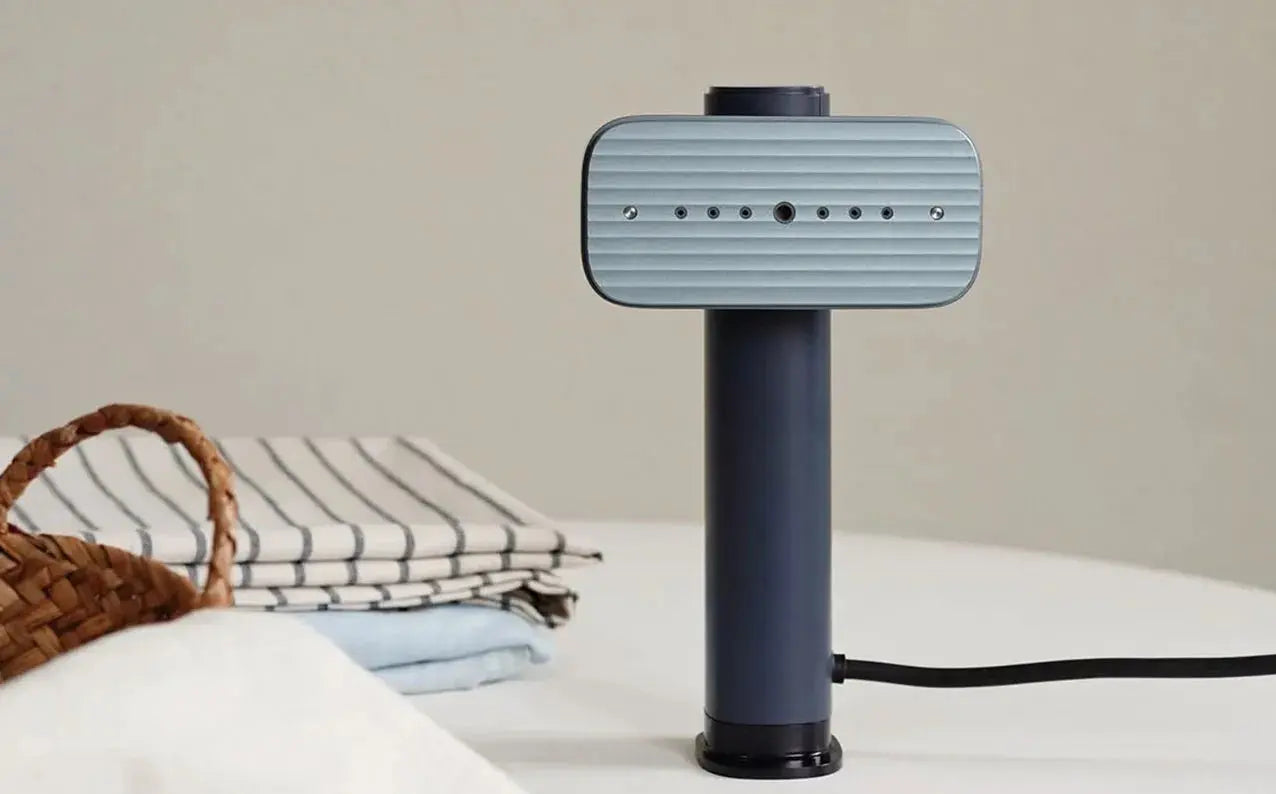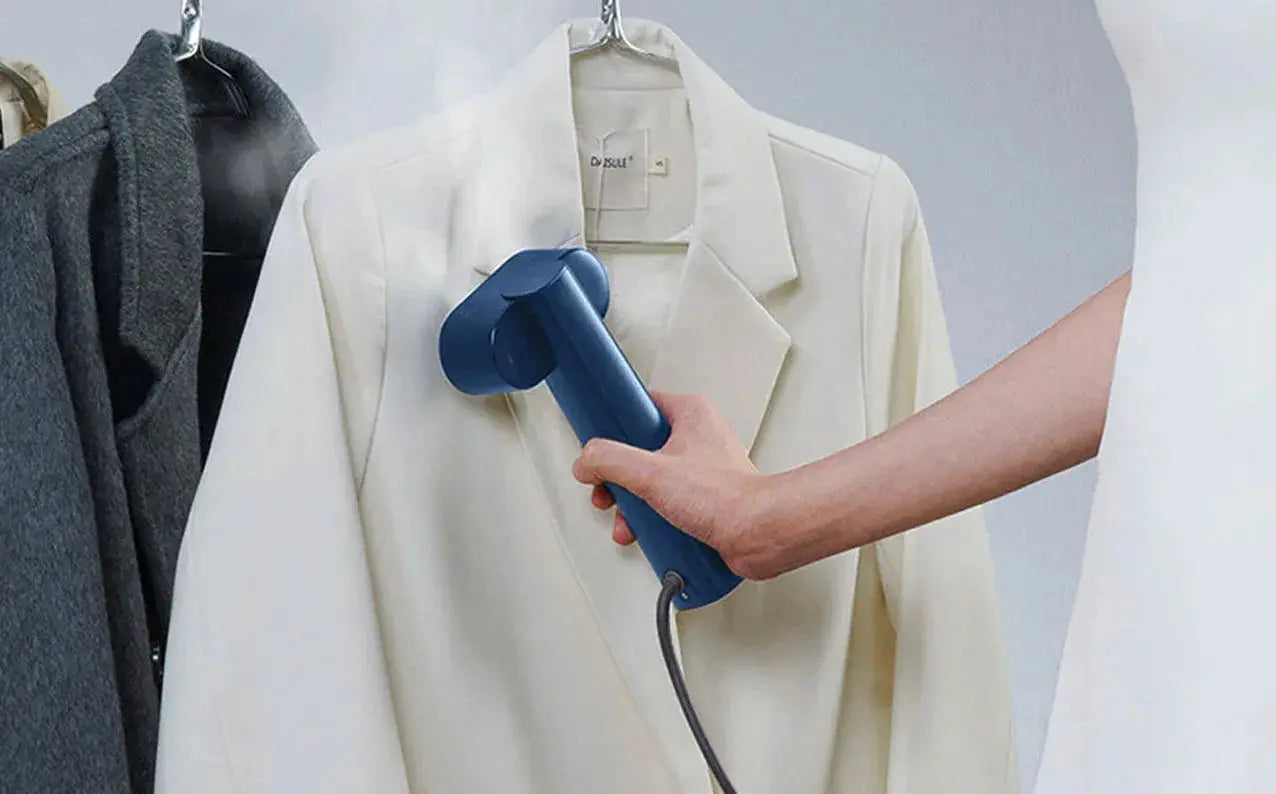

Why I always carry a portable clothes steamer with me — even in waiting rooms
Starting from the daily life of a psychiatrist
If you have seen people hurrying into hospitals early in the morning in New York, Boston, or San Francisco, you can probably understand that state — the coffee hasn't fully kicked in yet, but the brain is already working at full speed.
As a psychiatrist, my job is not just “having a conversation”, but highly structured and extremely intense cognitive labor. Every day, I have to switch rapidly among different patients, different emotions, and varying levels of risk. And I gradually realized that a sense of stability often begins with some seemingly insignificant details.
One detail that many people tend to overlook — the state of one's attire.

Dressing neatly is not vanity; rather, it is a part of one's psychological security.
During medical training, we are repeatedly reminded that in the first 30 seconds of meeting a patient, they will form an initial judgment about you.
This is not bias; it is an instinct of the human brain.
Whether the clothes are neat and clean will directly affect patients' perception of “professionalism” and “reliability”. For patients with anxiety disorders, depression, and post-traumatic stress disorder, these non-verbal signals are particularly important.
I myself have also gone through a distinct stage of change.
When I was first in the hospital, I hardly paid any attention to these details. I rotated between day shifts and night shifts, and I would just pull my white coat out of my backpack and throw it on. Until one time, a patient who had been receiving long-term treatment suddenly said before the session began:
“You look a bit disheveled today. I'm a little worried.”
That sentence has stuck in my mind for many years.
Busy professionals have different understandings of what “saving time” really means.
When people talk about time management, they usually think of schedules and efficiency tools. But for someone like me who constantly moves between hospitals, clinics and teaching buildings every day, what really matters is reducing decision fatigue.
I don't want to spend every morning worrying about whether my clothes fit properly or if they have any obvious wrinkles.
Especially when on business trips, attending academic conferences, or undergoing cross-state training, the hotel's ironing equipment is either in a queue or in a poor condition.
This is also the reason why I started to use the portable clothes steamer.
Not because it is “advanced”, but because it reduces the complexity of life.

portable clothes steamer, it solves much more than just “wrinkles”
Functionally speaking, the portable clothes steamer merely flattens the clothes.
But from the perspective of user experience, it solves a series of interrelated problems:
- No need for an ironing board
- No need to warm up for too long
- Works in small spaces
- Friendly to suits, shirts and knitted fabrics
For me, the most important thing is that it enables me to maintain a familiar sense of order even in an unfamiliar environment.
In psychiatry, there is a concept called grounding (a sense of stability).
When the environment changes frequently, people will adopt certain fixed behaviors to stabilize their inner state.
For some people, it might be morning jogging, while for me, it's a set of ironed clothes.
From the consulting room to the suitcase: My own usage habits
I'm not a fan of equipment and I don't care about the specifications.
When choosing a portable clothes steamer, I only consider three points:
Weight and volume
Can it be placed directly in the carry-on luggage instead of the checked luggage?
Is the steam output stable?
I don't need extremely high power, but it must not fluctuate greatly.
Is the operation intuitive?
At six in the morning, I had no patience to study the complicated buttons.
Later, when I came across the related content about Nesugar on a lifestyle website, I noticed one point:
It didn't focus on “selling”, but rather discussed how an individual's state is supported by details in the context of the modern pace of life.
This is precisely the topic that I have been focusing on for a long time.

Dressing management is actually a form of self-care.
In psychotherapy, we often talk about self-care, but many people mistakenly think it means taking a bath, meditating, or going on vacation.
In fact, for people in high-pressure occupations, the truly sustainable self-care often involves:
- Reduce one hassle in the morning
- Reduce anxiety just once before going out.
- Make yourself look “controllable” in the mirror
When you don't have to worry about your clothes, your brain can then focus its energy on more important matters.
I have patients who are lawyers, consultants, entrepreneurs, and pilots.
They later shared with me that after they began to pay attention to these “minor orderings”, their emotional stability did improve.
Why don't I suggest regarding it as a “refined lifestyle label”?
It should be clearly stated that:
I don't think everyone needs a portable clothes steamer, and I certainly don't consider it to represent any particular status.
If your lifestyle is slow-paced, your space is fixed, and you have time to use a traditional iron, then there is absolutely no need to change.
The truly valuable tools are never “essential for everyone”, but rather are precisely suitable for a specific lifestyle.
The reason why I have been using it for a long time is:
- The occupation demands a high level of stability in one's image.
- High degree of uncertainty in the itinerary
- Emotionally labor-intensive
This is a very specific usage scenario.

From the perspective of a psychiatrist, here is one criterion for your judgment.
If you are considering whether you need a portable clothes steamer, I usually pose a very simple question to help you make a decision:
“Could it reduce a long-standing source of friction in your life?”
If the answer is yes, then it’s worth having.
If it is merely because others are using it, then it is likely to be left unused.
The improvement of quality of life rarely comes from major changes, but rather from these underestimated small tools.
Final Note
A sentence I saw on nesugarlife.com left a deep impression on me. Its gist is:
The lifestyle is not for showing to others, but for making one's life more stable.
As a psychiatrist, I am increasingly convinced of this.
We can't control the chaos of the world, but we can choose how to organize our own small space.
Sometimes, a neatly folded shirt is the starting point of a good day.
If you are also experiencing a period of accelerated life pace, I hope this sharing can be of some help to you.
At least, on a certain morning, it will make you less anxious and more composed.