
Garment Steamer for Blouses: How I Remove Wrinkles Without an Ironing Board
I used to put off ironing my blouses for as long as I could.
I had to pull out the ironing board, wait for the iron to heat up, and then deal with one sleeve at a time. By the time I was done, I'd usually find another wrinkle somewhere else. I was even more careful with delicate blouses because too much heat could leave the fabric looking shiny or make it lose its shape.
That's when I started using a garment steamer instead. It's faster, easier to use around sleeves and ruffles, and gives me the neat look I want without making the blouse look too stiff.
I did learn pretty quickly that a steamer doesn't fix everything. How well it works depends a lot on the fabric and how you use the steamer.

Why I Prefer a Garment Steamer for Blouses
Blouses are awkward little things. They often have lightweight fabric, curved seams, cuffs, pleats, ruffles, or delicate details that are annoying to press flat.
A steamer just makes the whole process easier. Instead of pressing the blouse against an ironing board, I can steam it while it's hanging up. That's especially handy with loose or delicate fabrics.
I find steaming especially useful for silk and other delicate blouses when the care label allows it. I also use it on polyester, rayon, loose-fitting tops, and blouses with ruffles or pleats. It's especially handy when I only need to touch up a few wrinkles before work or going out.
I still reach for an iron when I want a sharply pressed collar or a crisp crease. But if a blouse just has a few wrinkles from being stored or tossed in the laundry basket, I usually grab the steamer.
How I Steam a Blouse Without Making a Mess
My routine is pretty simple. I've just found that a few small things make a big difference.
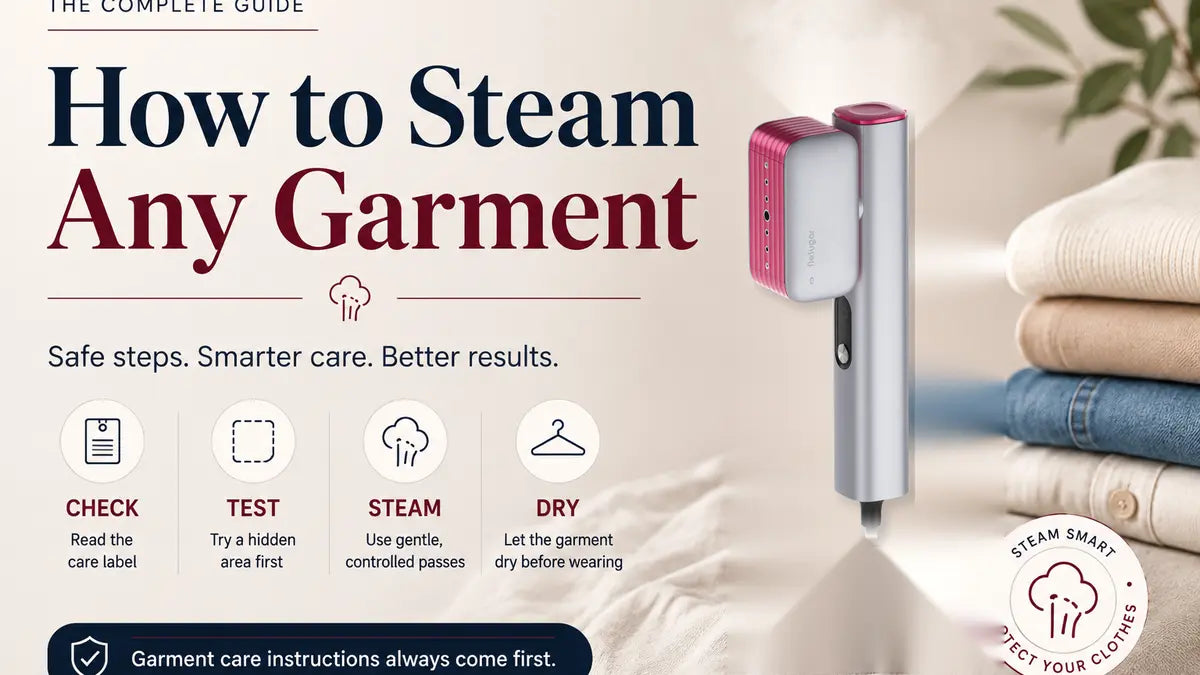
1. Check the care label first
I always check the garment's care instructions before applying heat or steam. Some fabrics handle steam well, while others are much more sensitive to heat and moisture. Leather, for example, should not be steamed, and garments with a "do not iron" or "do not steam" symbol should be left alone.
For a new or particularly delicate blouse, I also test a hidden area first.
2. Hang the blouse securely
I use a sturdy hanger and close the buttons, including the collar and cuffs when possible.
That gives me a stable base and makes the blouse easier to steam. It also makes it much easier to keep the fabric gently stretched while steaming. I usually keep the blouse on a sturdy hanger and gently pull the fabric as I steam it.
3. Start at the top and work downward
I usually begin around the shoulders and upper chest, then move down toward the hem.
For sleeves, I work from the shoulder toward the cuff. I don't rush. Moving too quickly can leave wrinkles behind because the steam has not had enough time to relax the fibers.
I gently pull the bottom of the blouse with one hand while steaming with the other. It helps keep the fabric flat and makes the wrinkles easier to remove.
4. Give collars and cuffs extra attention
These areas tend to be stubborn because several layers of fabric overlap.
If I want a soft, natural finish, I steam them carefully while keeping the fabric supported. If I want a genuinely crisp collar, I switch to an iron and press it properly.
That distinction matters. A garment steamer is fantastic for removing wrinkles, but it does not always produce the same sharp finish as a traditional iron.

What About Silk, Rayon, and Polyester Blouses?
This is where I pay a little more attention to the fabric.
With silk, I use gentle steam and keep the steamer moving rather than holding it over one spot. The fabric is delicate, so I follow the garment's care instructions rather than assuming every silk blouse can be treated the same way.
Rayon: I don't steam it for very long. Rayon can be sensitive to moisture and heat, so I avoid steaming it for too long.
Polyester: Usually straightforward, but I still use the temperature and steaming method specified by the care label.
Cotton and linen: These can take more patience when wrinkles are deep. I move more slowly and may need several passes rather than trying to remove one stubborn crease in a single pass.
If it's a blend, I usually follow the care instructions for the more delicate fiber. It's a small habit, but it has saved me from a few laundry mistakes.
Common Steaming Mistakes I Had to Stop Making
One mistake I used to make was holding the steamer too far away.
I used to think more distance meant more protection. Not necessarily. If the steam barely reaches the fabric, the wrinkles usually aren't going anywhere. For example, Panasonic recommends keeping the steamer about ⅜ inch away from the fabric for garments that call for non-contact steaming.
I also stopped holding the steamer over the same wrinkle for too long. If one spot still won't smooth out after a few passes, I usually stop and check whether I'm using the right amount of heat and steam for that fabric.
Another mistake is forgetting to let the blouse settle afterward. After steaming, I leave the blouse hanging for a few minutes so it can cool and dry before I put it on.
I also learned to be careful about water droplets. If the steamer spits water onto the blouse, it can leave marks, especially on lighter fabrics. A fully heated steamer and careful handling help reduce unwanted water spots.

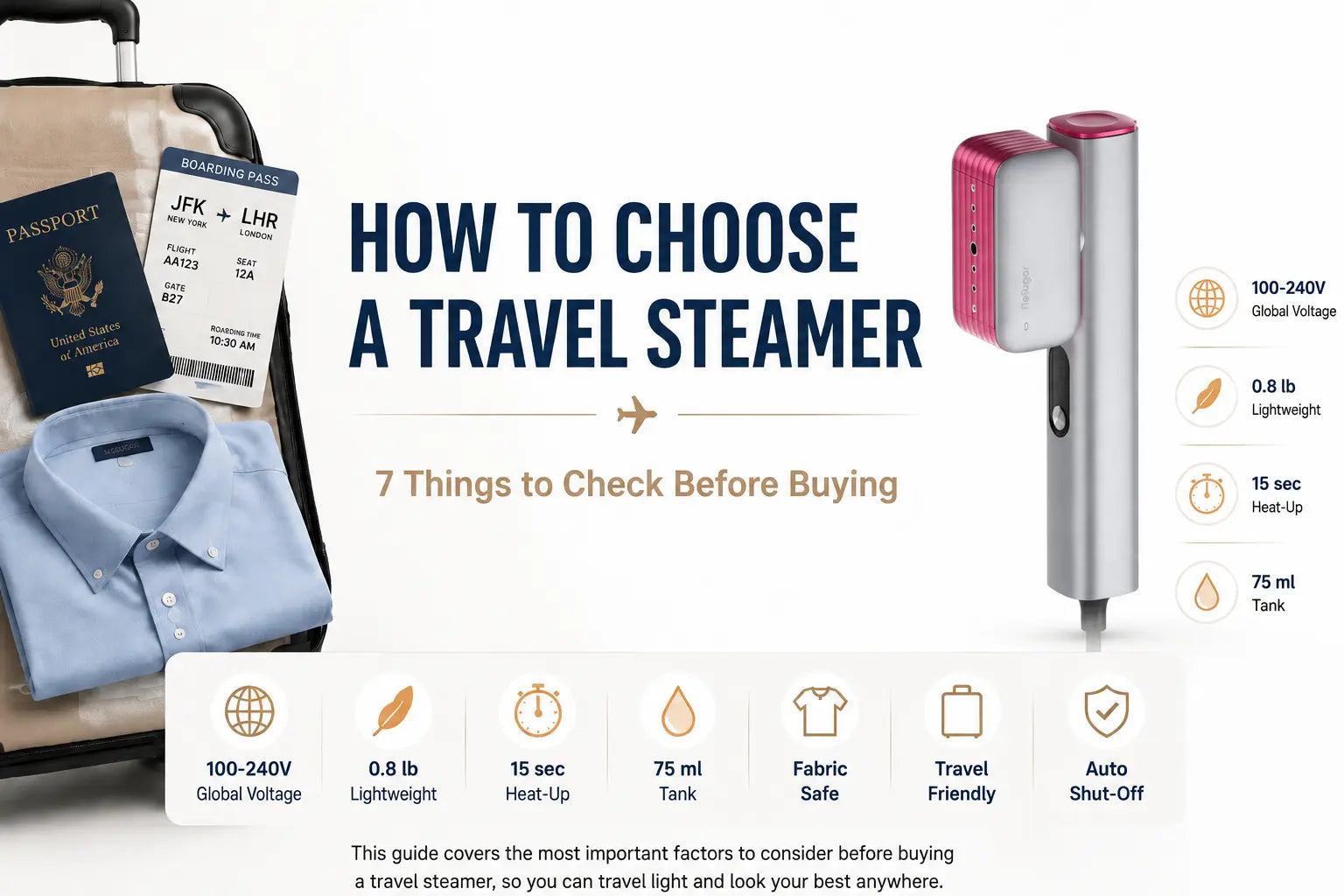
What I Look For in a Garment Steamer for Blouses
I don't think the most powerful steamer automatically wins.
For blouses, I care more about how easy the steamer is to control and hold. Fast heat-up also matters, and I like having enough water for a few blouses without refilling the tank.
A lightweight handheld model works well for me when I'm just steaming a blouse or two before leaving the house. If I were steaming a whole wardrobe every week, I'd probably go with a larger upright model.
I care more about whether it's comfortable to use and works well for the clothes I steam most often.
My Five-Minute Blouse Routine
When I'm in a hurry, this is the routine I come back to:
1.Check the care label.
2.Hang the blouse securely.
3.Close the buttons and straighten the garment.
4.Let the steamer reach its proper operating temperature.
5.Start at the shoulders and move downward.
6.Gently hold the fabric taut with my free hand.
7.Slow down around collars, cuffs, seams, and layered areas.
8.Use extra care with delicate fabrics.
9.Hang the blouse for a few minutes before wearing it.
The whole thing is much less of a production than ironing, especially at 7:30 in the morning.
For me, a good garment steamer is one that makes it easy to get a blouse ready without pulling out the ironing board. I also get better results when I slow down and pay attention to the fabric and how close I'm holding the steamer.
I don't think more steam is always better. I usually get better results with moderate steam and a steady hand.