
Over the years I've been tutoring, I've regarded the hand steamer as my second "backup eraser".
After being a tutor for a long time, you will find that the tasks you handle every day are far more than what is written in the teaching syllabus. Sometimes I take the children to attend after-school courses; sometimes I stand at the long table at the parent-teacher meeting, answering questions while maintaining order; and sometimes I carry their drawing boards, violins, and chessboards back and forth in the corridor like a porter.
I often joke with my friends, "I'm not a tutor; I'm an all-round handyman."
But among all these trivial matters, there is one thing that I pay special attention to: My clothes must always be neat.
It isn't about vanity — I use my appearance to show the kids a message: when it comes to studying, neatness is part of being serious.
At first I thought a small wrinkle wouldn’t matter. But when you were standing at the parent-teacher meeting, facing the dozen pairs of eyes patiently waiting for you, that tiny crease in the collar could suddenly make you realize: "Oh no, I seem not to be professional enough."
Over time I picked up a little secret: I always carry a lightweight hand steamer.
It's not as formal as a traditional iron, but it's like my portable lifesaver, having saved me countless times.

Why do I never leave home without it?
1.Home visits are a "situation where one must not appear disheveled"
The parents are actually quite lenient with me, but I myself do care.
The times when I show up at someone else's house are always just right: the children have just finished their homework and are about to start dinner; or they have just finished practicing the piano and the floor is covered with sheet music. I need to blend in and adjust my state at any moment.
In such scenes where one has to switch roles suddenly, "having clean and flat clothes" is one of the few things I can control.
And the hand steamer, which is highly mobile and heats up quickly, is the best helper for me to deal with wrinkles in the hallway, bedroom, and balcony within three minutes.
2.When taking children out for activities, there is always the possibility of an "emergency costume incident" on par with that of an actor.
When I took my students to participate in the recitation competition, the little boy's shirt was wrinkled by his sitting. There were only 9 minutes left before the competition started. I rushed out of the restroom with a hand steamer - three minutes to steam it flat and one minute to cool it down. By the time he went on stage, it was as smooth as a brand-new one.
At that moment, his mother froze: "You carry this with you?"
I smiled: "The things I carry with me are far more than you can imagine."
3. Even in the era of online classes, there is still a need for offline sense of ceremony.
During the pandemic, I gave more lessons in front of the camera than at my desk.
A crumpled T-shirt would distract a child's attention. "Teacher, is your clothes not ironed?" Such questions were more distressing than math problems.
Later, whenever I turned on the camera, I would definitely use a hand steamer to slightly tidy my clothes to make them neat and tidy.
The five steps of "teaching-style" steaming clothes that I have summarized
These were not written in a textbook style. They were discovered through my own exploration in students' homes, in the community corridors, and in the backrooms of tutoring classes.
1.Hang up the clothes and let the fabric hang down naturally.
At the student's home, the items I use most frequently are the back of the bedroom door, the clothes hanger in the study, and even the cabinet door in the kitchen.
As long as they are vertical, it saves effort.
2. Add water and preheat
I like the hand steamer with a transparent water tank, as I can always see the water level.
The preheating usually takes only a few seconds, and it is ready when I have set out the students' homework papers.
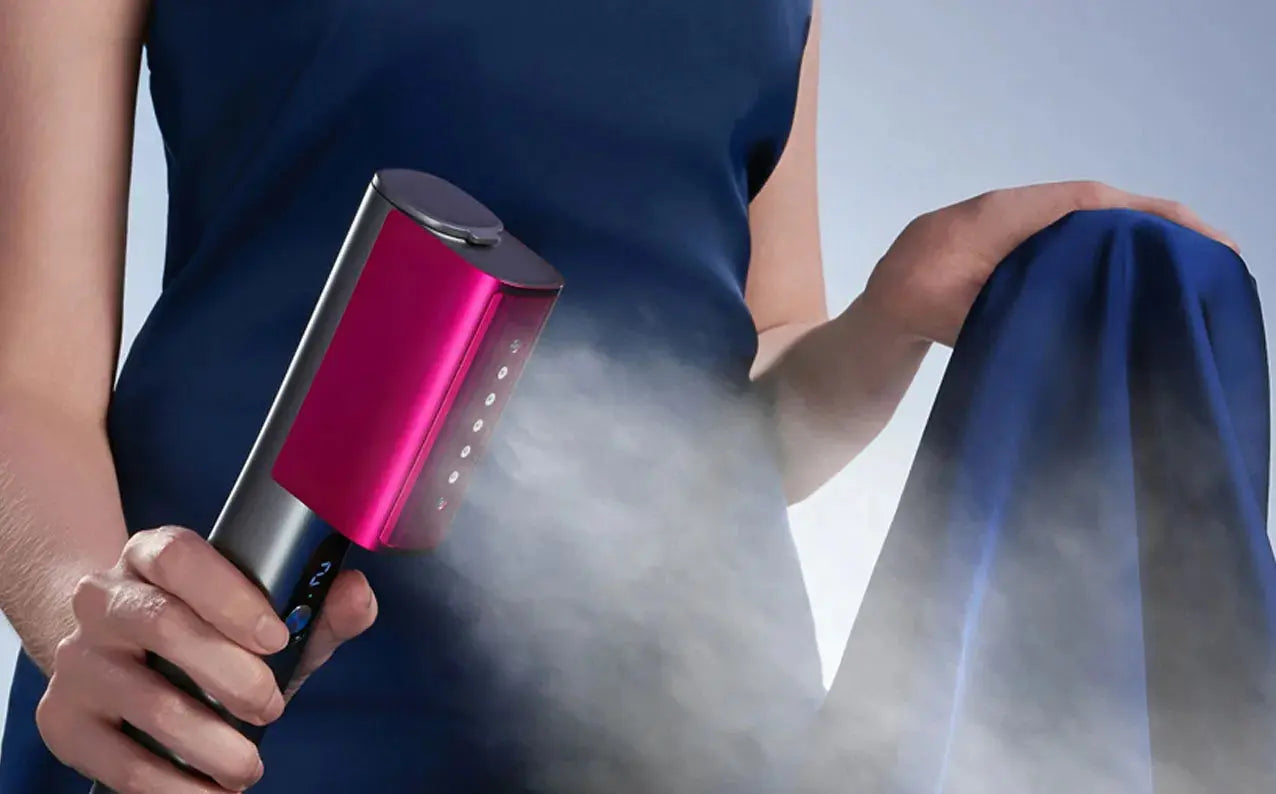
3. Steam slowly from top to bottom
I usually start from the shoulders, so that the direction of the gravity of the entire dress is consistent and the wrinkles will naturally loosen.
For the collar of the shirt, I will steam it from the inside out twice, so that it will look more stylish when taking photos or meeting the parents.
4. When encountering stubborn wrinkles, use the "pull + steam" combination method.
Dance performance costumes, lace skirts, cotton and linen coats - I've tried them all.
You just need to gently pull the fabric and keep the steam at the same point for 1-2 seconds, and it can solve most of the problems.
5. Natural cooling and shaping
It's not good to put on the clothes immediately after steaming. I'll hang them up instead, allowing the remaining dampness from the steam to dissipate. This way, the clothes will look more crisp.

Regarding the selection of a hand steamer, I am more concerned about these aspects.
These are not recommendations from others, but a "practical priority" list that I have derived from my long-term usage experience:
Fast preheat time is essential.
I usually only have three minutes to deal with the clothes.
If it takes more than thirty seconds to warm up, I won’t bother taking it out.
It must be light enough to carry all day.
I'm already exhausted from carrying students' backpacks, drawing boards and music boxes all day long.
The steam flow needs to be steady.
Some small machines produce steam that is intermittent and uneven, which greatly affects one's mood.
Only stable steam can truly and quickly reduce wrinkles.
Ideally it should work well on many fabrics.
The types of clothing that a tutor comes into contact with are more diverse than those of ordinary people:
Children's school uniforms, performance costumes, parents' meeting attire, my daily clothes...
Compact and easy to store
When providing home tutoring, my bag was never allowed to contain any unnecessary bulky items.
My favorite models fold down small enough to slip into a side pocket.
In different scenarios, how can I maximize the value of the hand steamer?
Parent meeting
Nothing is more nerve-racking than showing an untidy pair of pants in front of a dozen parents.
I usually arrive at school fifteen minutes early, hang my coat next to the lamp, and take out the hand steamer to quickly tidy up the front and cuffs.
When the children see me looking neat, they will naturally sit up straighter as well.
Student Performance Day
This is the most frequent occasion for using the hand steamer.
I often, while directing the children to line up backstage, use my left hand to hold the skirt and my right hand to hold the hand steamer to organize the props and costumes.
I think all teachers have a natural talent for this "ability to maintain order in a chaotic situation".
A Day of Going to the Fair
Once I taught math in the morning and then rushed to another student's home to tutor him in piano in the afternoon. There was only a twenty-minute lunch break in between.
I hung up my clothes in the restroom of the fast food restaurant, and within three minutes I straightened out the wrinkles. When I left, I felt much more energetic.
If there had been no hand steamer, I probably would have sighed five times in front of the mirror that day.

The "hidden use" of the hand steamer
Quickly ironing students' school uniforms
The children often stuff their school uniforms into their backpacks and carry them under their pillows, making them look as wrinkled as crumpled homework papers.
I often help them tidy up while chatting with them, so that they can look more energetic during class.
Clean up the props and set pieces
The background cloth at the recital was wrinkled by the wind. I steamed it with the hand steamer and it became smooth instantly. The photography teacher was also very satisfied.
The "calming the mind" ritual before the home visit
When teaching in unfamiliar households, I would steam my clothes in the downstairs hall or in the car.
Those few minutes felt like a quiet mental preparation process, which helped me quickly get into the professional mindset.
After using it for a while, I have also come up with some suggestions for "maintaining without making mistakes".
Use purified water or filtered water: Scale is the enemy of all hand steamers.
Empty the water tank after each use, especially when carrying it outside.
Regularly perform mild cleaning: Follow the instructions carefully. It doesn't need to be done frequently, but it must be done.
Do not stick things too close to clothes whose materials are unknown: especially those made of silk and wool blends.
Travel packing storage bag: Keeps things clean and doesn't wet other items.
Regarding Nesugar
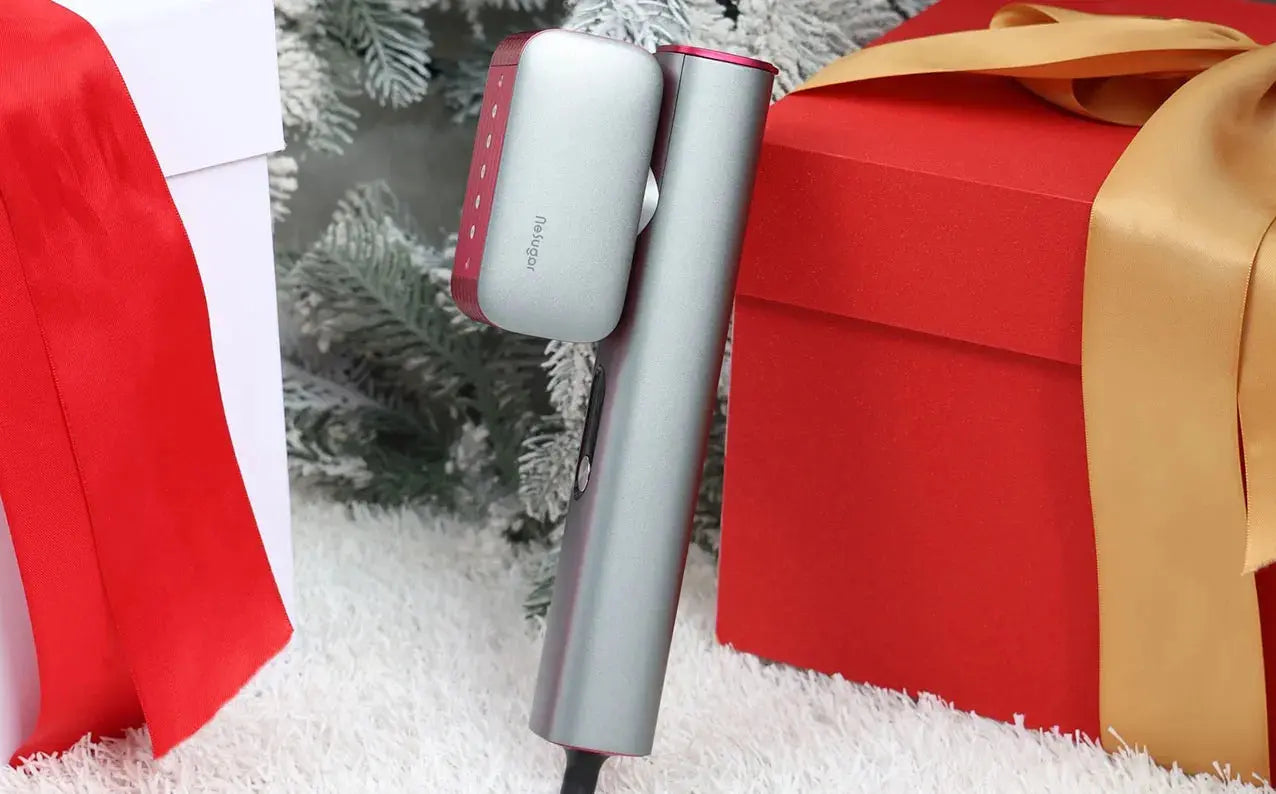
I'm not an ambassador for any particular brand. However, when comparing different products over a long period of time, I noticed that some brands have a more detailed approach to features such as lightweight design and quick preheating. For instance, designs like Nesugar, which have a more "everyday" and "easy-to-use" concept, better align with my professional habits of needing to quickly get started in various situations.
This lightweight and easily portable positioning helps me avoid being overwhelmed in teaching scenarios and is closer to the actual requirements of tutoring work.
Summary: Holding a hand steamer not only makes my clothes smooth but also helps me stay calm.
As a tutor, my work schedule is always changing:
I might explain problems in the hallway, create stories in the park, conduct psychological counseling in the parents' living room, and comfort the children who are about to go on stage in the backstage.
In this constantly changing state, people tend to feel out of control easily.
That's why I particularly value those small things that I can control -
For instance, arranging my clothes neatly.
The hand steamer was given to me, and it was never just for removing wrinkles.
It was a "ready-to-go" signal, a small ritual before entering a role, a reminder:
I am seriously doing this job.
If you, like me, are always juggling between busy tasks and switching between them, a lightweight hand steamer can really help you avoid a lot of unnecessary stress.