
Why I’d Rather Pack a Travel Steamer Than One More Outfit
I used to have a pretty simple attitude toward wrinkles when I traveled: Most hotels have an iron, so if my clothes get wrinkled, I’ll just iron them.
Then I started traveling more often for business and for events where I actually needed to look put together—whether that meant wearing a button-down shirt, a blazer, or a dress.
That’s when I realized it wasn’t quite that simple.
After more than ten hours crammed into a suitcase, my clothes can come out looking like they’ve been through a minor traffic accident. Hotel irons can be bulky and awkward, and ironing boards somehow take up more space than they should.
The most annoying part? Sometimes I only need to fix a few wrinkles around the collar or cuffs, but I still have to set up the whole ironing station.
That’s when I started looking into travel steamers.
A steamer won’t magically fix every stubborn wrinkle, but for travel, business trips, hotel stays, and quick touch-ups, it can make getting dressed a lot easier.

What Is a Travel Steamer Actually Good For?
A garment steamer uses hot steam to relax the fibers in clothing, making it easier to smooth out wrinkles.
For me, the biggest difference between a steamer and an iron is simple:
A steamer is great when I just need a quick touch-up.
Say I’m getting ready for a morning meeting and pull a cotton button-down out of my suitcase, only to find a giant crease across the chest.
I’m probably not going to drag out an ironing board for that.
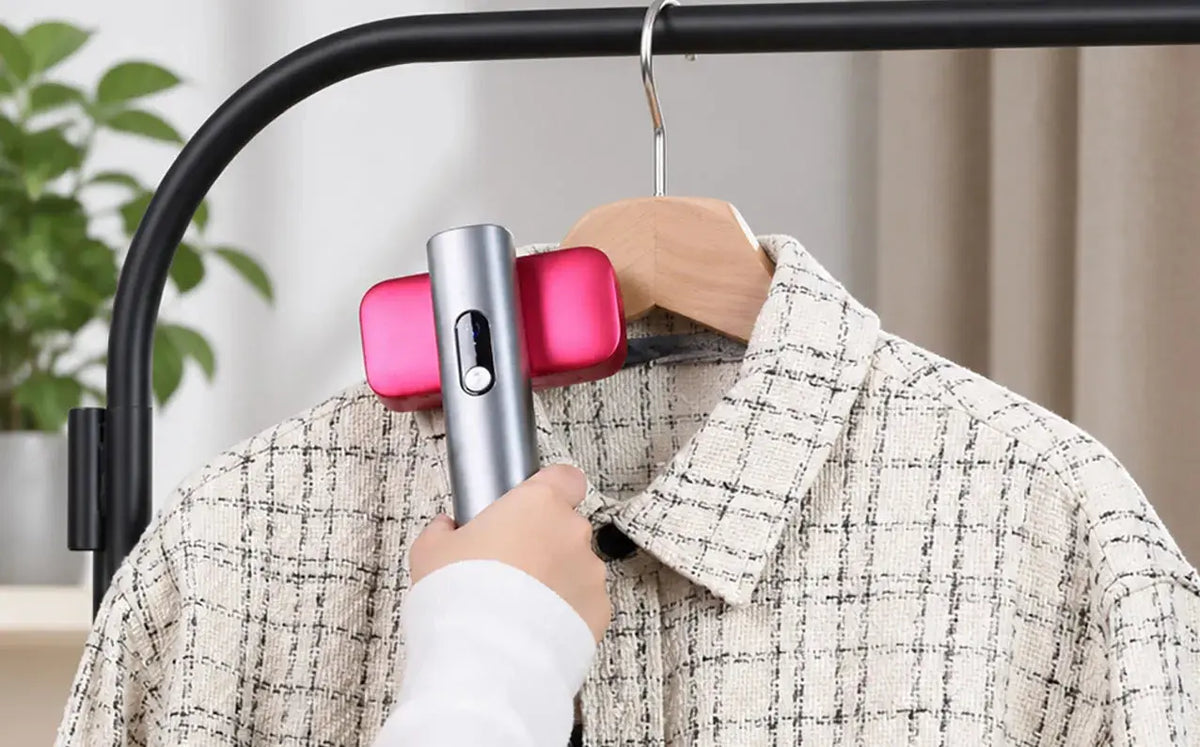
I’ll hang the shirt up and slowly move the steamer from top to bottom, paying extra attention to:
- The collar
- The shoulders
- The chest
- The cuffs
- The hem
Those are usually the spots that make it most obvious your shirt spent the night folded inside a suitcase.
Most travel steamers are designed with the same basic priorities in mind: compact size, relatively light weight, and quick heat-up times. NESUGAR’s travel lineup, for example, includes the G2 Pro, which is listed at about 0.8 lb and supports 100–240V; the G3 Pro, which advertises a heat-up time of around 15 seconds; and the G5 Pro, which has 1,500W of power and a 200ml water tank.
Those specs can look a little technical at first, but they come down to a few practical things:
Less weight means less to carry. Faster heating means less time waiting. A larger water tank means you’re less likely to run back to the bathroom sink halfway through steaming your clothes.
When I Choose a Travel Steamer, I Look at More Than Steam Power
I learned this after making a few less-than-great choices of my own.
When shopping for a travel steamer, wattage is one of the first specifications you’ll probably notice.
It matters, but it’s not the only thing I’d look at.
1. Weight Matters More Than You’d Think
At home, an extra few ounces probably won’t matter much.
In a carry-on, they can.
Every little “maybe I’ll use this” item eventually adds up, and at some point I find myself wondering:
“Why is my suitcase so heavy?”
If I’m buying a steamer mainly for travel, I want something lightweight, compact, and easy to pack.
NESUGAR’s travel guide also points to weight, portability, heat-up time, and voltage compatibility as factors worth considering when choosing a travel steamer.
2. Traveling Internationally? Check the Voltage
This is one detail I wouldn’t leave to chance.
Voltage varies from country to country, so if you’re taking a steamer to Europe, Japan, or somewhere else overseas, check the voltage range on the device before you pack it.
Some models support 100–240V, which makes them more convenient for international travel. But voltage compatibility and plug compatibility aren’t the same thing.
Even if your steamer supports the voltage at your destination, you may still need a plug adapter to physically connect it to the outlet.
If the device doesn’t support the local voltage, you’ll need to check whether a voltage converter is appropriate for that particular steamer.
NESUGAR’s travel guide also recommends checking the voltage range of the specific model instead of assuming every travel steamer is designed for international use.
My rule is simple:
Spend a minute checking before you leave instead of finding out at the hotel that your steamer won’t work.

Different Fabrics Need Different Treatment
It’s easy to overlook this when you’re in a hurry.
Cotton, polyester, linen, and other common fabrics can often be steamed, but they don’t all respond to heat in exactly the same way.
For silk, delicate fabrics, or clothing with decorative details, I wouldn’t put a hot steamer directly against the fabric without checking the care label first.
The basic rule is:
Check the care label, then test the steamer on a small, inconspicuous area.
When I steam clothes, I keep the device at an appropriate distance and let the steam do the work while gently pulling the fabric smooth with my other hand.
There’s no need to attack the wrinkles with fast back-and-forth movements.
The goal is to relax the fabric, not force the steamer through every crease as quickly as possible.
For heavier fabrics or stubborn wrinkles, I’d rather make a few slower passes than hold the steamer in one spot for too long.
My Quick Wrinkle-Removal Routine: Work From Top to Bottom
If you’re new to using a travel steamer, this is the routine I find easiest.
Step 1: Hang the garment up.
Use a sturdy hanger if you can. I wouldn’t lay the garment flat on the bed and steam it from there. It’s much easier to work with when it’s hanging.
Step 2: Start with the collar and shoulders.
These areas make a surprisingly big difference in how polished a shirt or dress looks.
Step 3: Slowly work your way down.
Hold the steamer in one hand and gently pull the fabric taut with the other.
Step 4: Finish with the sleeves and hem.
Cuffs, pleats, and the bottom of the garment may need a little extra attention.
Step 5: Let the garment hang for a few minutes.
I wouldn’t steam a shirt and immediately throw it back into the suitcase.
Give it a few minutes to cool and dry before wearing it or packing it away. It’s a small step, but it can help keep those fresh wrinkles from coming right back.

Travel Steamer vs. Travel Iron: Which One Makes More Sense?
My rule of thumb is pretty simple.
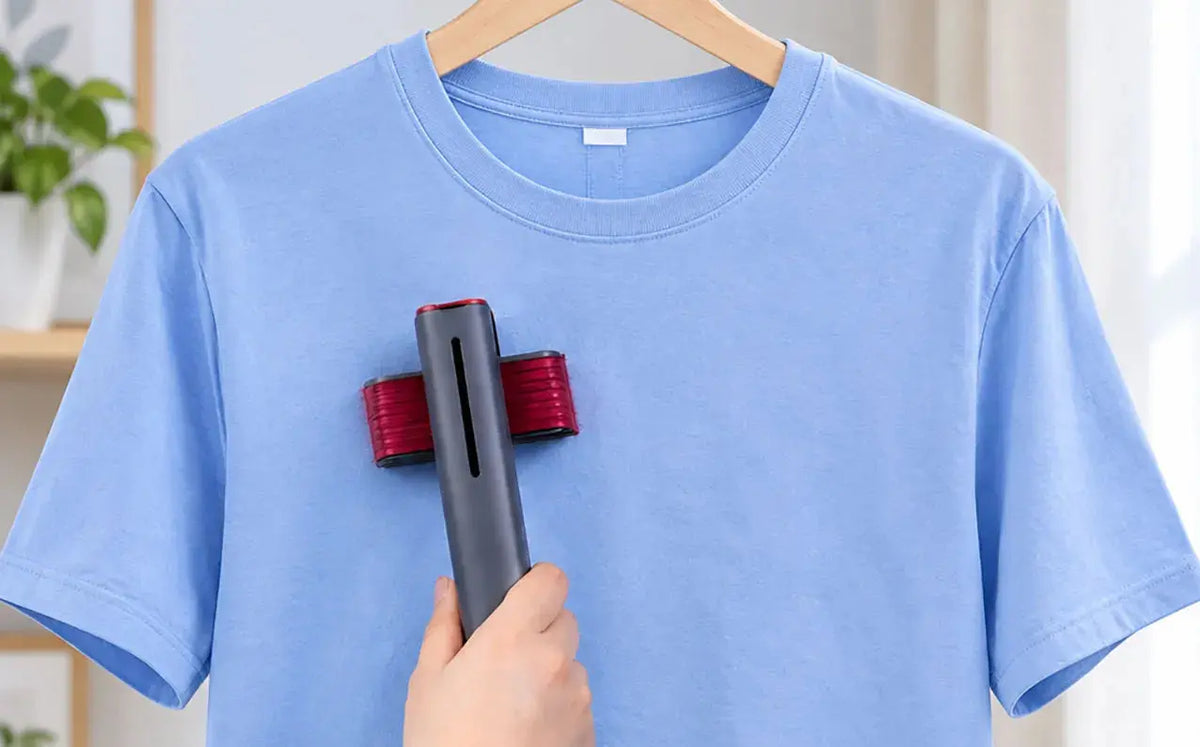
If I’m mainly trying to freshen up a button-down shirt, dress, T-shirt, or jacket—especially in a hotel room—I’d reach for a steamer.
If I want sharp pant creases or the really crisp finish you get from traditional ironing, a travel iron makes more sense for that job.
There’s also a middle ground: a 2-in-1 steam-and-press design.
For example, the NESUGAR G9 Pro combines steaming with pressing and has a 90-degree rotating ironing head.
That type of design could be useful if you like the convenience of vertical steaming but occasionally want to press clothes on a flat surface.
Where Should You Pack a Travel Steamer?
My advice: Keep it somewhere you can actually reach.
There’s not much point in having a convenient travel gadget if it’s buried underneath half your suitcase.
Before using it, fill the water tank as needed. Afterward, let the device cool completely, empty any remaining water, and store it securely.
If you’re flying, I also wouldn’t assume that every airline or destination has exactly the same rules.
NESUGAR’s travel guide recommends emptying the water tank, allowing the device to cool completely, storing it securely, and checking airline and local security requirements before departure.
These details may sound minor, but they can make a difference between a travel gadget that’s genuinely convenient and one that ends up being more trouble than it’s worth.
So, Why Has a Travel Steamer Earned a Spot in My Suitcase?
I used to think a travel steamer was one of those things that sounded useful but probably wasn’t worth the extra space.
Now I’m not so sure.
It doesn’t just solve the problem of wrinkled clothes. It solves a more annoying travel problem: getting your clothes presentable without turning it into a whole project.
A morning meeting. A nice dinner. A wedding. A last-minute date. Even just taking a few photos while you’re traveling.
Sometimes I don’t have the time—or the patience—to figure out the hotel iron and ironing board.
A lightweight travel steamer with a fast heat-up time and the right voltage compatibility can make those little moments much easier.
These days, when I’m packing, I don’t really ask myself:
“Am I actually going to use this?”
I ask:
“If my clothes come out of my suitcase looking like a road map, can I fix them in five minutes?”
If the answer is yes, I can usually justify giving that little gadget some space in my luggage.
Travel is complicated enough.
At the very least, my shirt doesn’t need to make things worse.