
My Notes on the Small Steamer: The Backstage Survival Guide of a Choir Conductor
I like to say conducting is half music and half wearing a dozen other hats — from counselor and traffic director to impromptu lighting tech and tailor. My baton and a small handheld steamer go everywhere together — one shapes the music, the other keeps everyone looking stage-ready.
If you’ve seen a backstage, you’ve seen dozens of adults in formalwear trying to go from “packed in a suitcase” to “performance-ready.” Some are so nervous they keep tugging at hems, some have wrinkled skirts, and others’ newly bought shirts already look rumpled. Every time I lift the steamer I feel like a one-person emergency wardrobe squad charging to the rescue.
To be honest, it was at an international choir festival that I first realized the significance of small steamers. It was in the summer, and the backstage was so hot that it was unbearable. The air conditioning seemed to be just for show. Looking at the creases on the back of my rehearsal outfit, I thought: If I were to go on stage like this, those audience members who were supposed to be listening to the music might only focus on that "ridge" behind me. My pride got the better of me, and I borrowed a small steamer from someone. Since then, it has become a must-have stage tool for me.
This isn’t a product plug — it’s a summary of ten years of on-stage experience. To me the handheld steamer isn’t a convenience — it’s basic stage discipline.


As a conductor, why am I so dependent on the small steamer?
A performance is a single finished work: sound is its heart, costumes form the frame — what the audience sees still matters. Sometimes a single crease can break the visual unity — in a choir of dozens, one uneven patch stands out the way a misplaced half-beat would. I won’t let that happen — certainly not when I’m in charge.
Under the stage lights, any crease would be magnified. I witnessed too many scenes: the tenor's tie twisted into a knot, the soprano's black dress showed strange shadows due to the creases, and even one of the young members had a huge "U-shaped crease" on the back of his shirt. I froze for a second and silently thanked my luck that it wasn’t a soloist on stage.
These moments taught me one thing clearly: steady prep makes steady performances.
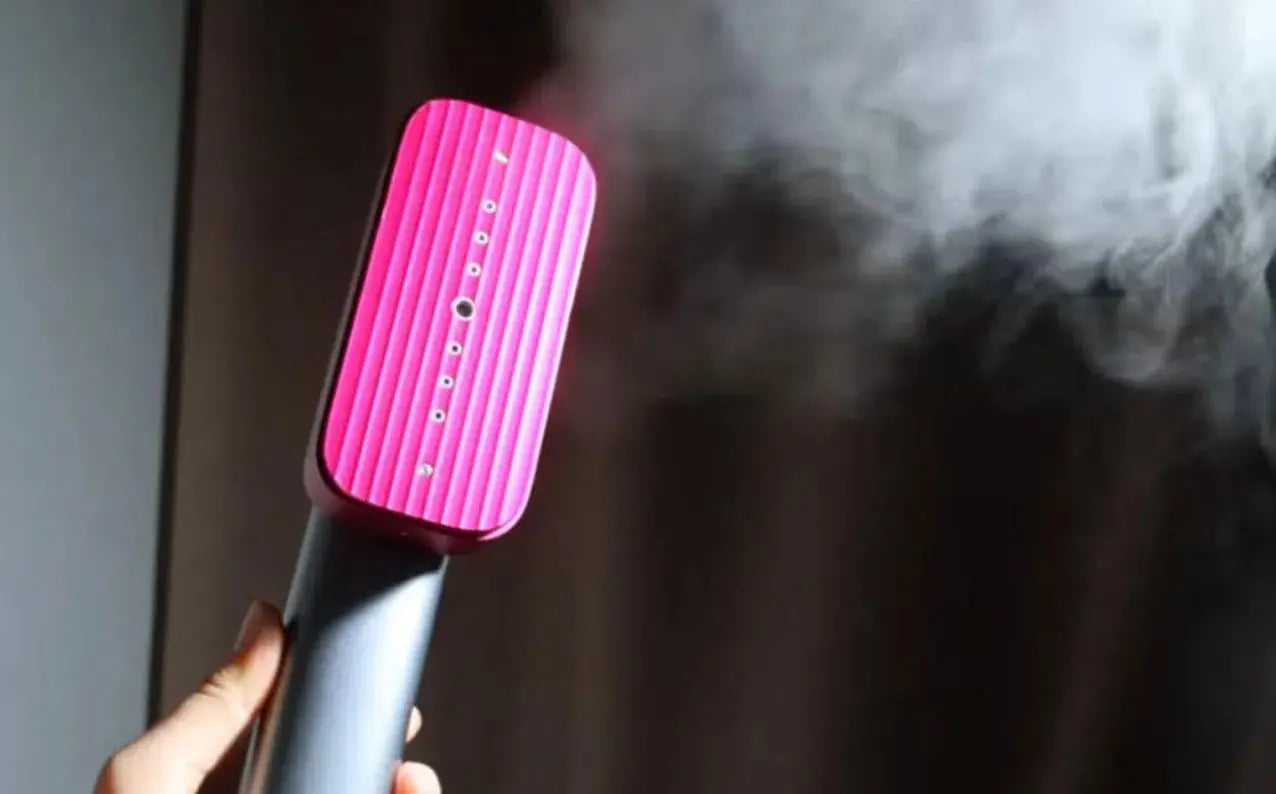
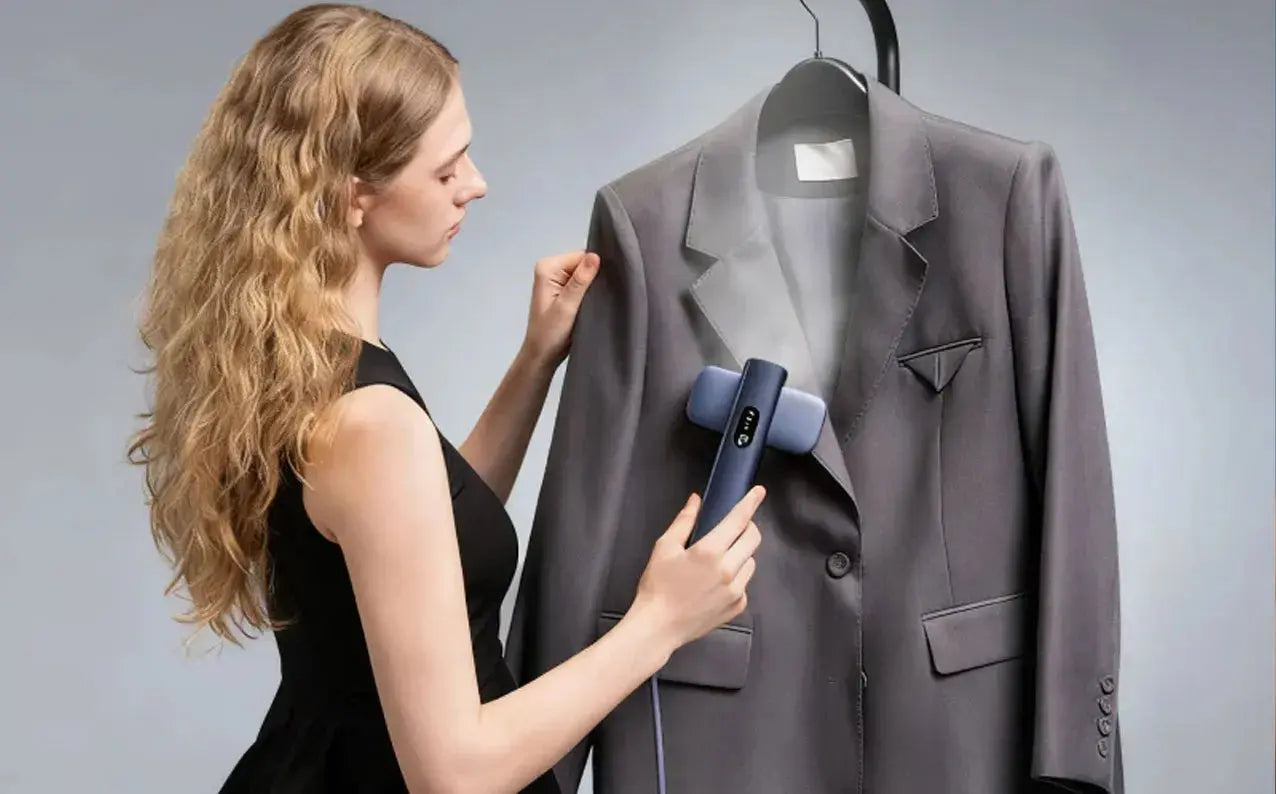
The steamer does not require a flat surface like a regular iron does, and it also has no risk of severe indentation. Therefore, it is suitable for environments such as backstage areas where space is limited and time is tight. A handheld steamer doesn’t need an ironing board and won’t press deep creases, so it’s perfect for cramped, hectic backstage areas.
What do I expect from a small steamer?
What I want from a small steamer — based on years of shows — is simple.These standards were not derived from the instructions in the manual, but were collected from various disaster scenes. These aren’t specs from a manual; they’re lessons learned from backstage emergencies.
Heating-up speed: I find anything taking more than 30 seconds to be too slow. Ideally it heats in about 15 seconds — that instant hiss of steam when you flip it on is priceless. The waiting time backstage is usually only a few minutes. It's impossible to wait for a sluggish unit to warm up gradually.
Continuous steam duration: At least enough to iron out the entire dress. When leading a group, I often have to "save three or four people at once", especially during large-scale performances. The small units that can be used for continuous steaming for 8–12 minutes are the most practical — they don't require refilling water during use and won't run out of steam halfway through the process.
Weight and Grip: Space is tight, and you often have to hold the device at odd angles. Backstage I often need to hold the clothes at a high position, from the side, or even behind. I don't have the time to struggle with such a cumbersome machine. A too-heavy steamer would make my wrists sore and it's also difficult to ensure even drying.
Portability and Storage: It should fit easily into my conductor bag. During my journey, I have brought along the conducting score, the score-marking pencil, the backup earphone, the small tuning fork, the collar stays... The steamer will be eliminated by me once it takes up too much space. I favor units that stand upright without leaking and won’t spill when tilted.
Voltage Compatibility: Overseas tours are a real test. The voltages vary in many countries. If the steamer doesn't support dual voltage, it might get damaged or won't be able to start at all. I had a bad experience once and since then, I always double-check before going abroad.

My backstage steaming routine — a rhythm honed over many years — looks like this:
Step 1: Check the material, don't overdo it
Silk, sequins, chiffon — I will be more cautious and usually keep a greater distance. Some clothes, once water stains them, the damage is irreparable.
Step 2: First, smooth out the clothes to make them "stand properly"
I used a sturdy wooden clothes hanger with some weight to it. If a person can't stand steadily, they won't be able to sing. And if the clothes can't be hung securely, they won't be able to be steamed either.
Step 3: Keep the heating element always at a proper distance, not too close.
That balance comes with practice. If it is placed too close, it will get wet; if it is too far away, it won't be effective.
Step 4: The sequence for steaming is fixed: collar → front piece → sleeves → hem
This sequence is the conclusion I've reached over many years: The neckline is the most noticeable, the front piece is the largest, the sleeves are the most difficult, and the hem is the easiest. Mixing the difficulties together will save a lot of time.
Step 5: After steaming, hang it up to cool for about one or two minutes.
The fibers require a setting time. Wearing them immediately will cause them to wrinkle again. In the backstage, I often tell the members: "Don't put the clothes on right away — let them hang for a minute." It sounds funny, but it is very useful.
How do I deal with the special materials?
- Silk: I treat it carefully — gentle, distant steaming and no rubbing.
- Heavier woven fabrics: I steam the inside first to relax the fibers, then lightly brush the surface.
- Sequins, embroidery and stage costume details: never blast them head-on — steam from the side or from the reverse side.
- Synthetic fibers (common in performances): These materials are wrinkle-resistant and easy to steam. However, there should be a proper limit to the steaming time. Over-steaming will cause the fabric to become too soft.
The "survival kit" that I always carry with me
Each conductor brings different things with them, and these are the five items that I have summarized over the years:
- Small steamer
- Mini spray bottle
- Thread brush
- Clear double-sided tape
- Safety pin, sewing kit
In case of any unexpected situations backstage, I can handle them by combining these methods.

Maintenance and Care: small devices need regular attention to last.
Use clean water. Empty the tank after each use. Do a light clean every few weeks and check the nozzle. The steamer isn’t disposable to me — it’s a reliable companion. When it’s in good shape, the show runs smoother.
A note on brand choices
I first came across the name Nesugar at the backstage area of a regional music festival. A colleague lent me one, saying it was lightweight, quick to heat up, and suitable for travel. At that time, the one I was using was temporarily out of order, so I borrowed it and was deeply impressed by its portability.
I won't recommend any specific model, nor will I tell you "buy this and you'll be sure to be right."
What I'd rather do is tell you:
When choosing any brand, apply the five criteria I mentioned earlier one by one.
The value of stage equipment lies not in the advertisements, but in its stability.
A little story: About how "wrinkles" can change a person's state
I once had a tenor member in my group. He was a nervous type. Before each performance, his palms would sweat and he would stutter when speaking. I noticed that he often pulled the hem of his shirt into a bunch due to nervousness. The more he looked in the mirror at that wrinkle, the more nervous he became.
Once I saw him frantically trying to smooth out the wrinkles by himself backstage. I walked over and hung his clothes up. Then I used a small steamer to gently remove the creases. The whole process took less than a minute.
He looked in the mirror, as if he had finally breathed a sigh of relief.
That performance was one in which he sang exceptionally well.
Later, he told me, "Teacher, it seems that from that moment on, I'm not so scared anymore."
That moment made me even more certain that:
The steamer is not for its appearance, but to give people a sense of security in their hearts.
Conclusion: Every moment of composure on the stage is achieved through preparation.
The music itself is already complex enough.
I hope that for my band members, and even for myself, the moment we step onto the stage, all our attention will be focused on emotions, the music and our breathing, rather than a crease.
The small steamer is not the main character, but it quietly holds onto the details of the stage.
I use it to maintain my clothes and my posture.
I use it to help others and also to calm myself down.
If you also often need to maintain dignity, confidence and order at crucial moments, then you probably understand the intention of this article of mine.
This is not a skill; it's the "stable method" that people on stage gradually learn.