
Every day before going on camera, I use this steamer for clothes. Is it really worth buying?
If you haven't done live streaming before, you might find it hard to understand this:
The camera really does magnify all the details.
When I first started working as an e-commerce livestreamer, I thought all I needed to do was to select good products and give clear explanations. But after actually starting the live stream, I realized that the viewers wouldn't tell you what was wrong - they would just simply scroll away without saying a word.
Later, when I reviewed the footage, I realized what the problem was:
The clothes had slight wrinkles, the collar wasn't straight, and the fabric looked "lifeless". These issues were not obvious in reality, but under the lighting and high-definition camera, they would be magnified infinitely.
It was from that time on that I truly regarded "clothing condition management" as part of my job. And the "clothing steamer", thus, became a tool that I would use every day.

Doing this job in real-time requires more "detail control" than you might think.
Many people think that an e-commerce host only needs to be able to "talk well", but that's completely wrong.
My day usually goes like this:
- Product selection, script review
- Try on different styles and find the best-looking combination
- Adjust lighting and camera position
- Final check of the overall condition before broadcasting begins
And the "clothing" issue runs through the entire process.
Because in the live streaming room, the time available for the audience to make a decision is only a few seconds.
They won't analyze too much; they will simply make an intuitive judgment: Does this person look professional enough and is he/she trustworthy enough?
Once the clothes appear wrinkled, collapsed or lack texture, even the best product explanation will lose its effectiveness.
So for me, sorting out clothes is not a trivial matter of daily life, but rather "part of the preparation for a career".
Why did I abandon the traditional iron and start using a steamer for clothes on a regular basis?
At first, I also used a traditional iron, but to be honest, it is more suitable for situations where one has "time to sort things out slowly".
And my work pace is:
- One day might require changing 3 to 5 sets of clothes.
- Sometimes the choice of outfit is made just before the show starts.
- It is often necessary to quickly adjust one's state of mind.
In such situations, traditional irons are quite inconvenient:
- To find the ironing board
- To wait for the temperature
- And be careful not to damage the fabric
After it was replaced with a steamer, the experience was completely different.
My current habit is:
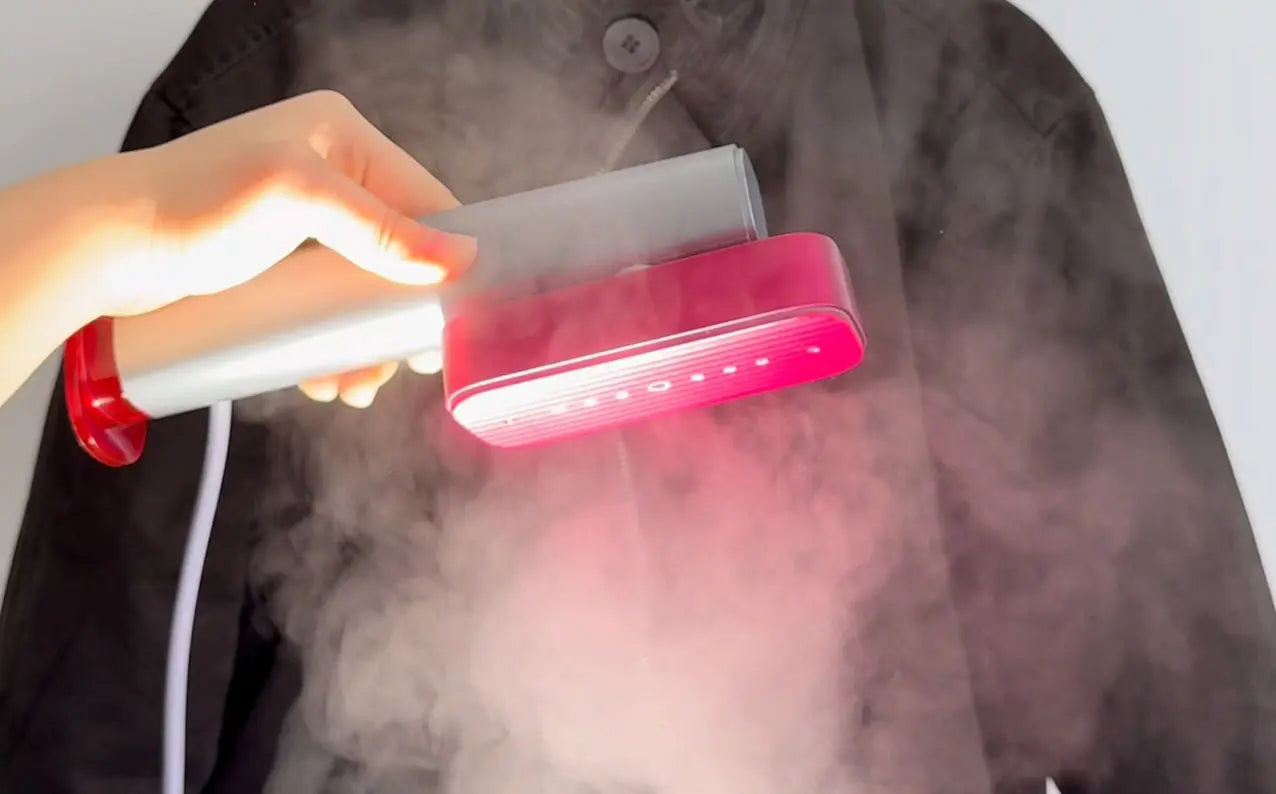
Hang up the clothes, turn on the steamer, wait for about 40 seconds for the steam to come out, and then simply dry them from top to bottom - this should be enough to make them ready for a photo shoot.
No preparation is needed, no skills are required, and there is no need to worry about making mistakes.

After using it for some time, I realized that what it truly changed was "efficiency".
Many people ask: Isn't steamer just for removing wrinkles?
Actually, it's not entirely true.
For me, its greatest value lies in enabling me to adjust my state to the "ready for appearance"
level within a very short period of time.
1.Quickly restore the clothing to its original state
The livestreaming pace is very fast, and sometimes:
- The clothes have just been taken out of the packaging
- or are buried under a pile of samples
At this point, without a steamer, it would be basically impossible to use it.
But if there is steam, it can be restored to usable condition within a few minutes.
2. Safer for different fabrics
The types of clothes I usually wear are quite diverse:
- Silk
- Chiffon
- Knitting
- Cotton and linen
These fabrics are prone to problems if they are ironed with an iron.
The steam from the steamer is "soft treatment", which does not directly press the fabric. This makes it more reassuring to use.
3. Strong ability to make on-the-spot adjustments
Sometimes during the live broadcast, I would notice:
- The fabric is wrinkled in some areas.
- Or there are a few wrinkles.
If time permits, I might even quickly handle some tasks during the transition period.
This flexibility is something that traditional ironing methods simply cannot achieve.
Some of the pitfalls I have encountered (they really do affect the user experience)
When I first chose the steamer, I also bought a few that didn't work very well.
In summary, the issues mainly fall into several areas:
- The steam is coming out too slowly, and it's very annoying to wait.
- The steam supply is intermittent, and the effect is unstable.
- The machine is too heavy, and the hands get sore after using it for a long time.
- The water tank is poorly designed, and water needs to be added frequently.
These problems are not obvious when used for a short period of time, but once they become "something that needs to be used every day", they will greatly affect the experience.

Now I have chosen steamer. I will focus on these points.
These are the few details that I personally find most important:
Steam discharge rate
I basically won't use the models that require a long wait time.
Because the reality is - I don't have that much time.
Steam stability
Stability is more important than "aggressiveness".
Continuous and uniform steam is necessary to truly flatten the clothes and it is also less likely to leave watermarks.
Handheld comfort level
As a host, I use it very frequently every day.
If the machine doesn't feel good to operate, it will be replaced soon.
Volume and Storage
My workspace is not very spacious. The equipment should be as simple as possible.
It would be great if the items could be easily picked up and placed back down.
Nesugar was a choice that I noticed later.
During my continuous exploration of various products, I came across the brand Nesugar because it pays meticulous attention to the "usage experience" aspect.
For example:
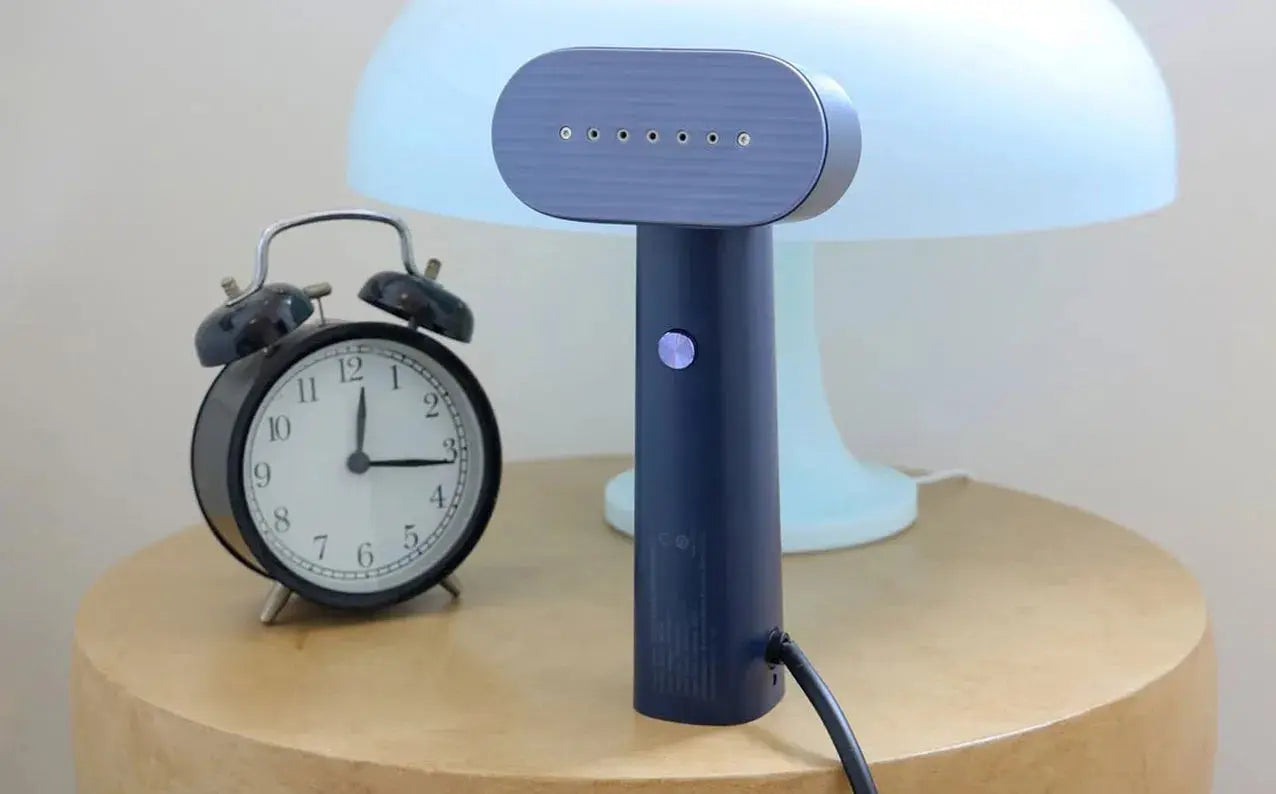
- Overall, it is lightweight and does not cause fatigue even after long use.
- The steam output is fast, suitable for fast-paced scenarios.
- The design is simple and does not have any unnecessary burdens.
These points may not seem complicated, but they precisely correspond to the aspects that I pay the most attention to in my daily use.
For me, whether a tool is valuable or not is not determined by how many functions it has, but by whether it reduces my operational costs.
How did it fit into my work?
Now, the steamer has become one of the regular steps I follow before starting the broadcast.
Before the start of the broadcast
I will quickly check the clothes I'm going to wear that day and use steam to condition the overall appearance.
Change-over period
If I need to change clothes during the process, I will prefer to choose the "previously processed" styles to save time.
Content of the shooting
Sometimes when shooting short videos or product photos, we also use the steamer to adjust the fabric condition in advance, so that the pictures will be cleaner.
In the end, is it suitable for you or not?
If your life or work has these characteristics:
- Often requires wearing more formal or elegant clothes.
- The time is limited and one doesn't want to spend a lot of effort organizing the clothes.
- There are certain requirements for the overall appearance.
That clothes steamer is indeed very helpful.
But if you usually:
- The dressing style is rather casual.
- Or one is accustomed to ironing all the clothes at once.
Then it might not be a necessity.
The final true feeling
During my time as a host, one of the biggest changes for me was that I began to pay attention to those "small details that I wouldn't have noticed before".
The smoothness of the clothes, the condition of the fabric, and the overall cleanliness - all these factors will influence how others form their first impression of you.
The steamer is not a "life-changing big item", but it does give me a bit more sense of control in the hectic pace of life.
At least, every time I stand in front of the camera, I know that I am in the right state to perform.