
The details of a floral designer's work: Why do I always keep a fabric steamer in my studio?
When many people first enter my floral art studio, they are immediately drawn to the flowers. Rows of fresh roses, freshly unpacked peonies, and the faint smell of green leaves in the air. But if you stay a little longer, you will discover another thing - there are fabrics everywhere in this place.
Tablecloths, background drapes, bouquet ribbons, ceremony arch setups, cotton and linen table runners, photography background cloths... In real floral design work, fabrics are almost as important as flowers.
And if these fabrics have creases, no matter how beautiful the pattern is, it’s impossible to make them look refined.
So in my tool list, apart from scissors, floral shears, wire, and tape, there is another item that I use every day: fabric steamer.

The job of a florist is not merely "arranging flowers".
If you come across floral design content on social media, the pictures are usually very serene: sunlight, bouquets, tables. But the actual work site is completely different.
Wedding setups usually begin early in the morning.
The flowers need to be trimmed, rinsed and sorted into different buckets.
The centerpieces need to be arranged according to the table numbers.
The background structure needs to be built.
By the time everything is in place, the time has been compressed to a very tight schedule.
At this point, the problems with the fabrics will become apparent. The tablecloth was folded during transportation, leaving obvious creases; the background curtain was rolled up in the box for the entire night and, when unfolded, was covered in wrinkles; the linen tablecloth, due to its natural fiber properties, tends to wrinkle easily by itself.
If these details are not addressed, the photos taken at the scene will be very obvious.
And the camera lens shows no mercy towards creases.
It was the first time that I truly realized the significance of the fabric steamer.
That was an outdoor wedding many years ago.
The customer chose light-colored linen tablecloths and sheer curtains as the backdrop. After the fabrics arrived at the site, I discovered that all the tablecloths had obvious creases. A traditional iron simply wasn’t practical - there was no ironing board on site and there was no space to lay out dozens of tablecloths.
At that time, a photographer handed me a handheld fabric steamer and said I could give it a try with the steam function.
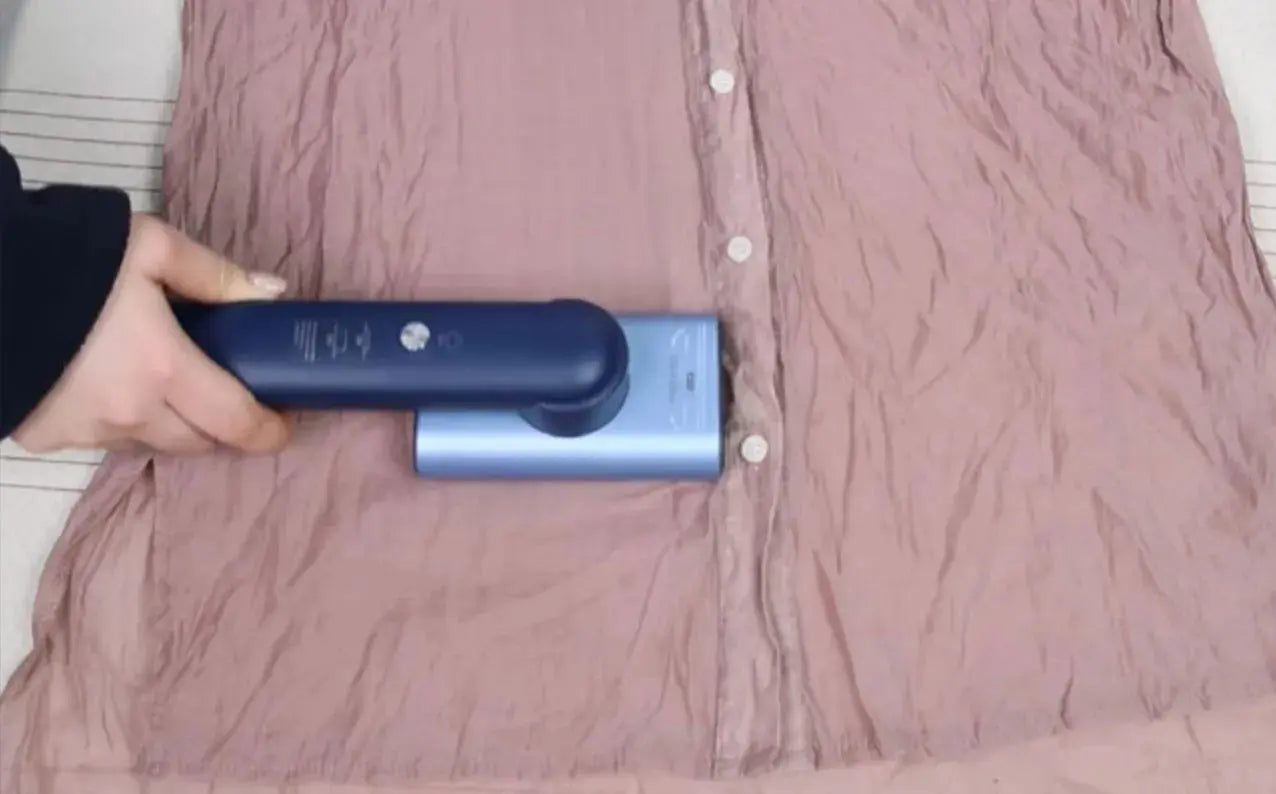
That day, for the first time,allery I witnessed the fabric gradually regain its smoothness under the steam. The fibers were relaxed by the heat, the creases gradually disappeared, and the linen reappeared with its natural texture.
Since then, I have never used a traditional iron again.

In floral design, fabric is just as important as flowers.
Many people only focus on the price and variety of the flowers. However, from a design perspective, the fabric actually plays three crucial roles.
1. Visual Layers
The background color is usually determined by the fabric.
Linen brings a sense of naturalness, velvet adds a thick texture, and sheer curtains make the space appear soft.
If the fabric has obvious creases, the entire space will appear messy.
2. Lighting Effect
The photographer is very concerned about the condition of the fabric surface.
Creases can create irregular shadows, which affect the texture of the picture.
The fabric treated with steam is smoother and the lighterolight reflection is more uniform.
3. Material Texture
Many high-end weddings prefer to use natural fibers, such as:
- linen
- cotton
- real silk
- velvet
These materials are prone to creasing easily.
A fabric steamer is almost a necessary tool in this situation.
Why do florists prefer to use fabric steamer?
Traditional irons work well at home, but they are not practical on a setup site.
Floral setup environments usually have a few characteristics:
Space is limited.
Time is tight.
The fabric area is large.
The material is complex.
This is where steamers really shine.
No need for an ironing board
The fabric can be handled directly by hanging it, such as the background cloth, the curtain or the tablecloth.
The steam is more gentle.
For delicate fabrics such as ribbons, lace, and silk, steam pressing is safer than hot iron pressing.
It works quickly.
A whole piece of background cloth can often be improved by steam treatment in just a few minutes.
When preparing for a large-scale event, I usually place the steamer in the set-up area and handle the fabrics while constructing the structure.

The fabrics I work with most often in the studio
Linen tablecloth
Linen is almost always a classic choice for wedding decorations, but it is also prone to wrinkling. Steam can restore the natural shape of the fibers, rather than making them stiff and rigid.
Sheer backdrop fabric
The curtains are often used for arches or background walls. After transportation, they usually have creases. Steam can quickly restore their light and drape-like appearance.
Ribbons
The packaging of flower bouquets and the back cover decoration often use real silk ribbons. Steam treatment is safer than using an iron.
Photography backdrop cloth
Many brand events often include photo areas, and the condition of the fabrics will directly affect the quality of the photos.
What factors do I consider when choosing a fabric steamer?
Over the years, I have used many devices and gradually developed my own criteria for judgment.
Preheating time
At the work site, waiting time should noteway not be too long. The faster the steam is released, the better.
Steam stability
Whether the steam output is continuous has a direct impact on efficiency.
Weight
If used continuously for several minutes, the weight difference will be quite obvious.
Tank capacity
If it’s too small, I have to refill it frequently; if it’s too large, it becomes bulky.
When researching products, I also look at the design concepts of some brands, such as Nesugar's handling of certain details on their steam devices. Many of the improvements are actually centered around real usage scenarios.
Not just a work tool
Many people have asked me if I still use the fabric steamer after work.
The answer is yes.
After doing floral arrangements for a long time, I have become very sensitive to the cleanliness of the space. For things like curtains, sofa covers, and tablecloths in the house, if there are obvious creases, I usually use steam to simply smooth them out.
When I travel for destination weddings, I also bring a portable steamer. The shirts, suits and dresses in the hotel can be treated with steam, which is much more convenient than using an iron.
Gradually, it became a very natural part of life.

A florist's obsession with details
The flower industry has a saying that I have always strongly agreed with:
Good design is often achieved not by adding more, but by refining the details.
The position of the flowers needs to be adjusted, the corners of the tablecloth should be straightened, and the ribbons should be reorganized. Many seemingly insignificant details will ultimately affect the overall atmosphere.
A fabric steamer is, for me, a tool that helps improve the details.
It won't make the design more ornate, but it will make the picture cleaner.
In the floral design industry, which places great emphasis on atmosphere, such subtle differences often determine the outcome.