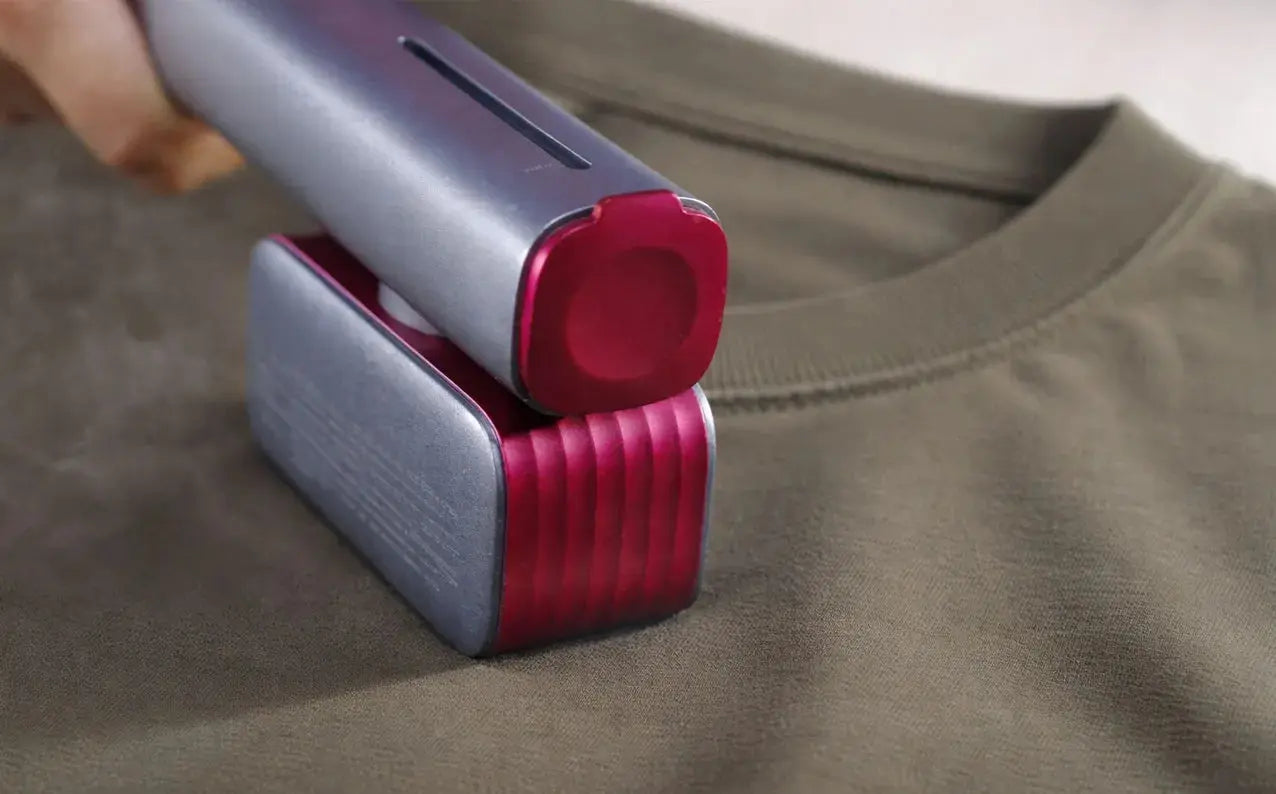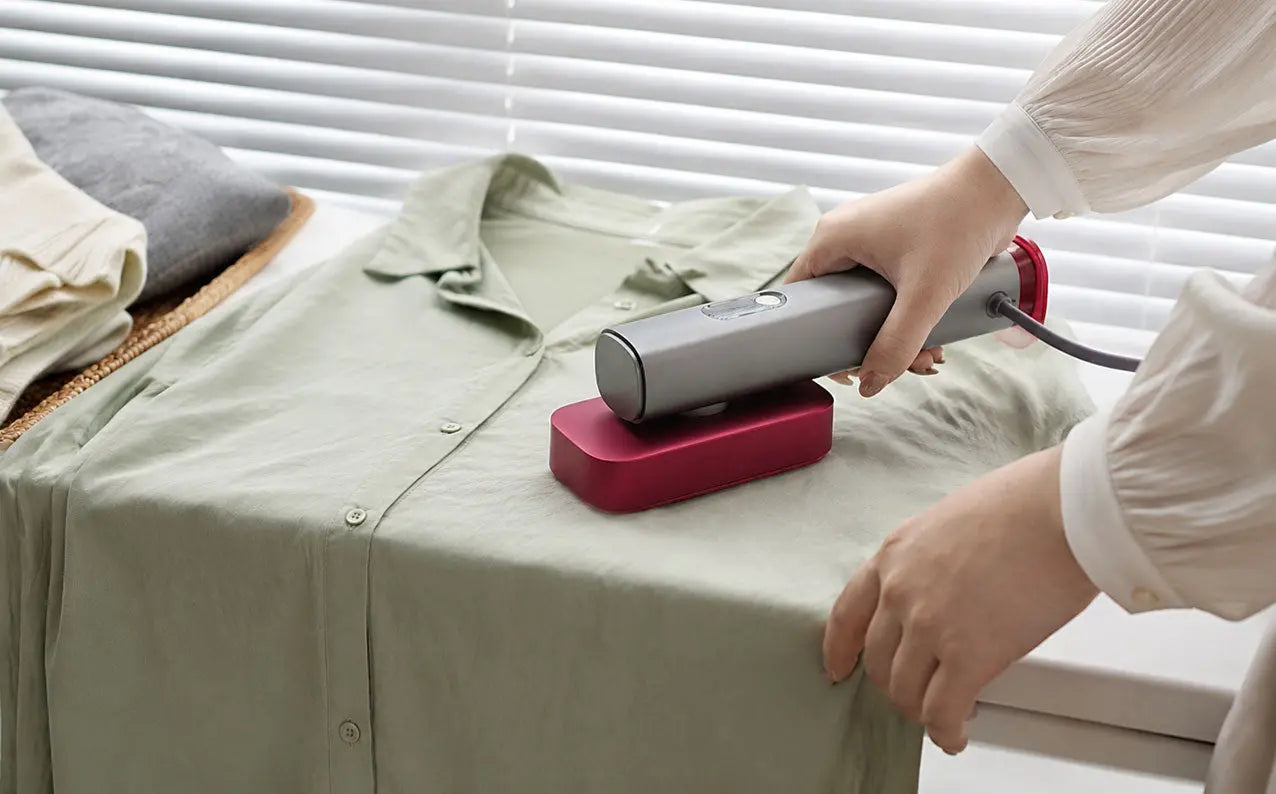

At 5:30 in the morning, I was in the hotel bathroom, holding a hand steamer and blasting steam at a champagne-colored dress worth over four thousand dollars.
The bride outside the door is crying.
The reason is particularly simple - the skirt is wrinkled.
It wasn't just a minor crease that could be tolerated, but a very distinct and hard crease right in the middle of the skirt hem, caused by folding during transportation. The photographer was due at eight, and the makeup artist was already urging the schedule along. The tension in the room felt like a pressure cooker.
At that moment, there was only one thought in my mind:
Thank goodness I brought the iron.
Many people think that the job of a dress consultant is just to help clients pick out dresses, match jewelry and check the fit. In fact, I spend at least half of my day dealing with the condition of the clothes.
Especially formal evening wear.
You might have spent two thousand dollars on a gown, but if it looks as crumpled as if it had just been pulled out of the laundry basket, its visual appeal immediately takes a hit.
And such things are really all too common in the United States.

Why are more and more people starting to use Hand Steamer for Clothes?
In the past, American families were more accustomed to using traditional irons.
But the shift has become especially obvious in recent years.
Especially in fast-paced cities like New York, Los Angeles and Chicago, more and more people are too lazy to set up an ironing board.
Because it's really too troublesome.
Just imagine:
You're in a rush to get to work in the morning. Your coffee is still half-drunk, your dog is running around the living room, your Uber will be at the door in five minutes, and you still have to unfold the ironing board, adjust the temperature, spray water, and iron...
Most people give up at the second step.
But a hand steamer is different.
Add water, plug in, preheat for tens of seconds, and then start directly.
A lot of Americans now steam their clothes while brushing their teeth.
It sounds exaggerated, but this is the reality.
Especially for these occupations, the requirements for the condition of clothes are particularly high:
- Real estate agent
- Flight attendant
- Boutique salesperson
- Wedding planner
- Lawyer
- Medical aesthetics consultant
- Luxury buyer
- Hotel management
- Fashion industry professional
They may not wear expensive clothes every day, but they must not look shabby.
In the American workplace, whether your clothes look pressed and polished can sometimes really affect others' first impression of you.
When did I completely give up the traditional iron?
Once, a customer was ironing a satin dress by herself at home.
The temperature was not controlled properly in the end.
There was a shiny square indentation right at the chest of the dress.
It looked like someone had pressed it with a pizza spatula.
The worst part is that this kind of damage is basically irreversible.
After that, I began to use the traditional iron less and less.
Especially fabrics like silk, satin and organza, which are used for formal gowns, are really delicate.
But steam is different.
It doesn't press directly against the fabric.
It is much more friendly to delicate fabric.
This is also why a large number of wedding dress stores, dress studios and styling teams are now using hand steamers.
Because the risk is much lower.
High efficiency.
It's still convenient.

What's the difference between a cheap steamer and a good one?
I used to think that:
Isn't it just about spraying steam?
It was only later that I found out the difference was ridiculously huge.
The most common problem with cheap products is:
- Water leakage
- Intermittent steam
- The water tank is too small
- Clothes are even more damp after steaming
- Unstable steam
- Hands start to ache after ten minutes of use
Especially in the dressmaking industry, water spraying is the most dreaded.
Because many formal fabrics will show water marks particularly prominently under the light once they are left with water stains.
Now when I'm choosing a hand steamer, I don't pay much attention to the advertising parameters.
I care more about the actual user experience.
For example:
How fast is the preheating?
Will it drip water?
Does it get tiring to hold it for a long time?
Can it fit into the suitcase?
These are the things that the average person really cares about.
So when I recently saw Nesugar Life's product design, I was instantly drawn to it. They've completely moved away from the traditional bulky home appliance mindset and fully embraced the concept of "mobile lifestyle scenarios."
I quite agree with this point.
Because now nobody is at home leisurely ironing clothes at all.
but rather in:
- hotel
- Wedding backstage
- On a business trip
- Cruise cabin
- Airbnb
- Gym changing room
Sort out the clothes quickly.
What modern people need is efficiency.
It's not about the sense of ceremony.
Does the steam method in hotel bathrooms really work?
There is a particularly popular method online:
Hang the clothes in the bathroom and then turn on the hot water.
Many bloggers claim that this can "naturally reduce wrinkles".
To be honest:
It's somewhat useful.
But not much.
If the T-shirt is only slightly wrinkled, it might still be wearable.
But formal evening dress?
It's basically not enough.
Especially:
- Thick satin gowns
- Multi-layered long dress
- Clothes that have been folded for transportation
The effect is very limited.
Moreover, in many hotels in the United States, the air conditioning is particularly strong, and the steam dissipates very quickly.
So nowadays, many people who travel frequently have begun to take portable steamers with them as a matter of course.
This thing may not look impressive, but it can really save lives in critical moments.

The several types of dress fabrics I deal with most frequently
There is a very realistic problem in the evening dress industry:
Beautiful fabrics are usually hard to handle.
Especially the following types.
Satin
This is a high-risk area for rollovers.
Satin is particularly afraid of high temperatures.
I usually start steaming from the inner layer and won't stay in one area for a long time.
Otherwise, it is very easy to leave reflective pressure marks.
That thing was particularly noticeable under the photography lights.
Tulle
Tulle is actually pretty easy to handle.
Many creases can be gradually restored to their fluffy state simply by hanging the garment and gently steaming it.
The wedding dress industry does this every day.
Velvet
Never press directly.
Steam can "revive" the nap.
Traditional irons, on the contrary, are more likely to flatten the texture.
Sequins
I will be particularly careful about this.
Because some of the sequins are glued on.
High heat can loosen them pretty easily.
Usually, I only steam the inner lining, allowing the steam to gradually pass through.
Why are American young people increasingly concerned about the "condition of their clothes"?
This change is actually quite obvious.
In the past, when people bought clothes, they only cared about the brand.
Nowadays, more and more people are beginning to pay attention to:
Does this dress look sophisticated when worn?
And the sense of sophistication doesn't necessarily have anything to do with the price.
I've seen many people wearing designer dresses but all crumpled.
I have also seen people wearing ordinary suits, yet looking particularly neat and presentable.
The difference often lies in the details.
Especially now, short videos, high-definition photography and social media are so widespread.
The camera magnifies everything.
Including:
- Clothing creases
- Fabric condition
- Pilling
- Water stains
- Line texture
Many people are beginning to realize that:
What truly makes a person noble is not a logo.
Rather, it is whether the clothes look like they have been "treated seriously".
The most chaotic wedding scene I have ever witnessed
There was once a beach wedding that was particularly outrageous.
Six bridesmaid dresses were crammed in the SUV trunk for four hours.
When opened, all the skirts looked as if they had been crumpled up and slept on.
There is only one and a half hours left until the ceremony begins.
Finally, the last three stylists used hand steamers to save the situation.
The whole room was filled with steam.
The bridesmaids are queuing up to get their wrinkles smoothed out.
The photographer sat beside, sipping iced coffee and watching the commotion.
Looking back now, it all seems like a reality show.
But it was after that incident that I truly realized:
In the dressmaking industry, the steam iron is not a dispensable little tool.
It is a sense of security.
A function that many people didn't expect: deodorization
Many male customers later became particularly fond of the hand steamer, and there was one reason that was especially genuine:
It can make clothes smell "as if they have just been ironed".
Especially after business trips.
Clothes are not necessarily dirty.
But there will be one kind of:
The feeling of having been on the plane for eight hours.
Steam makes a significant improvement to this musty smell.
Special suit.
Recovery is particularly fast.
One last practical piece of advice
If you often do the following in your daily life:
- Business trip
- Attend a wedding
- Wear a shirt
- Wear a suit
- Wear a formal outfit
- Take photos
- Meet with clients
That hand steamer is basically something that you'll save yourself a lot of trouble by getting it early.
It may not make clothes more expensive.
But it will make you look more energetic overall.
And this kind of change can actually be sensed by others at a glance.
Even if they can't explain the reason.