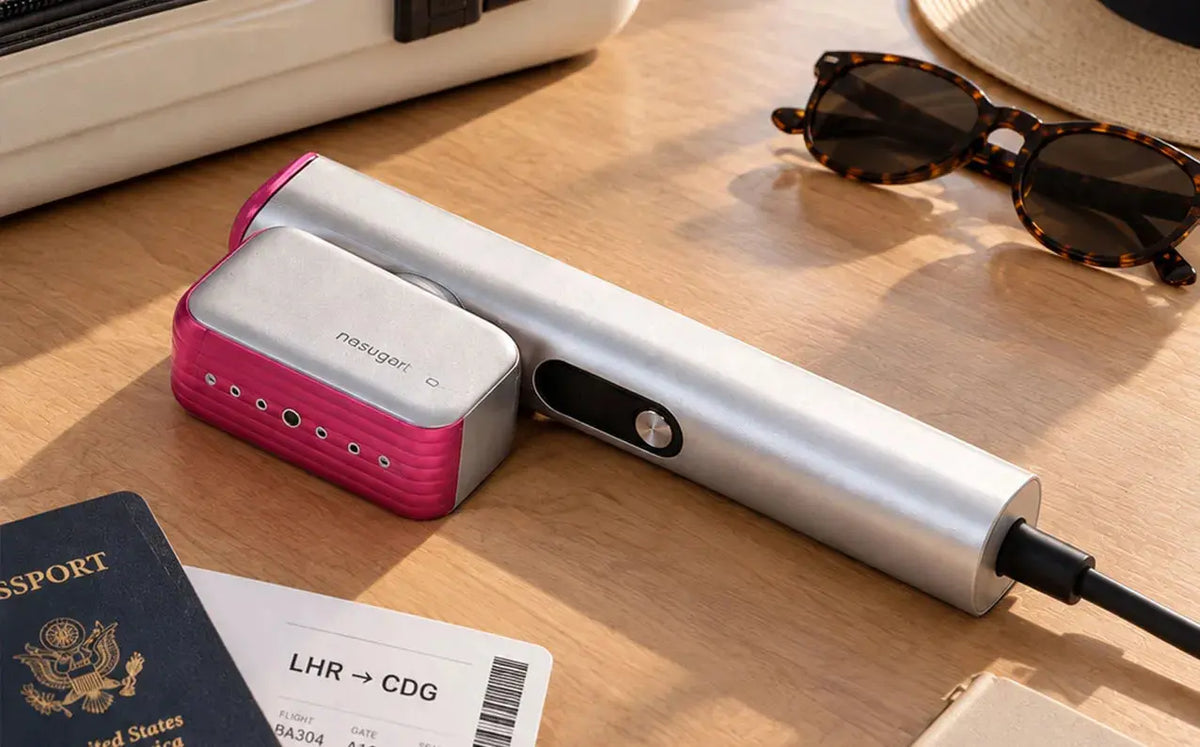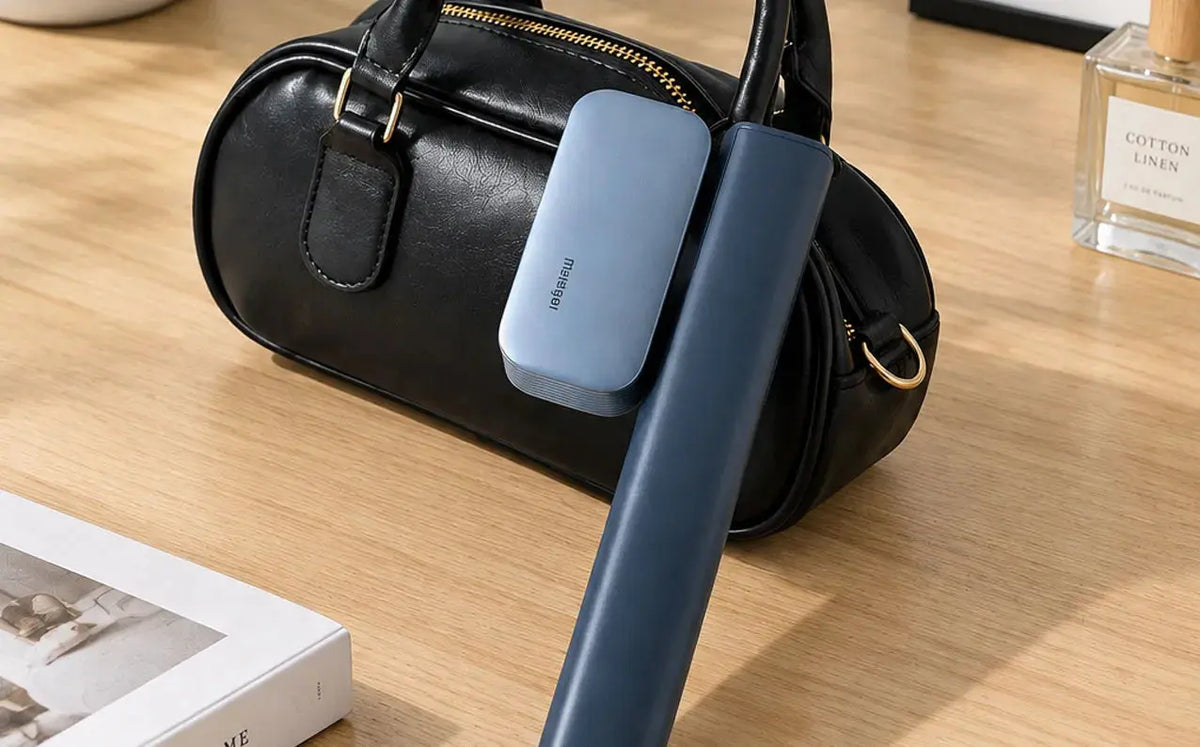

Why a Vacuum Suction Travel Steamer Can Be More Practical Than a Regular Travel Steamer
I used to have a pretty simple opinion about travel steamers: if it makes steam, it does the job.
Then I had a business trip.
It was a little after 7 a.m. when I pulled a shirt out of my suitcase. I had folded it neatly before leaving home, but by the time I got to the hotel, it looked completely different.
There was a crease across the shoulder, another one across the chest, and the cuffs were even worse.
The whole shirt looked like it had spent the night in a wrestling match with my suitcase.
Of course, the hotel room had an iron.
But I really didn't feel like wondering whether that iron was actually clean. And I definitely didn't want to drag the ironing board out of the closet and turn my hotel room into a temporary laundry room.
That's when I started asking a more practical question:
What actually matters in a travel steamer?
It's not just about whether the steamer can produce steam. Most clothes steamers can do that.
What matters more is how easy it is to get your clothes looking decent again when you're in a hotel room, rushing through an airport, staying in a rental apartment, or trying to get ready inside a cruise cabin.
That's what got me interested in vacuum suction travel steamers.

Why Do Clothes Get So Wrinkled When You Travel?
At home, wrinkles aren't usually a big deal.
You've got space, hangers, a flat surface, and probably everything you need to take care of your clothes.
Travel is different.
Your clothes get squeezed inside a suitcase for hours. A shirt gets pressed against a pair of jeans. A suit gets folded over and over. A dress can somehow come out of your suitcase with creases in places you didn't even know could crease.
Then you finally get to the hotel.
You open your suitcase and find the shirt you planned to wear to tomorrow's meeting.
It barely looks like a shirt anymore.
It looks more like a piece of paper that got crumpled up and then somehow decided to become clothing again.
That's one reason I've come to like portable steamers.
They're simple. Hang the garment up, turn the steamer on, let it heat up, and then focus on the areas that actually need attention.
When you're traveling, that simplicity matters.
What Does Vacuum Suction Actually Do?
The first time I came across the term "vacuum suction travel steamer," I was a little skeptical.
Vacuum suction sounds impressive, but what does it actually do?
The basic idea is pretty straightforward: it helps keep the fabric more stable while you're working on wrinkles.
A regular handheld steamer has one small but annoying problem. Clothing is soft, and as you move the steamer downward, the fabric can move with it.
You find a wrinkle, start working on it, and suddenly the fabric shifts.
Now you're looking for the wrinkle again.
Then chasing it.
Then looking for it again.
At that point, it feels less like steaming a shirt and more like trying to catch a very uncooperative cat.
Vacuum suction is designed to help keep the fabric in place while you're steaming. That can be useful around shirt collars, cuffs, buttons, heavier wrinkles, and those stubborn creases that show up after a long flight.
It won't magically make every wrinkle disappear. Nothing does.
But when the fabric isn't constantly moving underneath you, the whole process can be a lot easier.
Why Do I Want Both Vertical and Horizontal Steaming?
I used to think a travel steamer was really meant to be used vertically.
Hang the clothes up and move the steamer from top to bottom.
For most garments, that works just fine. Shirts, dresses, lightweight jackets, T-shirts—you can handle most of them that way.
But some wrinkles are stubborn.
Collars. Cuffs. And those one or two spots that somehow got crushed especially badly inside your suitcase.
For those areas, I often find it easier to lay the garment on a flat surface and work on it there.
That's why I like the option of both vertical and horizontal steaming.
My usual routine is pretty simple.
First, I hang the garment up and work over the whole thing. If most of the wrinkles disappear, I'm done.
If there's still a stubborn spot or two, I'll lay the garment flat and focus on those areas.
There's no reason to steam an entire shirt three times just because one cuff refuses to cooperate.

How Fast Does a Travel Steamer Really Need to Heat Up?
This wasn't something I paid much attention to before.
Then I started traveling more, and I realized how much those few extra minutes can matter.
You're usually not steaming clothes on a lazy Sunday afternoon. You're more likely dealing with something like this:
7:35 a.m. — Wake up.
7:45 — Get ready to leave.
7:50 — Realize your shirt looks terrible.
8:00 — Meeting starts.
In that situation, I don't want a steamer that takes long enough for me to make coffee, scroll through the news, and answer a few emails before it's ready.
I just want it to heat up and get to work.
The G12 Pro Max lists a heat-up time of about 18 seconds.
That doesn't mean your entire shirt will magically be wrinkle-free 18 seconds later, of course. Those are two very different things.
It simply means there's not much waiting around before the steamer is ready to use.
When you're standing in a hotel room thinking, "I need to wear this right now," that's pretty useful.
Does More Steam Always Mean Better Results?
Not necessarily.
Different fabrics respond differently to heat and steam. Silk, lightweight synthetics, wool blends, linen, and heavier cotton may all need a slightly different approach.
So I don't automatically start with the highest steam setting.
I check the garment's care label first. If I'm unsure, I'll start with a lower setting and keep the steamer moving rather than holding it over one spot.
For delicate fabrics, it's also worth testing a less noticeable area first.
It's not complicated. The goal is to take care of the clothes, not give yourself a reason to buy a new outfit the next day.
International Travel? Check the Voltage
If you travel internationally, don't overlook this one.
Different countries use different voltage standards, so it's worth checking the voltage range before buying a travel steamer.
The G12 Pro Max is listed as supporting 100–240V, which can make it more convenient for international travel.
There's one detail that's easy to miss, though:
Voltage compatibility does not mean plug compatibility.
Even if a device supports 100–240V, you may still need the appropriate plug adapter depending on where you're traveling.
I used to think this was one of those boring little details that didn't really matter.
Then you end up standing in a hotel bathroom holding your steamer, staring at an outlet your plug doesn't fit into.
Suddenly, it doesn't feel so boring anymore.

How I Pack a Travel Steamer in My Suitcase
I don't just toss it into my suitcase.
I usually give it a specific spot.
If I'm wearing a shirt the next morning, I'll put the shirt near the top of my suitcase and keep the travel steamer somewhere easy to reach.
That way, when I open my suitcase the next morning, both are right there.
I don't have to dig through everything and make my suitcase look like it just survived a small earthquake.
If I'm traveling for several days, I also try not to pack clothes that are ridiculously difficult to take care of.
Travel is complicated enough. I don't need to add another garment to my itinerary that requires daily supervision.
How to Get Better Results From a Travel Steamer
The steamer itself is only part of the equation. How you use it matters, too.
Work From Top to Bottom
When I'm steaming a garment that's hanging up, I usually start around the shoulders and upper section, then work my way down.
That lets gravity do some of the work as the fabric naturally hangs.
Give the Fabric a Little Tension
You don't need to pull hard.
Just hold the fabric lightly so the wrinkles can open up. It also makes it easier for the steam to reach the areas that need attention.
Don't Rush Stubborn Wrinkles
If there's a deep crease, don't just fly over it and expect it to disappear.
Slow down a little and give the steam some time to work. If necessary, go over the area again.
Pay Extra Attention to Collars and Cuffs
These areas tend to show wrinkles more easily than the main body of the garment.
If your steamer supports horizontal steaming, this is where I find that feature especially useful.
Don't Fold the Clothes Right Back Into Your Suitcase
This is an easy mistake to make.
After steaming, give the garment a little time to cool and dry.
If you immediately fold it up and stuff it back into your suitcase, some of those wrinkles may come right back.
It's kind of like mopping the floor and then immediately walking across it yourself.
Is a Vacuum Suction Travel Steamer Worth Considering?
Not everyone needs this type of travel steamer.
If you travel once a year and don't really care about a few minor wrinkles, a regular clothes steamer may be perfectly fine.
But if you travel frequently for work, attend weddings, regularly pack shirts or dresses, or simply hate pulling a garment out of your suitcase only to find that it looks like it was run over by a suitcase, better fabric control can make the whole experience easier.
It can be especially useful if you:
- Travel frequently for business
- Fly often
- Need to pack shirts or dresses
- Stay in hotels regularly
- Travel internationally
- Have limited luggage space
- Need to deal with wrinkles quickly
For situations like these, I don't think the real value of a travel steamer comes from having a long list of impressive-sounding features.
It's about making the whole process easier.
What Do I Actually Look For in a Travel Steamer?
These days, I don't just look at the spec sheet.
I ask myself something much more practical:
If I only have ten minutes to get ready in the morning, will I actually want to take this thing out and use it?
If the answer is yes, then it feels like a travel-friendly product to me.
I usually look at a few basic things:
- Is it light enough?
- Does it take up too much room in my suitcase?
- Does it heat up quickly?
- Can it handle different types of clothing?
- Is it easy to use?
- Is the voltage compatible with international travel?
- Does it give me better control over the fabric?
None of these things is revolutionary on its own.
But together, they determine whether a portable steamer is actually useful when you're traveling—or just another small appliance that ends up sitting in a closet at home.
For me, a good travel steamer isn't about making the technology sound impressive.
It should simply be there when you have 12 minutes before you need to leave and your shirt looks like it just got run over by your suitcase.
Then you grab your bag.
Put on your shirt.
Walk out the door.
That's it.