
What a Travel Steamer Is Actually Good For When You Travel
I used to have a pretty funny habit when I traveled.
Before every trip, I’d spend way too much time picking out my clothes.
I’d decide which shirt I wanted to wear on the plane, what I’d wear to dinner, and which outfit I’d save for the next day’s meeting. Then I’d fold everything neatly and pack it into my suitcase.
Everything looked great when I left home.
Then I’d get to the hotel, open my suitcase, and wonder:
Did these clothes just get into a fight?
Shirts were usually the worst. The collar would be wrinkled, the sleeves would have creases, and there’d be random lines across the chest.
By the time I arrived, that shirt had been folded, squeezed into my suitcase, and pushed under half the stuff I packed. Then I’d pull it out and realize I needed to deal with the wrinkles before I could wear it.
After enough trips, I started thinking less about how my clothes looked when I packed them and more about how they’d look when I actually got there.
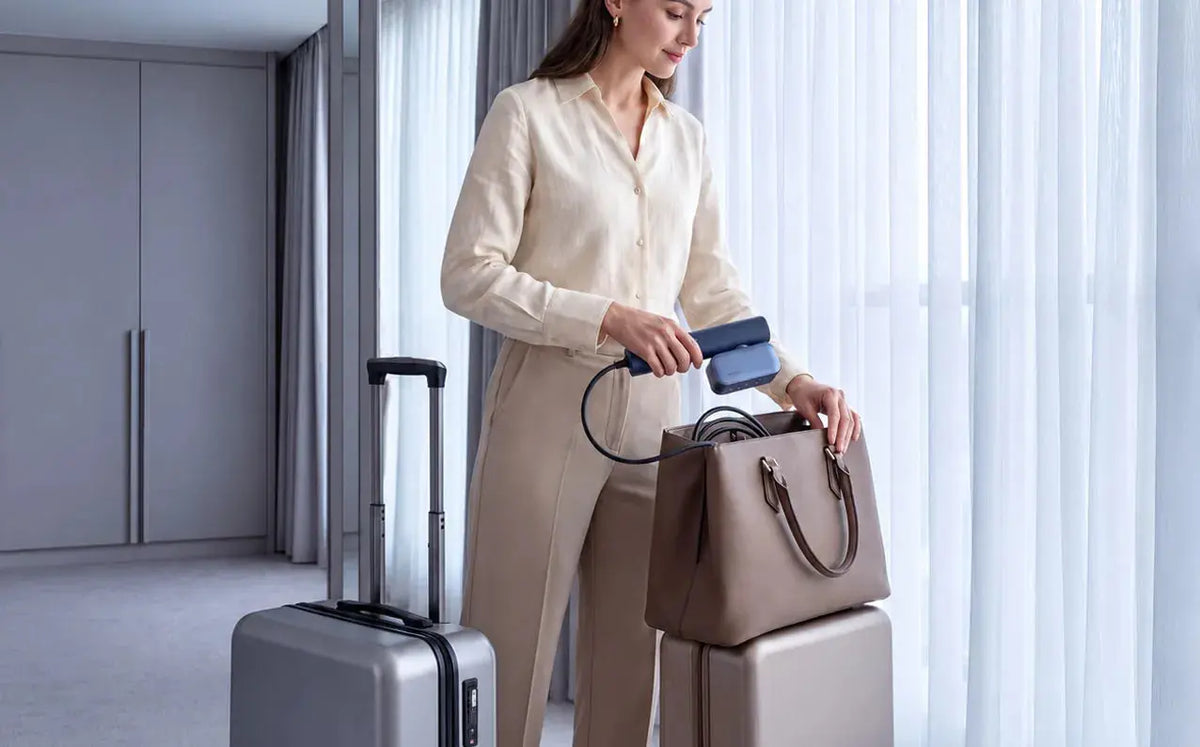
That’s when I started bringing a travel steamer.
I’m not trying to make every shirt look perfect. I just got tired of opening my suitcase and finding the one shirt I wanted to wear covered in wrinkles.

Why Do Suitcases Wrinkle Clothes So Easily?
The wrinkles you get from traveling are a little different from the ones you deal with at home.
At home, a shirt might get pushed against something in the closet or sit in a drawer for too long. In a suitcase, it gets squeezed into a tight space and pushed under whatever else I decided to bring.
If the suitcase is also carrying shoes, toiletries, a laptop, chargers, and all the other things I somehow decided I couldn’t live without, there isn’t much room left for my clothes.
I’ve gotten a little more careful about how I pack because of that.
If I know a shirt wrinkles easily, I try not to bury it underneath everything else. I’ll also leave a little extra room around clothes I know I’ll need soon after arriving.
It helps, but sometimes a shirt is going to come out wrinkled anyway.
When I’m traveling, I usually want a quick fix rather than another complicated thing to deal with.
On Short Trips, I Care More About Size and Weight
For a weekend trip or a two- or three-day getaway, I usually try not to fill my suitcase completely.
I already know what’s going to happen on the way home. There will probably be a souvenir, an extra shirt, maybe a book, plus a few random things I definitely didn’t plan on buying.
So I pay more attention to how much space my travel gear takes up.
If a travel steamer is bulky, it starts competing with my clothes and shoes for suitcase space. That’s not ideal when I’m only going away for a few days.
On a short trip, I notice the size and weight a lot more because there’s simply less room to work with.
For example, the NESUGAR G2 Pro is listed at about 0.8 lb and supports 100–240V, with a heat-up time of around 15 seconds. For me, that puts it in the category of compact gear that’s relatively easy to justify bringing on a short trip.
That doesn’t mean a lightweight steamer is automatically the right choice for every trip.
If I’m away for a week and need to steam several outfits, I’d probably care more about water capacity and steam performance than saving a few ounces.
The little steamer that works fine for a weekend away may feel pretty limited if I’m traveling for a full week and steaming several outfits.

Business Travel Is When I Notice It the Most
Business travel is where I notice the difference the most.
On vacation, I can live with a few wrinkles. If my shirt isn’t perfect, it’s usually not a big deal.
A work trip is different.
You might wake up at 7 a.m., leave the hotel at 8, and have a meeting at 9. Somewhere in there, you still need coffee, breakfast, a shower, email, and your laptop bag.
Then you open your suitcase and discover that the shirt you planned to wear looks like it spent the night under a suitcase wheel.
That’s when I want the problem solved quickly.
When I’m traveling for work, I pay a lot more attention to how quickly a steamer heats up. The NESUGAR G3 Pro, for example, is listed with a roughly 15-second heat-up time.
The G5 Pro is built more for heavier use, with a 200 ml water tank, 1500W of power, and 100–240V support.
The specs are useful, but what matters to me depends on the trip.
If I’m fixing one shirt before heading downstairs, I mainly care about getting started quickly. If I’m dealing with several outfits, I’m more interested in water capacity and steam performance.
Once I know what the trip is going to look like, it’s usually pretty easy to figure out what kind of steamer makes sense.
I Don’t Unpack Everything as Soon as I Get to the Hotel
This is a small habit I picked up after traveling enough to know I don’t want to make things harder for myself.
When I check into a hotel, I usually don’t unpack every piece of clothing.
I pull out whatever I’m going to wear the next day, hang it up, and let it sit for a while.
Later, I’ll take care of the most obvious wrinkles.
That way, I’m not digging through my suitcase again at 7 a.m. while trying to get ready.
It’s especially useful on business trips. If I have an important meeting the next morning, I’ll get my shirt and jacket ready the night before. In the morning, I only need a quick touch-up if something still looks a little rough.
It’s a small thing, but I definitely notice the difference when I’m getting ready in the morning.
Hotel Rooms Make Clothing Care a Little Awkward
Hotel rooms aren’t exactly designed around clothing care.
At home, you might have an ironing board sitting in a closet or a convenient place to work. In a hotel room, the desk might be too small, the room might be cramped, and finding a convenient outlet can sometimes be surprisingly annoying.
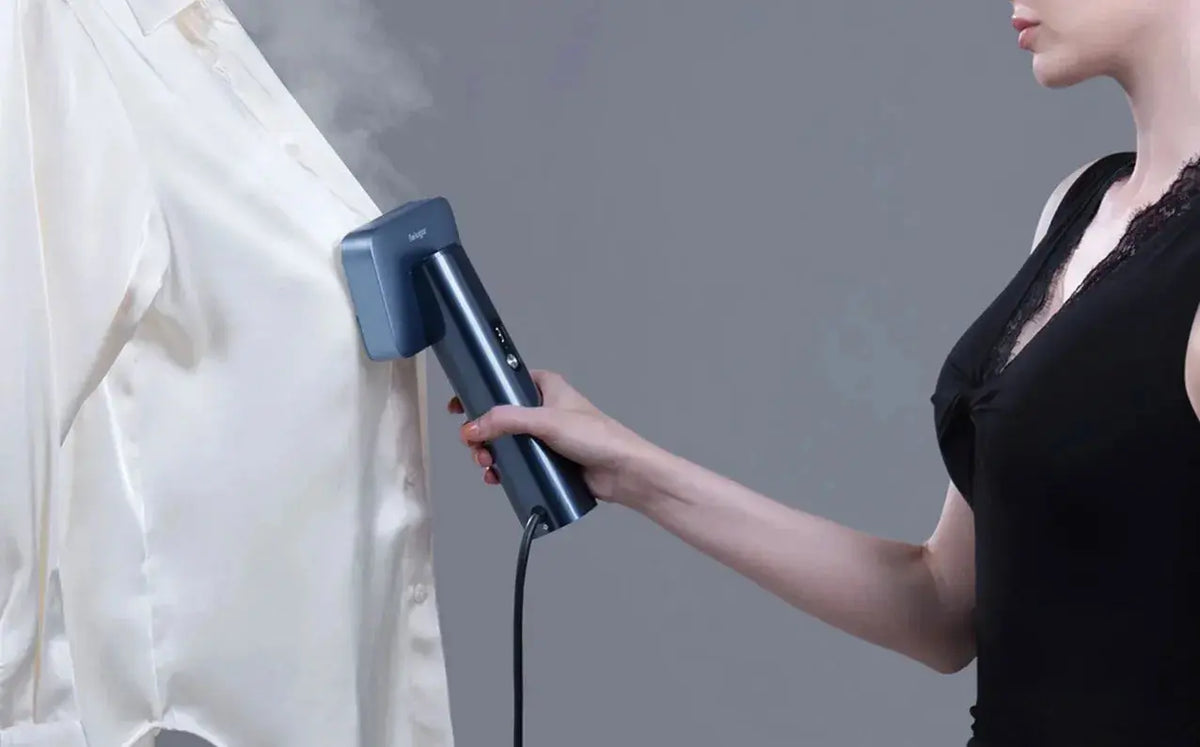
That’s one reason I like being able to steam clothes while they’re hanging.
I can hang the shirt up, gently pull the fabric with one hand, and run the steamer over it with the other. I don’t have to clear off the desk or rearrange the room just to deal with a few wrinkles.
When I’m in a hotel room, not having to set up an ironing board is a pretty big convenience.

International Travel: Check the Voltage Before the Plug
This is an easy detail to overlook.
A plug adapter answers one question:
Can I physically plug this in?
It doesn’t necessarily answer whether the device is designed to work with the local voltage.
When I’m traveling internationally, I check the voltage before I even think about the plug adapter.
NESUGAR’s travel guide lists several travel models, including the G2 Pro and G5 Pro, as supporting 100–240V. For someone who travels internationally regularly, that can make packing a little simpler.
I still check the plug type for the destination, though. Outlet designs vary, and a device supporting the right voltage doesn’t automatically mean the plug will fit the wall.
I’d much rather figure that out at home than discover a problem after checking into a hotel.
Air Travel: I Think About How I’m Packing It
When I’m flying, I don’t just think about whether I can bring a travel steamer. I also think about how I’m packing it.
Before leaving home, I empty the water tank and make sure the steamer has cooled completely. Then I pack it securely.
NESUGAR’s travel guide also recommends emptying the tank before flying, allowing the unit to cool completely, packing it properly, and checking the specific airline and local security requirements.
I’d much rather sort that out at home than stand at the airport wondering whether I packed it correctly.
An airport is not exactly where I want to figure that out, especially when I’m already trying to make an early flight.
If I’m Traveling for a Wedding, I Do One Extra Thing
I try the outfit on before I leave.
Not because I’m unusually picky.
I’m just a little more careful on wedding trips because I usually can’t show up in whatever happens to be in my suitcase.
If I discover at the hotel that my dress shirt or other formal clothing is badly wrinkled, I may not have much time to find another solution.
So before a wedding, formal dinner, or similar event, I think about where I’m going to hang the clothes, how I’m packing them, whether the steamer will be easy to use, and whether the voltage will work at the destination.
It takes a few minutes to think about those things at home. That’s a lot better than trying to solve everything an hour before the event.
On a Cruise, I Care More About Space
Cruise cabins are another story. They’re usually pretty tight on space.
You can also end up needing more types of clothes than you would on a normal city trip. You might spend the day in casual clothes, change into something nicer for dinner, and still need formalwear for one of the evenings.
Before you know it, you’ve got a suitcase full of clothes for a trip that was supposed to be pretty simple.
So I pay more attention to the size of everything I bring.
I don’t want one piece of travel gear taking up a huge chunk of my limited cabin space, and I definitely don’t want to bring a bulky setup just to deal with a few wrinkled outfits.
A compact travel steamer can make sense in that situation, especially when most of what I need is a quick touch-up.
That said, cruise lines can have their own rules about electrical appliances, so I’d always check the specific cruise operator’s policy before packing one.
I Don’t Actually Use a Travel Steamer Every Day
I used to think that if I wasn’t going to use something every day, it probably wasn’t worth putting in my suitcase.
I don’t really think that way anymore.
I don’t need to use something every day to justify bringing it. If it solves a problem I’m likely to run into on the trip, that can be enough.
A travel steamer is like that for me.
I might not touch it for two days. Then one evening, I’ll pull out the shirt I actually want to wear, and of course, that’s the one covered in wrinkles.
That’s when I’m glad I brought it.
It reminds me a little of carrying a power bank. You don’t decide it was a bad idea just because your phone happened to stay charged yesterday.
You may not use a travel steamer most days, but you’ll be glad it’s in your bag when your clothes come out of the suitcase looking terrible.
How I Decide Whether to Pack One
If I’m only gone for a weekend, I’m mostly thinking about size and weight.
For a longer work trip, I’m more likely to care about things like heat-up time, water capacity, and voltage support.
If I’m bringing formal clothes, I also care more about how easily I can deal with wrinkles once I get there.
For international travel, I check the voltage, plug type, and airline requirements before I leave. On a cruise, I also think about cabin space and the cruise line’s rules for electrical appliances.
I’ve found that asking for the “best” travel steamer isn’t very helpful on its own.
I’d rather ask what I actually need for the trip I’m taking.
The Thing That Really Changed My Mind Was Packing Less
The more I travel, the more I appreciate simple gear.
Not because I’ve suddenly become a minimalist. I just don’t like carrying things that make my trip more complicated than they need to be.
If a travel steamer fits easily in my suitcase, heats up quickly at the hotel, works with the local voltage, and doesn’t become a hassle to pack again, I’m happy to have it with me.
Its value isn’t really about having perfectly wrinkle-free clothes all day.
It’s about taking care of the wrinkle problem without making the rest of the trip more annoying.
That’s usually enough for me.
My Travel Packing Logic Is Pretty Simple Now
Before I leave, I usually ask myself a few basic questions.
Am I bringing anything formal?
If yes, I’ll consider bringing a steamer.
Am I traveling internationally?
If yes, I check the voltage first.
Am I flying?
Then I check the airline’s requirements and make sure the steamer is empty, cool, and packed properly.
Do I have enough room in my luggage?
If not, I think twice about whether I really need it.
And the biggest question is probably this:
Will I actually use it?
If the answer is “probably,” I might leave it at home.
If I already know I’m going to pull a dress shirt out of my suitcase before a meeting or a nice dinner, then giving up a little suitcase space starts to feel pretty reasonable.
I’m less interested in having the longest list of features than I am in knowing whether I’ll actually use them. If something makes sense for the trip, I’ll bring it. If not, it stays home.
Most of the time, it’s not a big deal. It’s just one less thing I have to think about when I’m already tired from traveling.
If I can pull a wrinkled shirt out of my suitcase, steam it in the hotel room, and be ready to go a few minutes later, I’m pretty happy I brought it.