
Clothes Steamer to Remove Wrinkles: These Are the Only Things I Do
I have a very simple rule:
If my clothes are so wrinkled that I start wondering why I even decided to leave the house today, it’s time to use a steamer.
Especially in the morning.
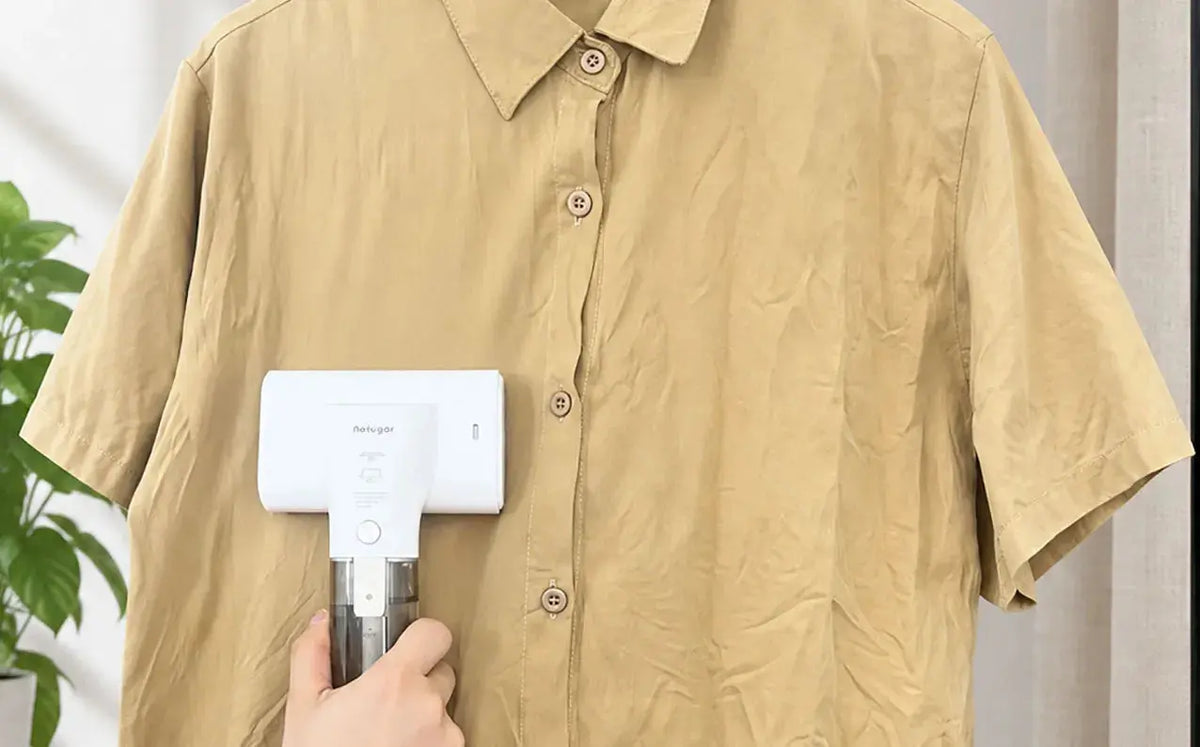
The alarm goes off. I haven’t finished my coffee. My phone has already hit me with three new messages. I pull a shirt out of the closet that I was planning to wear, only to discover wrinkles across the chest, sleeves, and hem.
At that point, I don’t want to study some complicated garment-care routine.
I just want the wrinkles gone.
That’s why, for everyday wrinkles, I’ve started reaching for a clothes steamer to remove wrinkles more and more often.
Hang the garment up. Turn on the steam. Work your way through it.
Simple, straightforward, and perfect for those “I have five minutes before I need to leave” mornings.
That said, if you want your clothes steamer to actually work well, there are a few details worth knowing.

Why Does a Clothes Steamer Remove Wrinkles?
The basic idea is pretty simple.
A clothes steamer heats water and turns it into steam, which is then directed onto the fabric.
The heat and moisture help relax the fibers in the fabric. Wrinkles caused by folding, compression, or being stuffed in a closet can gradually loosen.
And because the garment is hanging vertically, gravity does some of the work for you.
That’s probably my favorite thing about using a steamer:
You don’t have to fight with your clothes.
Hang them up and let the steam do its thing.
A lot of the time, the fabric naturally falls back into shape.
Deep creases may take a little more time, of course. But for everyday wrinkles, steaming is incredibly convenient.
The First Thing I Do Before Using a Steamer Is Not Turning It On
A lot of people probably plug in their clothes steamer first.
My first move is:
Hang up the clothes.
And I don’t just throw them on any hanger.
I use a sturdy hanger that lets the garment hang completely straight.
For a shirt, I’ll button the top button.
For a dress, I’ll make sure the skirt hangs freely.
For a jacket, I’ll let the shoulders keep their natural shape.
Why bother with all that?
Because if the garment is hanging crooked, there’s a good chance your finished result will be crooked too.
It’s kind of like making a bed.
If the sheet isn’t spread out properly in the first place, smoothing it over and over just moves the wrinkles somewhere else.

The Order I Usually Follow When Steaming Clothes
My routine is pretty consistent:
Collar → shoulders → chest → sleeves → body → hem
I work from top to bottom.
The reason is simple.
Once the upper part of the garment is smooth, the lower part naturally hangs down and becomes easier to work on.
If a shirt is seriously wrinkled, I also don’t steam every inch of it over and over.
I look for the most obvious creases first.
Maybe there’s one deep fold across the chest. That’s where I’ll focus.
If the rest of the shirt only has light wrinkles, I’ll give those areas a quick pass.
There’s no need to turn three tiny wrinkles into a full tropical rainforest.
The Thing That Really Affects Results? How Fast You Move the Steamer
I had no idea about this when I first started using a steamer.
I moved way too fast.
Steam comes out.
Swipe.
Swipe again.
Then I look at the shirt and think:
“Why is it still wrinkled?”
Eventually, I realized the problem wasn’t necessarily a lack of steam.
I was just rushing.
Now, when I’m dealing with noticeable wrinkles, I slow down.
I give the steam enough time to actually reach the fabric.
With my other hand, I gently hold the bottom of the garment to create a little natural tension.
Not a hard pull.
And definitely not enough to stretch or distort the fabric.
Just enough to keep the material open and smooth.
Going a little slower usually works better than blasting the same spot as fast as possible.

What Kind of Wrinkles Are Best for a Clothes Steamer?
When my clothes fall into one of these categories, I usually don’t worry too much.
Light Wrinkles From the Closet
Maybe a shirt has been hanging in the closet and got squeezed between other clothes.
These are usually easy to deal with.
Wrinkles After Washing
Clothes can come out of the washer or dryer looking pretty rough if they sit around without being folded or hung up.
Hanging them up and giving them a quick steam can be an easy way to smooth things out.
Wrinkles From a Suitcase
This is where I think a clothes steamer really earns its place.
You open your suitcase after a trip and realize your clothes have completely lost their dignity.
Especially shirts, dresses, and lightweight jackets.
I hang everything up and focus on the most obvious wrinkles.
It’s usually much easier than trying to completely reorganize every piece of clothing.
Wrinkles From Wearing Clothes All Day
Some clothes look perfectly smooth in the morning and somehow develop wrinkles around the waist, sleeves, and back by the afternoon.
A quick steam can help freshen them up and make them look presentable again.
Why Do Some Wrinkles Refuse to Go Away?
When I run into this problem, I usually check five things.
1. Is the Steam Consistent?
If the steam is weak or keeps cutting in and out, wrinkle removal will naturally take longer.
Check the water tank and make sure the steamer is operating properly.
2. Are You Moving Too Fast?
This is probably the most common issue.
Slow down.
Seriously. Slow down.
3. Is the Garment Hanging Properly?
If the garment is bunched up, blocked by something, or the hem is folded over, the steam won’t be able to reach the fabric evenly.
4. Is the Crease Really Deep?
Some creases have been pressed into the fabric pretty firmly.
Those may take multiple passes and a little more time.
5. Is the Fabric Thick?
A heavy coat or thick cotton garment will naturally take longer than a lightweight shirt.
Don’t expect every garment to become perfectly smooth in exactly the same amount of time.
Different Fabrics Need Slightly Different Steaming Techniques
I’ve developed one habit that saves me a lot of trouble:
Check the care label first.
It’s not exactly exciting, but it’s useful.
Cotton
Cotton garments are often fairly straightforward to steam.
Everyday shirts, T-shirts, and lightweight cotton clothing can often be refreshed with steam when the care label allows it.
Linen
I’m pretty relaxed about linen.
Because linen wrinkles.
That slightly rumpled texture is part of its character.
So I’m usually not trying to make linen look completely wrinkle-free. I just want it to look clean and put together.
Polyester and Blends
Many polyester and blended garments can be steamed, but always follow the care label.
Just because a garment looks durable doesn’t mean you should automatically use the highest heat or steam setting.
Wool
I’m more cautious with wool.
For light storage wrinkles, gentle steaming can help when the care instructions allow it.
Afterward, I let the garment air out instead of immediately putting it back in the closet.
Silk and Other Delicate Fabrics
This is where I get especially careful.
Check the care label first.
If the garment calls for special care, follow those instructions.
An expensive silk shirt is not the place to test the “maximum performance” of your steamer.
Don’t Put the Clothes On Immediately After Steaming
This is a small habit, but I find it useful.
After steaming, the garment may still be warm and slightly damp from the steam.
I usually leave it hanging for a few minutes.
That gives the fabric time to cool down and settle.
If you immediately stuff a freshly steamed garment back into the closet, you may undo some of the work you just did.
So my rule is simple:
After steaming, let it hang.
Give the garment a little time.
It needs to cool off more than we think.
What I Like Most About a Clothes Steamer: There’s No Whole Production Involved
This is probably the real reason I’ve come to rely on my clothes steamer.
I don’t have to turn a few wrinkles into a whole project.
Hang up the clothes.
Turn on the steamer.
Work from top to bottom.
Stop when the wrinkles are gone.
Especially in the morning.
That’s when my patience is usually at its lowest.
I don’t want to do anything complicated.
I just want my clothes to look like I actually planned my outfit.
Whether I actually planned it...
Let’s not get into that.
My 5-Minute Clothes Steamer Routine
If you just want to get one garment looking presentable quickly, this is the routine I recommend:
① Check the care label
Make sure the garment is suitable for steaming.
② Hang it up
Make sure the garment is hanging freely and vertically.
③ Wait for the steam to stabilize
Don’t rush in the second you turn the machine on.
④ Move from top to bottom
Start with the collar and shoulders, then work down through the body and hem.
⑤ Gently hold the fabric
Create a little natural tension without stretching the garment.
⑥ Slow down
Give the steam enough time to work on the wrinkles.
⑦ Leave the garment hanging for a few minutes
Let it cool and settle naturally.
That’s it.
In the End, I Don’t Think the Best Thing About Steaming Is How Fast It Is
It’s how easy it makes everything feel.
When my clothes are wrinkled, I don’t have to turn garment care into a major project.
Hang them up.
Let the steam work its way into the fabric.
Focus on the wrinkles that actually stand out.
Give the garment a few minutes to settle.
Then put it on.
I don’t care anymore if my clothes look like they were pressed to within an inch of their lives.
It’s everyday clothing, after all. I’m not getting ready to be displayed in a museum.
What matters more to me is:
The clothes are clean.
They look reasonably smooth.
They feel good to wear.
And I don’t start the day in a bad mood because of a few wrinkles.
If a clothes steamer can do all that for me, I’d say it has done its job.
Wrinkled clothes? Let the steam help them loosen up.
Sometimes clothes are a lot like people—
they don’t need more pressure.
They just need a little heat and a little time.