
Why I Prefer a Handheld Clothes Steamer for Travel
My requirements for travel gear have gotten pretty simple over the years.
It shouldn’t take up much space or add much weight to my luggage, and I should be able to use it without thinking too much about it.
When I travel, I don’t want an appliance that takes up half a packing cube or comes with a learning curve. My suitcase is already full of clothes, shoes, toiletries, chargers, and all the things I’m convinced I’ll need but somehow never end up using.
That’s why, when I’m choosing a clothes steamer for a trip, I care less about extra features and more about whether I’ll actually use it.
For me, the basics matter most: it needs to be handheld, compact, and easy to pack.

A Handheld Steamer Is Easy to Use
What I like most about a handheld steamer is that I can deal with a few wrinkles without turning it into a whole chore.
I hang up the shirt, grab the steamer, and get started.
If I’m getting ready in the morning and only have ten or fifteen minutes, I don’t want to rearrange my schedule because a shirt came out of my suitcase looking wrinkled. I just want to fix it and move on.
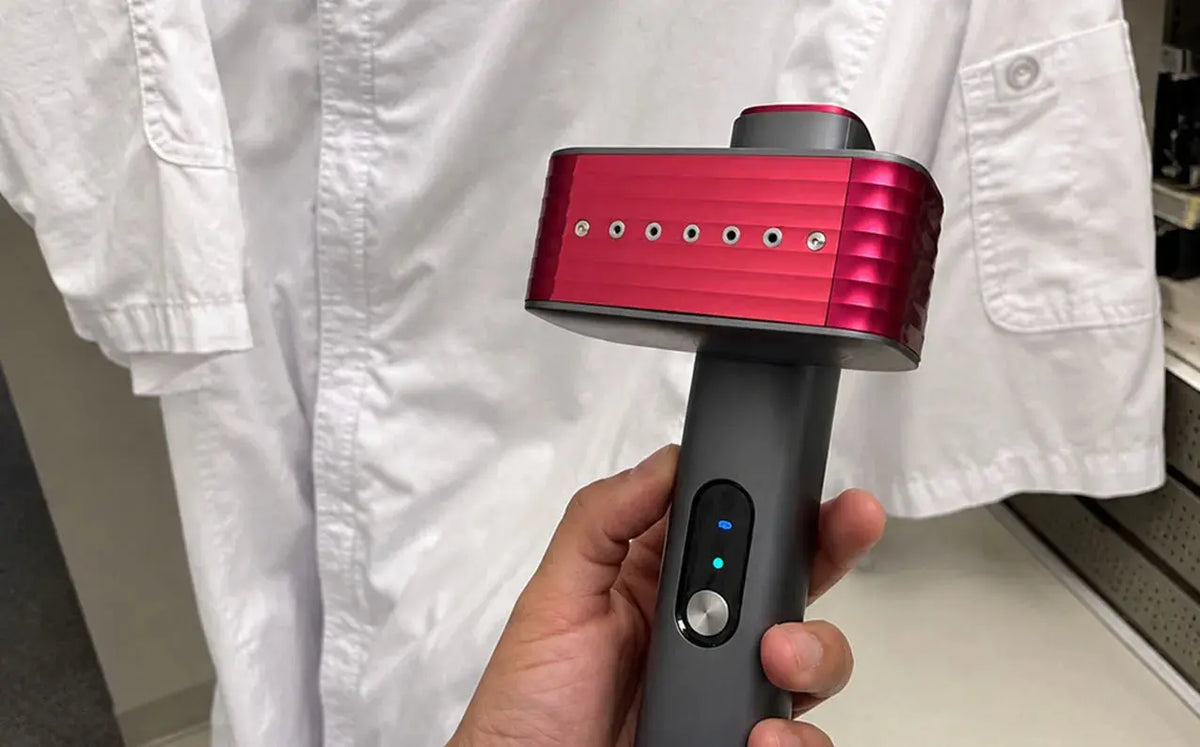
A handheld design makes that easy. I can bring the steamer closer to the hanger, change the angle, and work around the collar, cuffs, sleeves, or hem. If there’s a stubborn wrinkle, I can simply go over it again.
That’s especially useful when I’m traveling because I rarely have an ideal setup.
In a Small Hotel Room, Handheld Makes Even More Sense
I notice the difference most in a hotel room, where space is usually limited.
Sometimes there’s barely enough room around the closet to move comfortably. My suitcase might be open beside the bed, while the desk is already covered with my laptop, phone, and chargers.
I don’t want to clear the desk, find an ironing board, and turn a five-minute job into a whole setup.
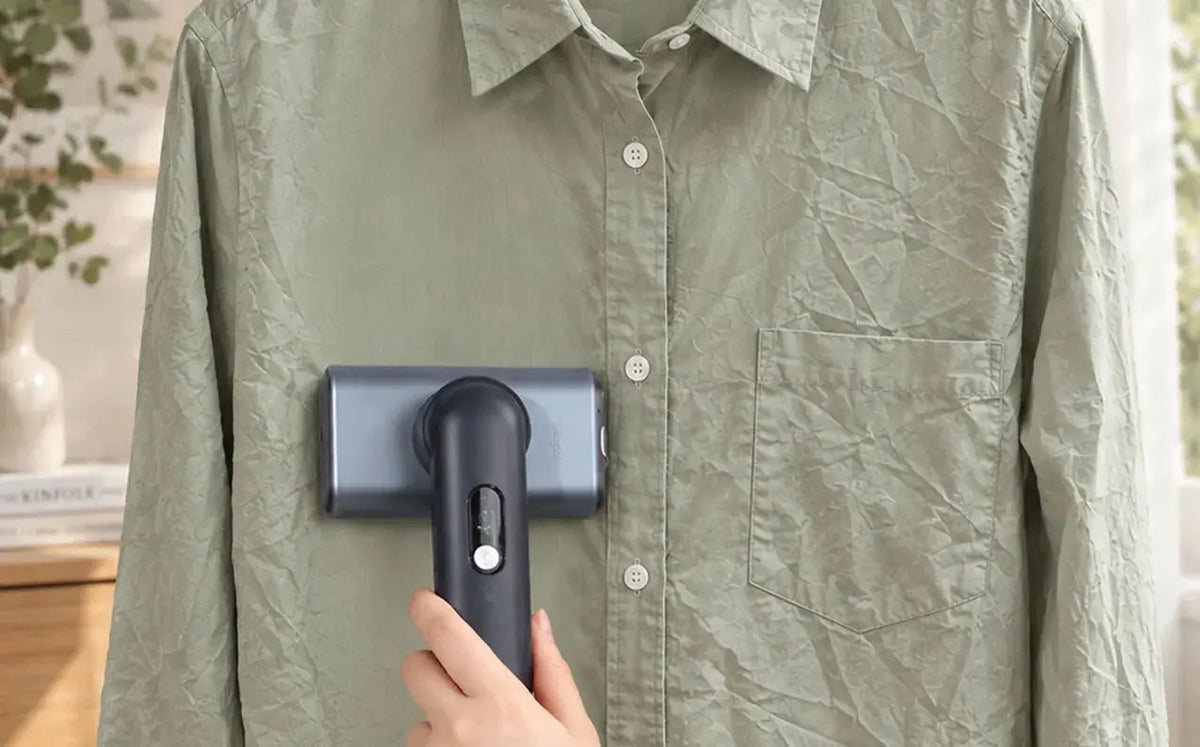
With a handheld steamer, I can hang the shirt near the closet and start steaming. I can reposition the garment or change the angle as I go.
I’m not trying to get my clothes perfectly pressed when I travel. I just want a shirt or dress to look presentable after being packed in a suitcase.

The Real Question: Will I Actually Pack It?
I’ve learned not to assume that something is travel-friendly just because the word “travel” is in the product name.
Before I pack a steamer, I ask myself a simple question:
Would I actually pack this for a three-day trip?
A steamer can have plenty of useful features, but if it’s so heavy or bulky that I hesitate every time I pack, there’s a good chance it will eventually stay home.
Size
On a two- or three-day trip, I’m usually trying to keep my suitcase as small as possible.
A compact steamer should fit into the luggage I already have rather than forcing me to reorganize everything around one appliance. That matters even more when I’m traveling with a carry-on and every bit of space counts.
Weight
Weight matters, too.
Clothes, shoes, a laptop, chargers—it all adds up surprisingly fast. I’m not going to choose a larger water tank just because it holds more water if that also means carrying around a heavier device.
I want a steamer that feels light in my hand and doesn’t take up much room once it’s packed.
That’s what makes it practical enough for me to bring along.
I Use It Most When I Need It at the Last Minute
The time I use a travel steamer most often isn’t necessarily before the trip.
It’s during the trip.
Maybe I get to the hotel, open my suitcase, and discover that tomorrow’s shirt is badly wrinkled. Maybe I decide at the last minute to wear a dress that has been packed all day. Or maybe I have an important meeting the next morning and want my clothes to look a little more polished.
In those situations, I don’t want a complicated process.
I fill the tank, wait for the steamer to heat up, and run it over the wrinkled areas. If the wrinkles are deeper, I make another pass.
That’s where the handheld design helps. I can move around the garment easily and focus on the areas that need the most attention.
Heat-Up Time Matters When I’m in a Hurry
When I’m traveling, I also care about how quickly I can actually use the steamer.
Many portable models advertise fast heat-up times, with some ready to use in under a minute. That’s useful when I’m getting ready in the morning. I can get the steamer going while I’m making coffee or getting dressed instead of planning around a long warm-up period.
Fast heat-up is nice, but it’s not enough on its own.
Consistent steam output matters, too. Once I start steaming, I want the steam to stay steady so I can work through the wrinkles without constantly stopping and waiting for the device to catch up.

I’d Rather Have a Smaller Tank
I usually don’t look for the biggest possible water tank in a handheld travel steamer.
A larger tank means more water to carry and, depending on the design, a larger and heavier device.
If I’m only steaming one or two outfits, a compact tank may be more than enough. If I need more water, I can refill it when necessary.
So I’m less concerned with maximum tank capacity than with whether it holds enough water for the clothes I actually need to steam.
If I can finish what I need on one fill, that’s enough for me.
If I’m Traveling Internationally, I Check the Voltage
This is something I always check before taking a steamer overseas.
If I’m traveling outside the U.S., I check the voltage requirements for both the steamer and my destination.
Some travel steamers support dual voltage or a wider voltage range, which can be useful for international trips. But I never rely on the word “Travel” printed on the packaging. I check the actual product specifications.
The plug shape, voltage compatibility, and whether you need a voltage converter are three different things.
I make sure the steamer’s specifications match the electrical requirements at my destination before I leave.
I’d rather figure that out at home than find out at the hotel that I need a converter—or that the steamer isn’t compatible at all.
The Shape of the Garment Matters, Too
Clothing isn’t a perfectly flat surface.
The collar has one angle, the sleeve has another, and the shoulder is different again.
That’s where a handheld steamer is especially convenient. I can adjust my wrist and the position of the steam head depending on the part of the garment I’m working on.
That can be useful for dresses, lightweight jackets, and softer fabrics.
I usually hang the garment up, gently pull the fabric taut with one hand, and move the steamer slowly from top to bottom with the other. I can change the angle or make another pass depending on the fabric and the shape of the garment.
A Steamer Won’t Treat Every Fabric the Same Way
I find travel steamers useful, but they’re not a substitute for following the care instructions on the garment.
Different fabrics need different treatment.
Cotton is usually fairly straightforward. Linen is another example. Steaming can help with deeper wrinkles, but I’m fine leaving some of its natural texture intact. I’m traveling, not trying to make the fabric look freshly pressed.
For silk, wool, specialty coatings, or garments with delicate embellishments, I always check the care label and the steamer’s instructions first.
If I’m unsure, I test it on a less noticeable area. I’d rather do that than risk damaging an expensive shirt while I’m away from home.
What I Check Before Packing a Travel Steamer
Before I pack one, I usually check a few things:
- Is it light enough to pack?
- Does it heat up quickly?
- Will the water tank hold enough for what I need to steam?
- Is it compatible with the voltage at my destination?
- Does it have automatic shutoff or other useful safety features?
- Can I pack it away easily after use?
That last point is easy to overlook, but I pay more attention to it than I used to.
After I’m finished using the steamer, I want to be able to empty it, let it cool down, and pack it away without much fuss. I don’t want a complicated disassembly process or a device that leaves me wondering what to do with leftover water.
The easier it is to put away, the more likely I am to bring it on my next trip.
My Travel Steamer Routine
My routine is pretty straightforward.
I hang the garment up, fill the tank according to the instructions, and wait for the steamer to heat up. Then I work from the top down, making another pass over any stubborn wrinkles.
I usually pay extra attention to the areas people notice first, such as the collar, cuffs, shoulders, and front of a shirt.
When I’m done, I leave the garment hanging for a few minutes before putting it on.
It only takes a few minutes, and then I can get on with the rest of my morning.
Why I Prefer a Handheld Travel Steamer
After using travel gear for a while, I’ve become less interested in how many features something has and more interested in whether it earns a place in my suitcase.
I want something light enough to pack and simple enough to use when I need it.
A good travel steamer doesn’t need to take over the hotel room or become another thing I have to think about. It just needs to fit easily into my luggage, work in a small space, and handle the wrinkles that show up after clothes have been packed for hours.
That’s really all I need.
If I open my suitcase and find a wrinkled shirt, I want to know I can deal with it quickly.
I steam it for a few minutes, hang it back up, and get on with my day.