
How to Choose a Portable Clothes Steamer: A Product Designer’s Perspective
As a product designer at NESUGAR, I get asked a question pretty often:
What actually makes a clothes steamer good?
Most people would probably point to steam output or wattage.
But when we talk about product design, the things that make the biggest difference are often less obvious: weight, balance, grip, heat-up time, water capacity, and, perhaps most importantly, whether the steamer is actually easy to pack and use when you're traveling.
To me, the value of a portable clothes steamer isn't about how impressive the specs look on paper.
It's about what happens when you notice a wrinkled shirt and think, Do I actually want to pull this thing out and use it?

Portable Doesn't Just Mean Small
This is something I pay close attention to when designing products at NESUGAR.
When people hear the word "portable," they usually think about size.
But a product can be small and still be uncomfortable or tiring to hold. That's not really portable in the way that matters.
A clothes steamer is a good example. You typically hold it for several minutes while using your other hand to pull the garment taut. That makes weight, balance, and grip surprisingly important.
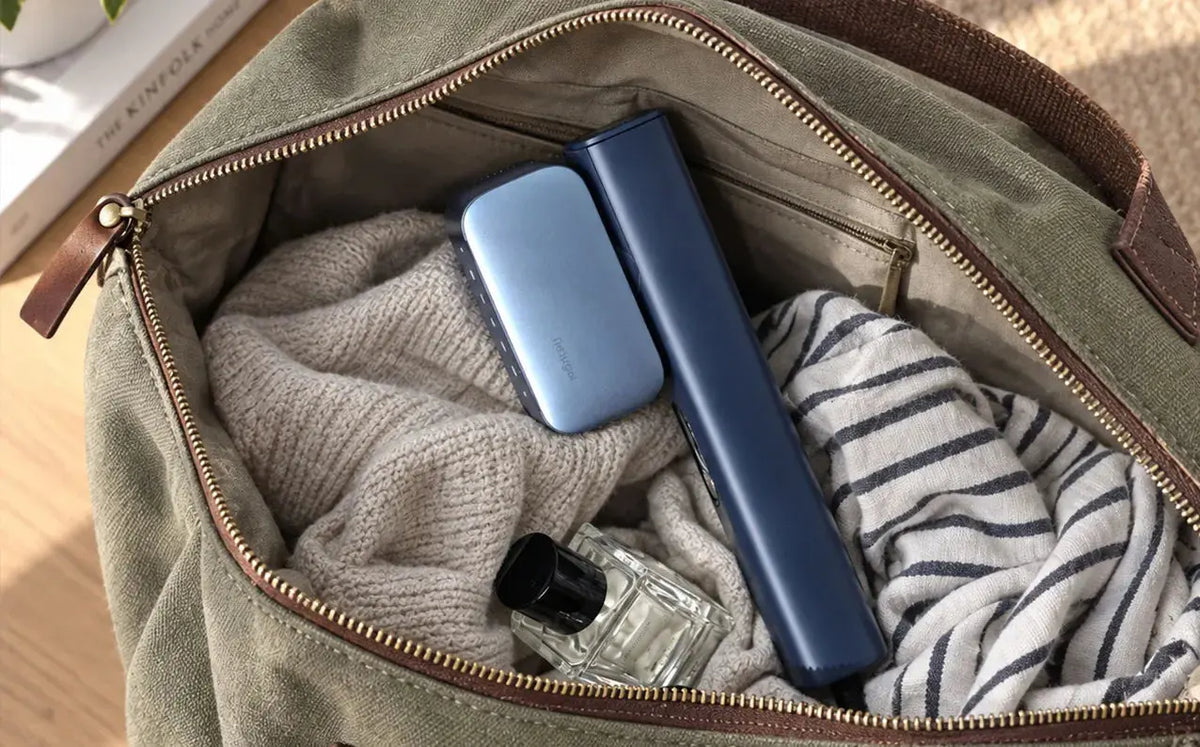
The NESUGAR G2 Pro weighs about 0.8 lb, and its compact design is built with travel in mind.
But I don't think the goal is simply to make a steamer lighter.
The real goal is to make it feel natural in your hand.
Those two things may sound similar, but you notice the difference pretty quickly when you're actually using the product.
Why Heat-Up Time Matters
Most people aren't using a portable clothes steamer during a slow, relaxing afternoon.
More often, it looks something like this:
7:30 a.m.
You have ten minutes before you need to leave.
You've had half your coffee.
Then you realize the shirt you stuffed into your suitcase last night is now so wrinkled it looks like it has a personal grudge against you.
At that moment, you don't care about the complicated technology inside the steamer.
You just want it to heat up.
The NESUGAR G2 Pro heats up in about 15 seconds.
That's why fast startup is such an important part of the user experience we think about during product development.
Good design shouldn't make you prepare ten minutes in advance for a task that should take a few minutes.

Why Not Just Make the Water Tank Bigger?
This is one of those classic product-design tradeoffs.
At first glance, a bigger water tank sounds better.
More water.
Longer steaming time.
Fewer refills.
What's not to like?
The catch is that a larger tank also adds weight.
And when a product is designed for travel and quick everyday touch-ups, that extra weight matters.
The NESUGAR G2 Pro has a 75 mL water tank and is designed for up to 15 minutes of continuous steaming.
For everyday touch-ups—a shirt, dress, jacket, or other travel clothes—that can be plenty.
The goal isn't to make the biggest water tank possible.
It's to find the right balance: enough water to get the job done without making you carry extra weight just for a bigger number on the spec sheet.
That tradeoff becomes especially noticeable when you're traveling.
Every extra ounce eventually feels real.
Don't Just Blast the Wrinkle
A lot of people instinctively point the steamer at the most obvious wrinkle and keep blasting it with steam.
You don't necessarily need to do that.
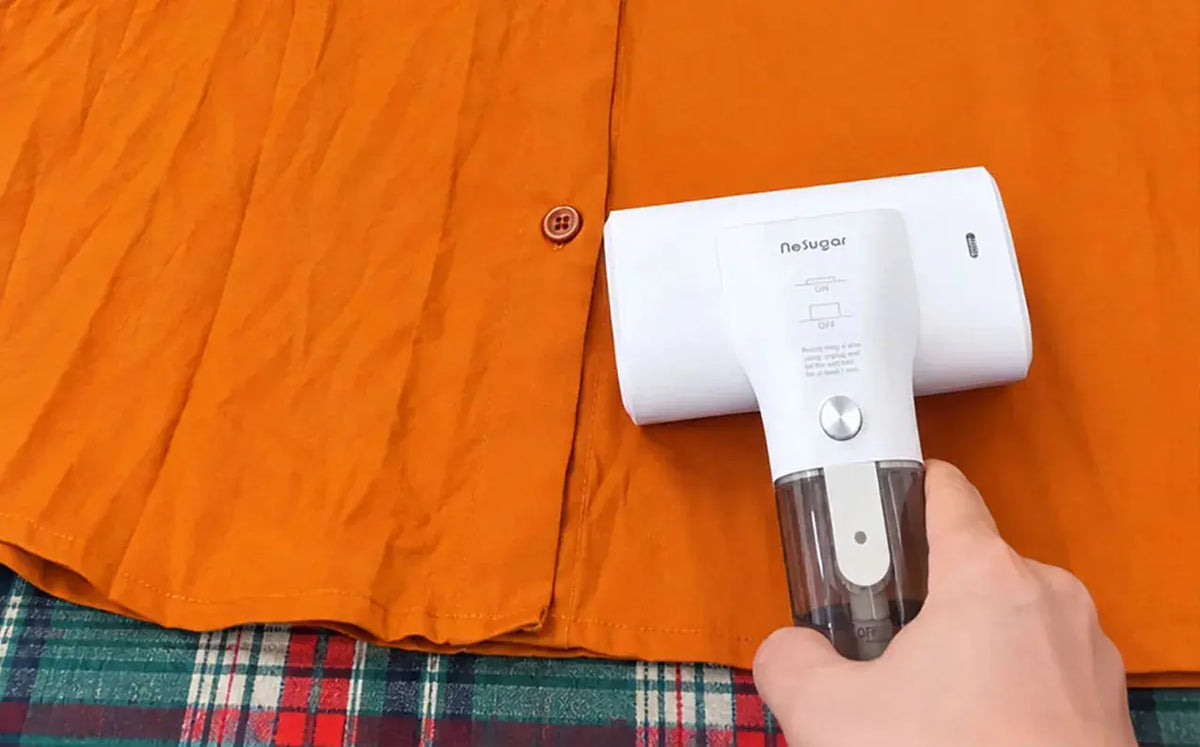
I usually hang the garment up and let the steamer fully heat up first. Then I slowly move the steam head from top to bottom while gently pulling the fabric taut with my other hand.
It's a simple technique, but it usually works better than holding the steamer in one spot and hoping the wrinkle gives up.
Steam helps relax the fibers in the fabric, while gently stretching the garment helps it settle back into shape.
Collars, cuffs, and hems tend to hold onto wrinkles more stubbornly, so they may need a few extra passes.
Just avoid keeping the steamer in one place for too long.
During product testing, we also pay attention to how easy a steamer is to use in situations like these.
Because something that performs well in a lab is one thing.
Using it one-handed in a hotel room at 7:30 in the morning while you're running late is something else entirely.

Different Fabrics Need Different Treatment
Cotton, linen, wool, silk, and some synthetic fabrics can all be steamed, depending on the garment.
The NESUGAR G2 Pro is designed to work with a variety of fabrics as well.
But there's one thing I'd always emphasize:
Check the care label first.
This is especially important when you're dealing with expensive or delicate clothing.
Different fabrics have different heat tolerances, and the right steaming technique can vary from one material to another.
If a garment specifically says not to use steam, don't experiment just because your steamer can produce it.
A good product should help you take care of your wardrobe—not turn your closet into a science experiment.
If You Travel Internationally, Check the Voltage
This is something I especially want travelers to pay attention to.
If you only use your steamer at home, voltage probably isn't something you think about very often.
But if you regularly travel between the U.S., Europe, Japan, or other countries, check the voltage requirements before you pack.
The NESUGAR G2 Pro supports 100–240V input, which makes it more convenient for international travel. You'll still need the appropriate plug adapter for your destination.
And there's an important distinction that travelers sometimes miss:
A plug adapter is not the same thing as a voltage converter.
An adapter changes the shape of the plug.
It doesn't necessarily change the voltage.
So check the electrical requirements before your trip. It's much easier than discovering a compatibility problem after you've checked into your hotel.
Can a Clothes Steamer Replace an Iron?
I wouldn't put it that way.
They're really designed for different jobs.
A clothes steamer is great for quickly removing wrinkles, freshening up everyday clothing, and handling last-minute touch-ups—especially when you're traveling.
An iron is better for stubborn creases, sharp trouser creases, and more precise pressing.
That's also why we've explored different product formats at NESUGAR.
For example, the NESUGAR G6 combines steaming and ironing in a 2-in-1 design.
I don't think one product necessarily needs to replace the other.
If I'm rushing to the airport, I'd rather have a compact travel steamer.
If I'm carefully pressing a pair of dress pants, an iron probably makes more sense.
Tools don't have to compete with each other.
They just need to be good at the job they're designed to do.
If I Were Choosing a Portable Clothes Steamer
If you're shopping for a portable handheld clothes steamer, these are the things I'd pay attention to:
Weight
Don't just look at the number. Think about how it will feel after you've been holding it for several minutes.
Heat-up time
If you're buying it mainly for travel and quick touch-ups, fast startup can make a real difference.
Water capacity
Choose based on how many garments you typically need to steam at once. Bigger isn't automatically better.
Steam consistency
A steady, usable flow of steam is often more practical than occasional bursts of very high output.
Grip and balance
This is easy to overlook on a spec sheet—and very easy to notice once the product is in your hand.
Travel compatibility
If you travel internationally, check the voltage range before you buy.
Fabric compatibility
And above all, follow the garment's care label.
I Think Great Products Should Be Easy to Forget
After spending years working on NESUGAR products, I've come to believe something pretty strongly:
The best design isn't necessarily the one that makes you remember how many features a product has.
It's the one that feels completely natural to use.
Pick it up.
Fill it with water.
Wait a few seconds.
Start steaming.
The wrinkles are gone.
Then walk out the door.
No complicated setup. No need to study a manual just to figure out how to smooth a shirt.
For a portable clothes steamer, I think that's the ideal experience.
Because we're not really trying to solve the problem of:
"How do we make a machine that looks impressive?"
We're solving a much simpler—and much more human—problem:
"When I'm getting ready to leave, can this make my wrinkled clothes look presentable in just a few minutes?"
If the answer is yes, then the product has already done the most important part of its job.