
Handheld Iron Steamer for Clothes: How to Choose One From a Product Development Perspective
I work in product development at NESUGAR, so I spend less time looking at the pretty product photos in ads and more time thinking about what happens between the first design sketch, testing, and the moment a real person actually picks up the machine and uses it.
So when someone asks me:
“What should I really look for in a good handheld iron steamer for clothes?”
My answer usually isn't “the higher the wattage, the better.”
And it definitely isn't “more steam is always better.”
What really determines the user experience is whether the entire system works well together.
Heat-up speed, steam consistency, water-tank capacity, overall weight, grip, temperature control, and even the position of the steam head can all affect those few minutes when you're actually trying to get wrinkles out of a shirt.
And there's one question we come back to again and again during product development:
Will people actually want to pick this thing up every day?
If the answer is no, impressive specifications don't mean much.

Why Are Handheld Garment Steamers Becoming So Practical for Everyday Use?
I used to think ironing was something you had to deliberately make time for.
Find the iron. Find the ironing board. Plug it in. Wait for it to heat up. Then carefully work your way through the garment.
If all you want to do is straighten out one wrinkled shirt before heading out, that's a surprisingly elaborate process.
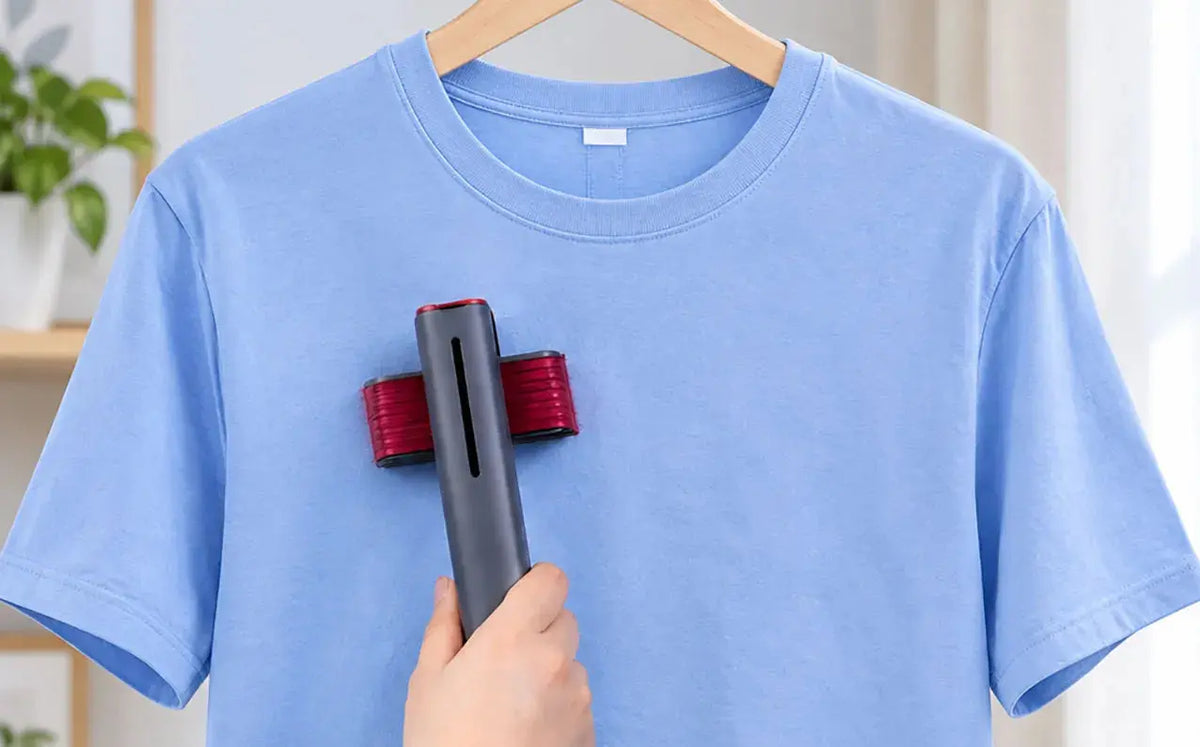
A handheld garment steamer changes that routine.
Hang up the clothes, let the steamer heat up, and start steaming.
You don't need to clear off a table or set up an entire ironing station.
For me, that convenience is more valuable than any single impressive-looking specification.
NESUGAR's current product lineup includes models such as the G2 Pro, G3 Pro, G5 Pro, and G6 Pro, designed around different needs including everyday garment care, portability, and travel.
I've always believed that the real value of a small appliance isn't giving users more things to figure out.
It's making an annoying task easier.
How Does a Handheld Iron Steamer for Clothes Actually Work?
The basic principle is pretty simple.
The machine heats water, converts it into steam, and releases that steam through the nozzle onto the fabric.
The combination of heat and moisture helps relax the fibers, allowing wrinkles caused by folding, compression, and storage to gradually smooth out.
That's also why a garment steamer and a traditional iron can both deal with wrinkles but feel completely different to use.
An iron relies heavily on heat and pressure.
A garment steamer relies more on steam and heat.
That's why a steamer works especially well on hanging shirts, dresses, jackets, and clothes that have been packed in a suitcase.
But if you're trying to create a sharp crease in a pair of dress pants, a traditional iron still has an advantage.
It's not really a question of which one replaces the other.
They're simply different tools for different jobs.

Why Do I Pay So Much Attention to Heat-Up Time?
Because when people need a steamer, they usually need it right now.
Imagine getting ready for work and suddenly noticing that yesterday's shirt has developed a few very obvious wrinkles.
The last thing you want is to stand there watching the machine slowly warm up.
The NESUGAR G5 Pro is currently rated at approximately a 15-second heat-up time, with 1,200W of power and a 90 mL water tank.
From a product-development perspective, fast heat-up isn't as simple as just adding more wattage.
The heating element, temperature control, water path, and safety system all have to work together.
Too little power and the machine takes too long to heat up.
But simply pushing the power higher can create other challenges involving temperature control, energy consumption, and the overall design of the machine.
That's why I pay more attention to one thing:
Can the machine reach a stable operating state quickly?
Not just:
What's the biggest number printed on the box?
Does More Steam Always Mean Better Performance?
Not necessarily.
This is one of the easiest things to misunderstand when shopping for a steamer.
Steam output obviously matters.
But consistent steam output matters just as much.
If the steam comes out in bursts, or if the nozzle starts spitting noticeable water droplets, the experience can quickly go downhill when you're actually working on a garment.
From a product-development standpoint, the steam system is really a complete chain:
- The water tank supplies the water.
- The heating system generates the heat.
- The water path moves water to the right location.
- The steam channel delivers the steam.
- The nozzle releases it onto the fabric.
If something goes wrong anywhere in that chain, you'll eventually see the result on the garment.
That's why a good handheld clothes steamer isn't simply about producing more steam.
We're more interested in whether the steam is:
Stable. Even. Consistent.
And whether it can keep doing its job throughout the steaming process.
Why Can't You Just Make the Water Tank Bigger?
This is another classic product-design tradeoff.
A larger water tank means longer operating time.
Sounds great.
But water has weight.
As the tank gets bigger, the overall weight of the machine goes up. And a handheld steamer is something you're expected to hold while operating it.
That creates a very practical question:
Would you rather refill the tank less often, or hold a lighter machine?
The NESUGAR G5 Pro currently uses a 90 mL water tank and is rated for up to approximately 15 minutes of continuous use.
For quickly touching up a shirt, dress, or travel outfit, that capacity makes sense for a portable product.
If you're steaming a dozen or more garments in one session, however, a larger tank may make more sense.
So when you're shopping, don't automatically assume that bigger is better.
The right water-tank capacity depends on how you actually use the machine.

Weight Is an Easy Specification to Underestimate
Product pages love words like “lightweight” and “portable.”
But once you actually pick up the machine, your hand becomes a much better judge of the truth.
During product testing, we don't just look at total weight.
We also pay attention to weight distribution.
Two devices can weigh roughly the same—say, around one pound—and still feel completely different in your hand if their centers of gravity are different.
My own rule is pretty simple:
If you constantly feel like you need to switch hands, the machine may not have solved the convenience problem in the first place.
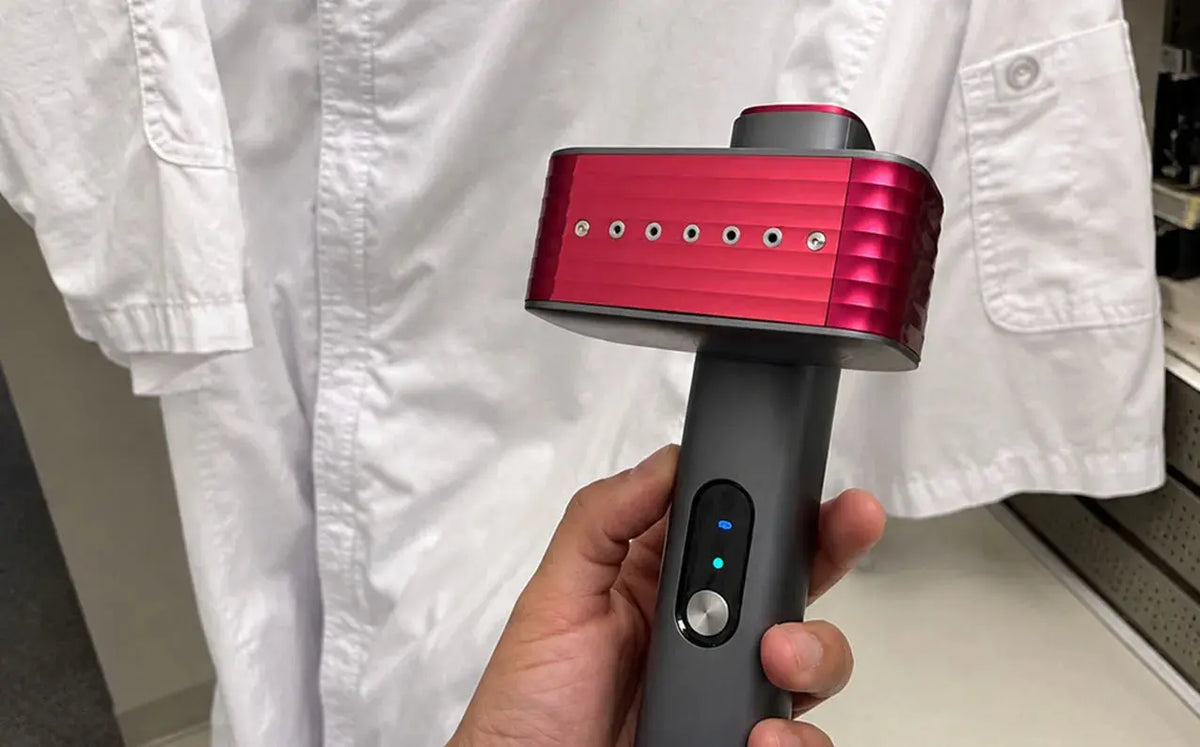
The NESUGAR G5 Pro is currently listed at approximately 1 pound, with dimensions of about 9.6 × 2.4 × 3 inches.
That kind of size can make sense for everyday touch-ups and travel.
But specifications only tell part of the story.
How that weight feels after several minutes of use matters too.
Should I Buy a Handheld Steamer or an Iron?
There isn't one universal answer.
I usually make the decision based on the job.
|
Your Need |
Better Choice |
|
Quick touch-ups before heading out |
Handheld steamer |
|
Steaming clothes while traveling |
Handheld steamer |
|
Dresses and jackets |
Handheld steamer |
|
Removing wrinkles from hanging clothes |
Handheld steamer |
|
Creating sharp creases in dress pants |
Iron |
|
Getting a very crisp finish on shirts |
Iron |
|
Steaming a large amount of clothing at once |
Depends on capacity |
If I just want a garment to look clean, fresh, and presentable, I'd reach for a steamer.
If I need a very crisp, formal finish, I'd still reach for an iron.
There's no reason to force one appliance to do a job it wasn't designed to do particularly well.
A Few Details I Pay Attention to When Steaming Clothes
1. Hang the garment securely
Don't try to hold the garment in one hand while operating the steamer with the other.
It's harder to get consistent results, and it increases the chance of accidental contact or misuse.
2. Don't hold the steamer in one spot for too long
For stubborn wrinkles, make several passes rather than concentrating steam on one small area for an extended period.
3. Work from top to bottom
This is generally easier when the garment is hanging naturally.
Gravity helps pull the fabric downward while you work.
4. Check the care label first
Different fabrics have different tolerances for heat and moisture.
With delicate garments in particular, I never assume that “steam-safe” means “steam it however you want.”
There isn't a shortcut here.
One More Thing: Don't Put Random Stuff in the Water Tank
This sounds obvious, but it's surprisingly important.
Some people wonder whether adding a little perfume or essential oil to the water will make their clothes smell nice while they're steaming.
My advice?
Don't do it unless the manufacturer specifically says it's allowed.
A handheld steamer contains heating components, water channels, and steam passages.
Adding liquids that aren't intended for the machine can potentially leave residue, cause buildup, clog the system, or create other problems.
If you live somewhere with hard water, follow the manufacturer's recommendations for water type and cleaning.
The inside of your steamer generally wants clean water.
Not your latest fragrance experiment.
If You Travel Often, What Should You Look For?
Travel is one of the situations where a handheld garment steamer can be especially useful.
Business travelers know the problem.
A few hours compressed inside a suitcase can turn even an expensive suit into something resembling a wrinkled road map.
That's where a compact steamer can be incredibly convenient.
But for travel, I'd pay special attention to voltage compatibility.
The NESUGAR G5 Pro is currently listed as supporting 100–240V, while the G3 Pro is also positioned as a worldwide-voltage product.
But there's an important distinction:
Worldwide voltage compatibility does not mean the plug will fit every outlet in the world.
Before traveling internationally, check the electrical standards at your destination and determine whether you'll need a plug adapter.
Those little details can have a bigger impact on your trip than how much steam the machine produces.
What Really Matters Isn't Just the Specification Sheet
Working in product development has made me increasingly skeptical of judging a product by one number.
1,200W sounds good.
A 15-second heat-up sounds good.
A 90 mL water tank has its own advantages.
But the actual experience comes from how all those numbers work together.
At the end of the day, a handheld garment steamer has a pretty simple job:
Start quickly.
Produce consistent steam.
Feel comfortable in your hand.
Be easy to operate.
And remove wrinkles from your clothes.
If it can do those things reliably, it's a useful product.
If the specifications look impressive but you have to fight with the machine every time you use it, those numbers are really only useful on the product page.
My Selection Criteria Have Actually Become Pretty Simple
For everyday use, I'd focus on:
- Heat-up time
- Steam consistency
- Grip comfort
- Water-tank capacity
- Continuous operating time
- Ease of cleaning and maintenance
For travel, I'd add:
- Weight
- Overall size
- Voltage compatibility
- Storage convenience
If you're mainly steaming large amounts of clothing, I'd put more emphasis on water capacity and sustained operating performance.
So if you're looking for a handheld iron steamer for clothes, I'd start with one simple question:
What problem do you actually need it to solve?
Is it the shirt you need to fix every morning before work?
The clothes that come out of your suitcase looking like they've been folded by an angry machine?
Or an entire family's worth of laundry?
The answer will lead you toward a different kind of product.
One Last Thought
Working in product development has actually made my definition of a “good” small appliance much simpler.
I'm less interested in whether a machine has a huge list of impressive-sounding features.
I'm more interested in questions like:
Does it feel natural to hold?
Does it heat up quickly enough?
Is the steam consistent?
Will I actually want to use it again tomorrow?
That's how I think about the value of a handheld garment steamer.
It doesn't need to replace every ironing tool in your home.
It just needs to make you look at a wrinkled shirt and think:
“Fine. I can fix that in two minutes.”
To me, that's when a product truly becomes part of everyday life.
And if a piece of clothing can be a little less wrinkled before you walk out the door, maybe your morning can be a little less chaotic too.
It won't solve the problem of being late.
But at least your wrinkled shirt won't become problem number two.