
Lightweight Handheld Steamer for Clothes: 10 Things I Actually Look For
I used to have a very simple attitude toward wrinkled clothes: if I could live with the wrinkles, I did.
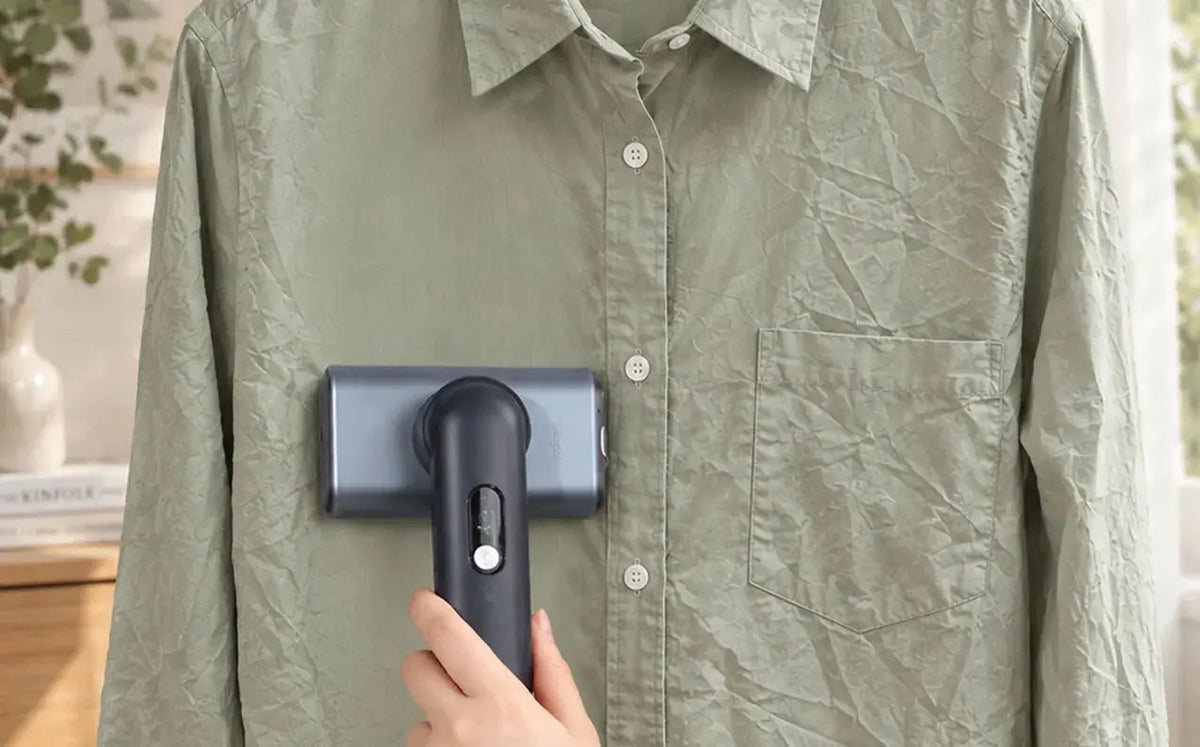
That was especially true when traveling. A shirt could spend a few hours getting crushed inside a suitcase and come out looking completely defeated. The collar was wrinkled, the sleeves were creased, and there were usually a few mysterious lines across the chest that seemed to appear out of nowhere.
The problem was that a traditional iron works well, but it usually means pulling out an ironing board, finding a flat surface, and having a little patience.
That's when I started paying attention to lightweight handheld steamers for clothes.
I wasn't looking for some miracle appliance. I had a very specific problem:
How can I spend less time and take up less space while getting clothes looking presentable after they come out of the closet or suitcase?
After trying a few different types of handheld steamers, I've realized that choosing one isn't actually that complicated.
What matters isn't how many impressive-sounding features are printed on the box. What matters is whether the steamer is light enough to hold comfortably, heats up quickly, produces consistent steam, and actually fits the clothes and situations you use it for.
Here are the things I pay the most attention to when choosing a portable clothes steamer.

1. Why Is a Lightweight Design More Important Than I Expected?
At first, I didn't think weight would be a big deal.
After all, I'm only going to hold the thing for a few minutes, right?
That's what I thought.
In practice, a handheld steamer is different from a small countertop appliance. While you're using it, you're constantly moving it around.
When I'm working on a collar, my hand is higher. When I'm steaming a dress hem, I'm moving downward. When I'm doing sleeves, I'm constantly changing the angle.
If the steamer itself is heavy, you may not notice it during the first few minutes. But after steaming an entire outfit, your wrist and arm definitely know about it.
So when I see the word lightweight, I don't simply think, "This thing doesn't weigh much."
To me, it means:
Easier to hold. Easier to maneuver. More comfortable to use for longer periods.
Weight also matters when you're traveling.
Every item in a suitcase has to justify its weight.
An appliance that's relatively heavy but only gets used occasionally is usually one of the first things I'm tempted to leave at home.
2. Why Is a Handheld Steamer So Good for Travel?
Wrinkled clothes are almost impossible to avoid when traveling.
Folding creates creases, and then the pressure inside a suitcase makes things even worse. Shirts, dresses, and jackets rarely come out looking exactly the way they did when they went in.
That's where a portable clothes steamer really makes sense.
You don't need a traditional ironing board.
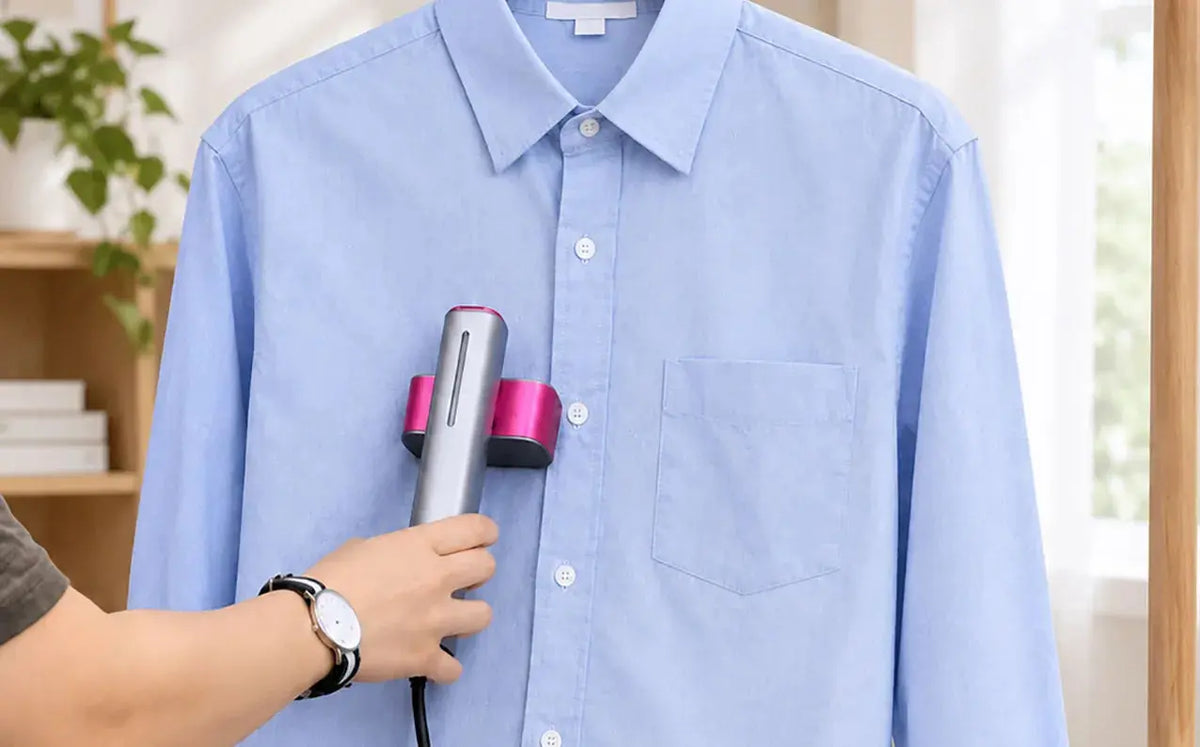
I usually just find a sturdy hanger, hang up the garment, and start steaming.
That advantage becomes even more obvious in a hotel room.
When space is limited, I don't have to turn half the room into a temporary ironing station just to deal with one shirt.
A compact handheld clothes steamer can take care of quick touch-ups without much setup.
For business travelers, I think this can actually matter more than maximum steam power.
Because when I'm traveling, I'm usually not trying to make ten outfits look like they just came back from a professional dry cleaner.
I'm trying to do something much simpler:
Make tomorrow's outfit look clean, neat, and presentable.
Those are two very different goals.

3. Heat-Up Time Determines Whether You'll Actually Use It
I've developed a pretty practical rule for small appliances:
If using something requires too much preparation, I eventually stop using it.
The same applies to clothes steamers.
If a portable steamer takes forever to heat up, there's a good chance I'll skip it on a busy morning and just put on the slightly wrinkled shirt.
According to publicly available product information, the Nesugar G2 Pro heats up in about 15 seconds.
For situations where I need to freshen up clothes quickly, that kind of startup time is genuinely useful.
I like appliances with a simple workflow:
Hang the clothes.
Fill the water tank.
Turn it on.
Wait for it to heat up.
Start steaming.
That's it.
There's no need for a complicated ritual.
After all, we're steaming a shirt, not launching a rocket.
4. How Should You Think About Water Tank Capacity?
When a product advertises a "large-capacity water tank," it's easy to assume that bigger must be better.
I don't look at it that way anymore.
A larger tank generally means a larger and potentially heavier appliance.
If you're mainly using a steamer for travel or for one or two garments at a time, an oversized tank isn't necessarily useful.
The Nesugar G2 Pro lists a water tank capacity of approximately 75 ml, with publicly available product information indicating up to about 15 minutes of continuous use.
For quickly touching up shirts, dresses, or jackets, that fits the general idea of a compact, travel-friendly steamer.
Of course, if you're steaming a dozen garments at home in one session, I'd prioritize a larger tank.
So instead of asking:
"Does this steamer have the biggest water tank?"
I'd ask:
"Is the tank capacity right for the way I actually use it?"
That's a much more useful question.
5. Consistent Steam Matters More Than a Big Number on the Box
I used to get distracted by impressive-looking specifications when shopping for a clothes steamer.
How many watts?
How much steam output?
How much pressure?
Those numbers can be useful, but there's another factor that's just as important in real-world use:
Is the steam consistent?
If the steam comes out in bursts or the appliance starts spitting water, the actual steaming experience can become frustrating.
This is especially important right after filling the tank. I wouldn't immediately point a freshly filled steamer at an expensive garment.
Let the appliance heat up properly and wait until the steam is steady before you start.
Nesugar's product instructions also advise allowing the device to heat fully before use, which can help reduce issues such as leaking or water droplets.
It's a small detail, but it's one that's easy to overlook when using a portable steamer.

6. What Types of Clothes Work Well With a Handheld Steamer?
I mainly use a handheld steamer for light to moderate wrinkles.
For example:
Shirts
This is probably the most obvious use case.
I hang the shirt up and start around the shoulders and collar before gradually working my way down.
Dresses
Dresses aren't always convenient to deal with using a traditional iron, especially softer, drapier fabrics.
Hanging the dress up and steaming it vertically is usually much easier.
Suit Jackets
For light wrinkles, steaming can be very convenient.
I just wouldn't expect a handheld steamer to completely replace professional pressing.
Linen Clothing
Linen wrinkles. That's basically part of the deal.
Steam can make linen look more polished, but I don't think it makes sense to obsess over eliminating every single wrinkle.
Sometimes linen is supposed to have a little natural texture.
Lightweight Sweaters
For garments that shouldn't be pressed directly with high heat, vertical steaming can sometimes be a more convenient option.
That said, I still check the care label before using a steamer on any garment.
7. What Clothes Shouldn't You Steam Without Checking First?
"Suitable for multiple fabrics" doesn't mean every garment can be exposed to high-temperature steam without a second thought.
If I'm dealing with something expensive or particularly delicate, I always check the care instructions first.
I'm especially careful with:
- Special embellishments
- Printed designs
- Glued or bonded construction
- Heat-sensitive synthetic fabrics
- Special coatings
- Very delicate materials
Even if the product documentation lists a fabric as suitable, I prefer to test an unfamiliar material on a hidden area first.
My rule is pretty simple:
It's better to be cautious the first time than to ruin the garment the first time.
8. How Do You Use a Lightweight Handheld Steamer for Clothes Properly?
Getting good results isn't just about the steamer itself. How you use it matters, too.
This is the basic process I follow.
Hang the Garment Up
Use a sturdy hanger whenever possible.
Once the garment is hanging naturally, the wrinkles are easier to work out.
Let the Steamer Fully Heat Up
Don't start steaming the second you turn it on.
Wait until the steam is steady.
Keep the Garment Hanging Naturally
Don't press the garment tightly against a wall.
Give the steam enough room to reach the fabric.
Gently Pull the Fabric
With my free hand, I usually apply a little tension to the garment.
That helps the fabric relax and the wrinkles release.
Move From Top to Bottom
I usually start with the shoulders and collar, then move down to the chest, sleeves, and hem.
Don't hold the steamer in one spot for too long.
Let the Garment Dry Naturally
Once you're finished, don't immediately stuff the garment back into your suitcase.
Give it a little time to dry and settle.
The process isn't complicated.
The main thing is simply not to rush it.
9. What's the Difference Between a Lightweight Steamer and a Traditional Iron?
I don't think a handheld steamer can completely replace an iron.
The two tools are good at different things.
The biggest advantage of a traditional iron is pressure.
When a garment is laid flat, the combination of heat and pressure can create sharper creases and cleaner edges on things like dress pants, cuffs, and tailored garments.
A handheld steamer is better suited to:
Fast, vertical, low-prep garment touch-ups.
So if I'm getting a formal suit and dress pants ready for an important meeting, I may still reach for an iron.
But if I've just gotten off a plane and need to wear a shirt the next morning, I'm much more likely to grab a portable steamer.
Especially in a hotel room.
At that point, I really don't want to start a serious relationship with a giant ironing board.
10. What Matters Most for International Travel?
If you're using a steamer at home, voltage probably isn't at the top of your list.
For international travel, that's a different story.
Different countries and regions use different voltage levels and plug types.
Publicly available information for the Nesugar G2 Pro indicates support for 100–240V, which covers a wide range of international electrical systems. However, travelers still need to check the plug type used at their destination.
This is an easy detail to confuse.
Voltage compatibility does not automatically mean the plug will fit.
Before an international trip, I usually check three things:
- The steamer's voltage range
- The voltage at my destination
- The plug type at my destination
If the plug is different, I pack the appropriate travel adapter.
A few minutes of checking before the trip is much easier than getting to a hotel and discovering that the steamer can't be used.
What Specs Do I Actually Look At When Choosing a Portable Clothes Steamer?
If I had to reduce all those product specifications to one simple checklist, these are the things I'd look at:
|
What I Look At |
Why It Matters |
|
Weight |
Determines how comfortable it is to use |
|
Size |
Determines how easily it fits in a suitcase |
|
Heat-up time |
Determines whether I'll actually use it on busy mornings |
|
Water tank capacity |
Determines how many garments I can steam in one session |
|
Steam consistency |
Directly affects the steaming experience |
|
Voltage range |
Especially important for international travel |
|
Controls |
The simpler, the easier it is to use regularly |
|
Storage |
Affects how convenient it is to pack and carry |
I've become less interested in the idea that more features automatically mean a better product.
For a travel clothes steamer, I generally prefer something simple and dependable.
Because when I actually need it, I'm usually not sitting around with plenty of free time.
It's more likely to be one of those mornings when:
"I have ten minutes before I need to leave, and this shirt looks like a dog sat on it."
That's when the steamer needs to do its job.
Who Is a Lightweight Handheld Steamer for Clothes Best For?
If you only occasionally deal with wrinkles at home and already own a good iron, you may not need another appliance.
But I think a portable steamer makes a lot of sense for a few specific groups of people.
Frequent business travelers.
Suitcases and wrinkle-free shirts aren't exactly natural partners.
Frequent travelers.
Especially if you regularly stay in hotels where space is limited.
People who wear dress shirts regularly.
Steaming one shirt in the morning is much easier than setting up an ironing board.
People who wear dresses often.
Vertical steaming can be a more natural way to handle many dresses and flowing garments.
People who hate ironing boards.
And yes, I'm being completely honest about this one.
If seeing an ironing board is enough to make you procrastinate, a lightweight handheld steamer may simply fit your habits better.
My Final Take on Lightweight Handheld Clothes Steamers
Looking back, I think I used to make getting wrinkles out of clothes more complicated than it needed to be.
I assumed that making clothes look presentable meant pulling out an iron, setting up an ironing board, and carefully working through every single crease.
But most of the time, clothes don't need that level of attention.
A lot of the time, I just need to take a shirt from "I just got crushed inside a suitcase" to "I can actually walk out the door wearing this."
That's where I think a lightweight handheld steamer for clothes really earns its place.
It's not designed to replace every traditional ironing method.
It's a quick garment-care tool.
Light enough to hold comfortably.
Compact enough to travel with.
Fast enough that I don't need to plan my morning around it.
Consistent enough to make steaming straightforward.
And with a water tank that's appropriately sized without adding unnecessary bulk.
For me, those ordinary details are what determine whether a portable clothes steamer becomes something I actually use for years or just another appliance that ends up sitting in a closet.
Because the real test of a product isn't how impressive the specification sheet looks.
It's whether, when I discover that my shirt is horribly wrinkled ten minutes before I need to leave, the thing can solve the problem in a few minutes.
If it can, then it has already done its job.
And my breakfast doesn't have to sit there getting cold while I figure out what to do with my shirt.