
How to Get Wrinkles Out of Clothes With a Steamer Iron: 7 Easy Tips
You're almost ready to leave when you pull your shirt out of the closet and notice the wrinkles. It's even more frustrating when you unpack before a business meeting and find creases running across the shirt you planned to wear.
When I'm getting ready in a hurry, a garment steamer is often the first thing I'd try. It's easy to set up and works well on many everyday fabrics, provided the care label allows steaming. The results depend on the fabric, the amount of steam, how the garment hangs, and how slowly you move the steamer.
If you're wondering how to get wrinkles out of clothes with a steamer iron, a few simple techniques can help. Here's how to handle common garments, deal with stubborn creases, and avoid damaging fabrics along the way.

1. Why Does a Steamer Help Remove Wrinkles?
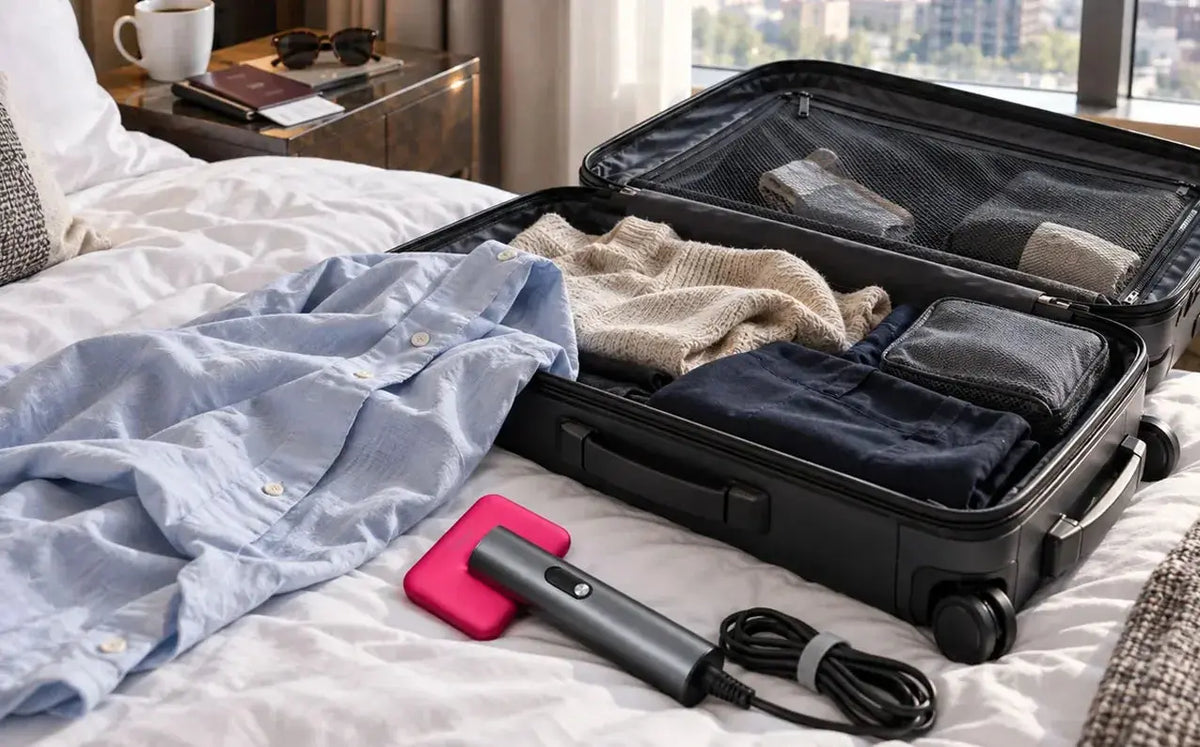
Clothes tend to wrinkle when they're folded or squeezed into a tight space, such as a suitcase. On fabrics that can be safely steamed, heat and moisture help relax the fibers so the creases are easier to smooth out.
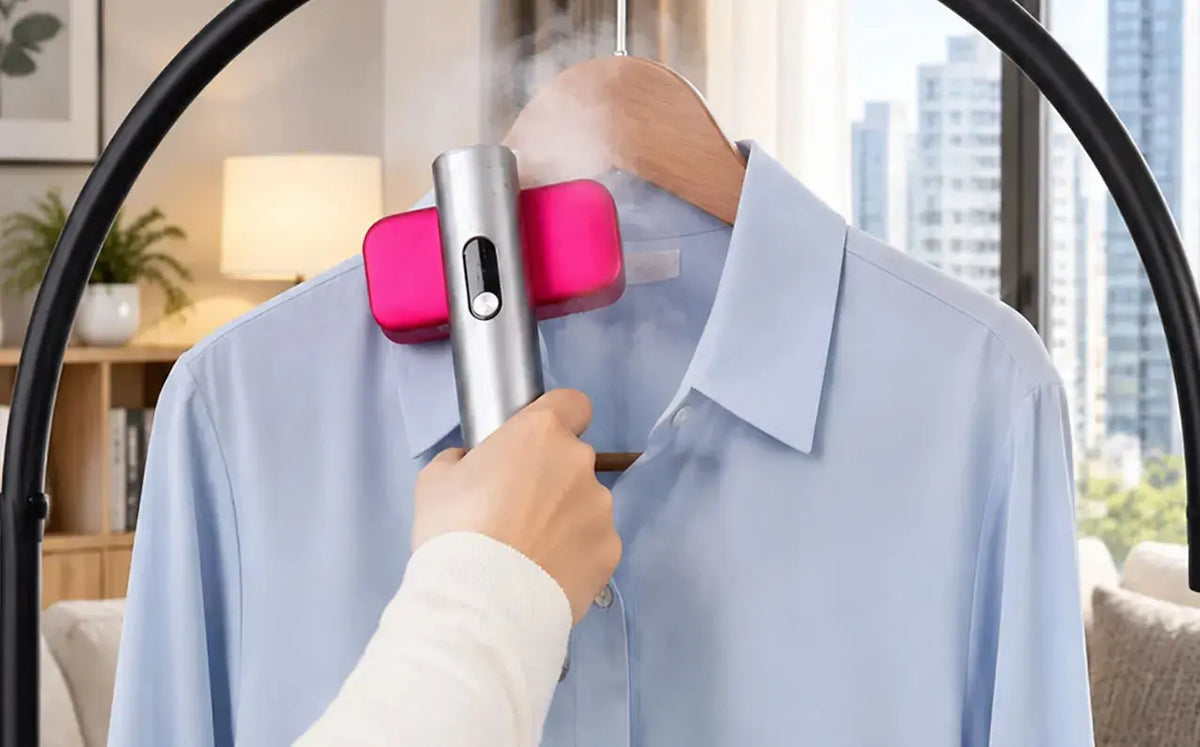
With a handheld garment steamer, you can usually smooth out a shirt or dress while it's still on the hanger. There's no need to lay everything flat, which is especially convenient when you're short on time or getting ready to travel.
A few passes may be enough for light wrinkles, but deep creases from hours of compression can take more work and may not disappear completely. Sharp creases in dress pants and the structured shoulders of a suit jacket can also be difficult to smooth with steam alone.
Before turning on the steamer, take a look at the fabric and the depth of the wrinkles. Light creases may need only a pass or two, while deeper ones call for a slower, more careful approach. More steam isn't necessarily better.
2. How to Get Wrinkles Out of Clothes With a Steamer Iron
Step 1: Check the Care Label Before You Start
Check the care label before steaming anything delicate or expensive. Different fabrics can react very differently to heat and moisture.
Cotton, polyester, and many common fabric blends can often be steamed if their care labels allow it. Silk, rayon, wool, and garments with special coatings or finishes may need a more cautious approach. Don't assume that a fabric is safe to steam just because it feels sturdy.
If the label says not to steam the garment, follow that instruction. When the label is unclear, test a hidden area first, provided the care instructions permit it. Look for water spots, discoloration, or changes in texture before treating the rest of the garment.
Testing a hidden area first can help you catch problems before they affect the whole garment.
Step 2: Fill the Tank and Let the Steamer Heat Up
Fill the water tank according to the manufacturer's instructions and make sure it's securely in place. Some models have specific water requirements, so check the manual rather than assuming tap water is always suitable.
Turn on the steamer and wait until it reaches operating temperature and produces a steady flow of steam. Starting before the unit is ready can lead to uneven results.
If the steam output drops while you're using the machine, check the water level and allow the unit to heat up again if necessary. If the problem persists, consult the manual for cleaning or descaling instructions specific to your model.
Step 3: Hang Your Clothes Properly
A sturdy hanger that keeps the garment in place makes it much easier to smooth out wrinkles.
Hang shirts so they fall naturally, with the sleeves spread out as much as possible. Give dresses enough room for the skirt to hang freely. For pants, use a suitable trouser hanger, making sure both legs fall without bunching up.
Before you start steaming, smooth out obvious folds by hand. There's no need to stretch the fabric tightly. Just make sure it isn't folded over itself or hanging in a way that hides the wrinkles you're trying to remove.
Make sure each section is visible and easy to reach before you begin.
Step 4: Move the Steamer in Slow, Even Passes
Follow your steamer's instructions for how close to hold the steam head to the fabric. Some models allow contact with suitable materials, while others require a little space between the head and the garment.
Start at the shoulders and work your way down, moving the steamer slowly enough to cover each section evenly. Overlap each pass slightly so you don't miss small areas between sections.
If a wrinkle remains, make another careful pass. Avoid holding the steamer in one spot for too long, especially when working with delicate fabrics.
Keep your hands clear of the steam path, and let the fabric cool before touching it. Hot steam can cause burns, even when the garment itself doesn't look particularly hot.
Step 5: Give the Fabric Time to Dry
Steaming can leave clothes slightly damp, so hang them somewhere with good airflow and let them dry before putting them on. Wearing a garment while it's still damp can feel uncomfortable, and handling it too soon may create new creases.
If you're steaming a shirt before work, allow a few extra minutes for drying. That way, you won't have to rush into getting dressed while the fabric is still damp.

3. How to Steam Different Types of Clothing
The best technique depends on the garment's shape, fabric, and construction. Here's how to approach some common items without overworking the material.
Shirts: Start With the Collar and Cuffs
Start with the collar and cuffs, where creases tend to stand out, then move on to the front and back of the shirt.
Work from the shoulders downward, following the direction of the fabric. When steaming the sleeves, keep your movements controlled and make sure the material hangs freely.
Steam can improve the appearance of a collar or cuff, but it may not create a perfectly crisp finish. If the fabric has a structured shape, don't keep applying steam in the hope of getting a sharper result.
Pants: Work From the Waist Down
Hang the pants by the waistband or use a trouser hanger, making sure both legs fall freely.
Move the steamer down each leg, working from the top toward the bottom. If the pants already have a crease, follow its direction rather than pulling the fabric across it.
For stubborn wrinkles in dress pants, work in small sections and make another careful pass if the care label allows it. If you need a sharp, well-defined trouser crease, however, a garment steamer may not give you the finish you're after.
Dresses: Keep the Steam Gentle
A cotton-blend day dress and a lightweight silk dress may need very different care, so check the label before applying steam.
For garments that can be steamed, begin at the shoulders and work down toward the waist and skirt. With a pleated dress or skirt, follow the existing pleats instead of moving across them, which could flatten their shape.
Light creases may smooth out after just a few passes. Check the result as you go, and stop once the wrinkles have eased rather than continuing to apply steam unnecessarily.
Suit Jackets: Take Extra Care With the Shoulders
A suit jacket has more than just an outer fabric to consider. Its lining, shoulder padding, and internal structure may all be sensitive to heat or moisture.
Check the care label first. If steaming is allowed, use gentle movements and avoid repeatedly directing steam at the same area.
Pay particular attention to the shoulders, lapels, and lining. If the jacket requires professional dry cleaning or has delicate internal construction, it's safer to leave the job to a professional than risk changing its shape.
4. Why Are My Clothes Still Wrinkled After Steaming?
Still seeing wrinkles after steaming? Before blaming the machine, check how you're handling the fabric, how much steam the unit is producing, and whether the material is suitable for steaming.
The steamer is moving too quickly.
Move the steamer slowly enough to cover each section evenly. If you're racing across the fabric, you may leave wrinkles behind even when the steam output is fine. Make another controlled pass if the care label permits it.
The garment isn't hanging smoothly.
If the fabric is folded over itself or keeps swinging around, you'll have a harder time getting an even result. Use a sturdy hanger and gently hold the garment taut where appropriate, keeping your hands away from the steam.
The wrinkles are too deep to disappear in one pass.
Clothes that have been squeezed into a suitcase or left folded for hours may need extra attention. Try a few careful passes if the fabric allows it, but keep in mind that some deep creases won't disappear completely.
The steam output is weak.
Check the water tank and make sure the steamer has heated up properly. If refilling the tank and allowing the unit to heat up don't help, check the manual for cleaning or descaling instructions specific to your model.
The fabric doesn't respond well to steam.
Some materials need more precise temperature control or a different type of garment care. If the fabric isn't responding, stop and check the care instructions before trying another approach.

5. Can You Steam Clothes Without Washing Them?
Yes. If the clothes are clean but wrinkled, steaming can help improve their appearance without putting them through another wash.
For example, if you've worn a shirt for a short time and it has no visible stains, noticeable sweat buildup, or unpleasant odor, steaming may be enough to smooth out the wrinkles. The same applies to a dress that has creased in the closet or pants that have been folded in a suitcase.
Steaming can smooth wrinkles, but it won't replace washing. Body oils, visible stains, and embedded dirt still need to be dealt with through appropriate cleaning. You also shouldn't assume that steaming will fully disinfect your clothes.
If a garment is dirty, wash it or arrange professional care according to its care label. Use a steamer to smooth suitable clothing, not as a substitute for cleaning.
6. How to Keep Clothes From Wrinkling Again
Most wrinkles are easier to prevent than to deal with when you're already getting dressed. A few simple habits can help keep clothes looking smoother.
- Take clothes out of the dryer promptly. Letting them sit in a pile can leave them with extra creases.
- Hang shirts and dresses right away. Give garments enough room in the closet so they don't get crushed together.
- Pack carefully for trips. Avoid unnecessary folds and keep heavy items from pressing down on wrinkle-prone clothes.
- Leave some room in your suitcase. Packing everything as tightly as possible can leave your clothes covered in creases when you unpack.
- Pick out your outfit the night before. If you have an important meeting, check your clothes early enough to deal with any wrinkles.
For business trips, take out the shirt or jacket you'll wear the next day as soon as you unpack. Checking it early gives you time to steam out wrinkles and let the garment dry before morning.
7. What Should You Look for in a Garment Steamer?
The right garment steamer depends on when you use it, what you wear, and how much time you want to spend steaming.
Consistent steam output helps you work through a garment without frequent interruptions. Look for a model that delivers a steady flow of steam throughout a session.
Fast heat-up time matters if you tend to get dressed at the last minute. A shorter wait makes it easier to handle wrinkles without adding much time to your morning routine.
Weight and portability are important if you travel frequently. A handheld steamer should be easy to pack and comfortable to hold, while still offering enough water capacity for the clothes you typically need to steam.
Adjustable steam settings can be useful if your wardrobe includes several fabric types. Extra settings are helpful only if they match the fabrics you actually wear. Check that the available settings are appropriate for your wardrobe and the care instructions on your clothes.
If you're planning to take your steamer overseas, check its voltage compatibility before you travel. It's also worth reviewing the applicable airline rules for carrying the device and its water tank.
Final Thoughts
For most everyday clothes that can be safely steamed, the basics are straightforward: check the care label, hang the garment securely, and work slowly over each wrinkled area.
Shirts, dresses, and many everyday garments can look much smoother with the right technique. Deep creases, delicate fabrics, and structured jackets may need extra care, and some garments are better left to a professional.
Take your time, especially with delicate fabrics. A few controlled passes are often more useful than repeatedly steaming the same spot.
The next time you unpack a wrinkled shirt, check the fabric, give it a careful steaming if appropriate, and see how much of the creasing you can smooth out before deciding what to wear.